Calculating Putin
This article was translated automatically and may contain differences from the original. For reference, read the original.
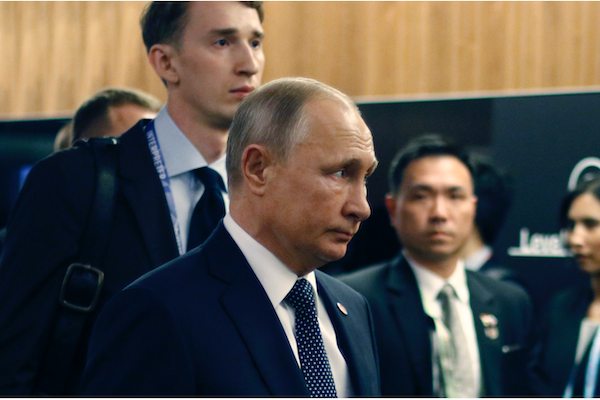
In this circumstance, Putin appears to be facing a personal survival crisis of his own making, having assumed that, as in the cases of Chechnya and Crimea, in Ukraine, the West would limit itself to condemnations and would not recognize the annexation of territories.
As expected, neither direct contacts between Russian and Western diplomacy nor announcements of economic sanctions against the Moscow government have managed to defuse the threat of a large-scale conflict in Ukraine (and potentially in the rest of Eastern Europe and the Baltic Sea region). Meanwhile, the nearly 2.3 million inhabitants of the disputed Donbas region continue to suffer the consequences of a simmering war that has already claimed more than 14,000 lives, in addition to the progressive destruction of cities and towns, which for over six years has forced them to live with the misery caused by the deprivation of the most essential services.
All of this, which is unacceptable “on a human scale” (and in accordance with the basic principles of Humanitarian Law and Human Rights), is part of the cost ignored by the geopolitical interests at play. Among other significant details of this crisis, the suffering of the inhabitants of Donbas does not seem to have motivated our well-known United Nations High Commissioner for Human Rights, whose opinion or initiative on the matter is unknown. A silence equivalent to a statement: I am of no use.
For the Russian government, none of this seems relevant. Fourteen or thirty thousand lives more or less are not significant in the power equation of Vladimir Putin’s government and the renewed Russian oligarchy, which has governed a country whose main asset is its nuclear arsenal since the 1990s. Without that strategic capability, Russia would be nothing more than a regional power equivalent to Turkey, a country that is also not a model to follow for the rest of the world. The limitations of diplomacy and the banality of politics As diplomatic contacts accumulate (along with the concentration of Russian regiments in Crimea, Eastern Ukraine, and Southeastern Belarus), behind the scenes, this crisis has served for escapades such as the visit to Moscow by far-right Hungarian Prime Minister Viktor Orban (the Russian Trojan horse in the EU), or the visit to Kyiv by British Prime Minister Boris Johnson. True to his “Black Adder” style (the historical satire created by actor Rowan Atkinson), Mr. Johnson has instrumentalized this serious conflict to escape from London amid the crisis stemming from his responsibility in sixteen events held at the government headquarters and the Prime Minister’s residence during the peak of the COVID quarantine (equivalent to sixteen “parties” at La Moneda during our own quarantine). Nevertheless, Mr. Johnson’s visit to Kyiv provided an opportunity for the Scottish Prime Minister (and leader of the Scottish National Party, which aspires to independence from the United Kingdom) to demand that if he truly wants to affect Putin’s economic interests in the West, he should regulate the financial norms that have allowed a substantial list of Russian oligarchs to turn the British capital into Londongrad.
Not only in the United Kingdom but also in the rest of the West, there is the perception that the governments of Tony Blair, David Cameron, Theresa May, and Mr. Johnson himself (all alumni of the University of Oxford and/or belonging to families with interests or friendships in the city) have been weak in regulating the activities of Russian oligarchs, some known for owning popular football clubs, hotels, nightclubs, and a long inventory of properties, in addition to being linked to a series of violent crimes, some still unresolved. Filmmaker Guy Ritchie has utilized this material in some of his most entertaining works.
Putin’s plan for Ukraine With all that said—and at least until the writing of this article—the anticipated Russian invasion has not occurred. Some analysts suggest that this is due to the fact that last December, the Washington Post and the popular German newspaper Bild published what appeared to be the original Russian battle plan. This was to unfold in three stages, starting in Crimea and the Black Sea (with the conquest of Odessa), followed by Donbas, and ending with a pincer operation and the capture of Kyiv by three armies coming from three different directions. Importantly, between the first and second stages, and the second and third, the Russian government would offer to engage in talks about the future of Ukraine. If those negotiations fail (as is likely), the Russian invasion would continue until total occupation of the country is achieved. Subsequently, a pro-Russian Ukrainian government would make the necessary constitutional arrangements to turn Ukraine into a federation, in which regions could immediately hold plebiscites to decide possible adherence to Russia. It is that simple. As the weeks pass and the date of the anticipated invasion is postponed, the Russian government and military class begin to face the inevitable onset of winter (which will occur starting the last week of this month), and the imminence of the Winter Olympics in Beijing, which will dominate the headlines in February. While the Chinese government has shown some understanding of the Russian demand for secure borders (to use an Israeli expression), it is assumed that the invasion of Ukraine would overshadow an Olympics in which the Chinese Communist Party has made a singular effort to, at least in part, mitigate the structural damage to its international image caused by its evident responsibility in the COVID pandemic. Others believe that Russia is waiting for the Olympic Games in Beijing to launch its military invasion. Perhaps that is why the Russian government continues to amass forces on its border with Ukraine, in occupied Crimea, and in part of the Belarusian territory bordering Poland and Lithuania. It has also dispatched part of its Baltic fleet to the Black Sea (in response to the strengthening of NATO’s naval capabilities in that region) to—consistent with its macho style—double down on its military bet, without considering (or simply disregarding) the fact that the Atlantic Alliance will soon be forced to do the same. In parallel, and after noting a sort of skirmish between Irish fishermen and the Russian fleet en route to the Black Sea, without waiting for Moscow’s response to a diplomatic memorandum presented days earlier, the Washington government has announced that it will send additional military capabilities to Eastern Europe. Thus, the escalation continues.The above reveals another essential aspect of this crisis: with the backing of a significant portion of its political class (some of whose figures reduce Russia’s power to that of a “mere gas station”), the American government has ended up assuming leadership in Europe, assuming that, whatever the reason (and despite the initial sincere push from its Secretary of State), the left-wing coalition government in Germany—with many of its figures linked to the “Russian gas business”—will not take the initiative. Germany will only join economic sanctions, including a possible closure of the Nord Stream 2 pipeline. A German offer of five thousand helmets for the Ukrainian army was flatly rejected by Kyiv. This has led some analysts to recall the hypothesis of conservative journalist and historian Paul Johnson, who believes that, because its center of gravity is in Berlin (Prussia), Germans are ultimately men of the East, prone to better understand the Russians than the French or the British. The cost of this political fact for Germany remains to be seen, as, unlike Japan and South Korea in the equally contentious scenario with China in the Western Pacific, Germany has shown doubts and hesitations. In geopolitics, nothing is free. Putin and Russia’s secure bordersWhile this was happening, Putin has insisted on his claim that the West ignores the Russian demand for secure borders, asserting that, from Ukrainian territory, hypothetical Western hypersonic missiles could hit Moscow in less than six minutes. Conversely, Putin has deliberately forgotten that, from his territory or from Belarus, Russian missiles could hit various capitals of the Atlantic Alliance in an even shorter time (the distance between Brest, on the Belarusian border, and Poland is just 180 km to Warsaw, and only 690 km to Berlin).
This rhetoric, initially intended to justify the use of the threat of force as a legitimate negotiating weapon, also illustrates the Russian leader’s desire to divert attention from the evidence revealed by satellite images and, at the same time (with his usual dose of cynicism), to promote his image as a great statesman. It is the cultivation of that image—instrumental to economically interested ultranationalism—that, while currently sustaining him in power, is simultaneously pushing Putin into a dead end.
Deprived by the Washington Post and Bild of the “element of surprise,” he and his generals continue to postpone the use of the military forces they are amassing, allowing the West, on one hand, to consolidate the international perception that the problem of Ukraine is synonymous with a moral crisis generated by unacceptable Russian neo-imperialism, and on the other, to have a window of time to deepen its military cooperation with Kyiv and reinforce the entire eastern border of NATO (with participation from the United States, United Kingdom, Spain, France, Netherlands, Norway, Denmark, Poland, etc.). Additionally, since mid-January, various experts have explained that, while Russia has managed to mobilize around 140,000 troops with their respective military equipment, to conquer and occupy Ukraine (and turn it into a federal state that allows for the secession of certain bordering regions), recent experiences in Iraq, Afghanistan, and Syria indicate that a potential Ukrainian insurgency would require a contingent of at least 340,000 adequately supplied troops. To date, Russia lacks such capabilities. Aware of these limitations, the Atlantic Alliance has doubled down on Putin’s bet, providing both sophisticated military equipment and intelligence information to facilitate the defense and the creation of a Ukrainian insurgency. This is already sufficient to, without directly intervening in a potential conflict (and despite the enormous Russian firepower), make an invasion even more costly in the medium term. In that scenario, in a matter of weeks, Russian casualties are anticipated to be in the tens of thousands, creating an internal problem that Putin will only be able to control by tightening his grip on society. Another Afghanistan. The specter of failure At this point, the risk of a Russian military failure is evident, as is the political cost derived from a prolonged war on the horizon. This possibility is already beginning to generate doubts, to the extent that some observers wonder whether an unsatisfactory outcome in Ukraine could catalyze the strengthening of the opposition to Putin and his circle, a question that is difficult to measure a priori. In any case, the West does not seem willing to miss the potential represented by both uncertainties, despite the fact that an adverse internal scenario could ultimately turn the “alpha male of the Kremlin” into an even more unpredictable leader. While some Western politicians have recognized certain skills in him (possible in a political regime that, like the Russian one, is conveniently controlled in its institutions, press, and civil organizations), the reality is that Putin is nothing more than a former KGB spy with no intellectual training. While this makes him more dangerous, it does not make him any smarter. The Ukraine crisis seems to begin to confirm this.
If some argue that the above is irrelevant, the fact is that in this circumstance, Putin appears to be facing a personal survival crisis of his own making, having assumed that, as in the cases of Chechnya and Crimea, in Ukraine, the West would limit itself to condemnations and would not recognize the annexation of territories.
Strategic error: the third time’s the charm. It is precisely this background that—without any young Russian soldier having unnecessarily lost his life so far—configures a scenario with poor and very poor prospects for Putin and his associates.
Calculating Putin It happens that Western diplomacy and the military class seem to have finally taken the measure of Putin’s government and—without neglecting the element of unpredictability—have managed to tilt the board in their favor. Undoubtedly, this reality can— as indicated—make the Russian government more dangerous, which, as days and weeks progress, must come to terms with the fact that the element of surprise and the favorable climatic scenario have lost essential relevance in their strategic calculations. This danger will become more significant if, as seems possible, without a military conflict occurring, the United States and its allies decide to impose direct economic sanctions on Putin’s environment (first the hydrocarbon industry) and perhaps on him and his family. As we explained in a previous article, in that scenario, the so-called “oligarchic family” will be faced with choosing between their material interests and the imperial project that Putin and his associates promote to maintain power ad eternum. So far, the Russian President has managed to rally around him a discontented mass with the results of the disintegration of the USSR (which he considers the greatest geopolitical error of the 20th century). Those of us who lived through the final period of the Soviet Union know from experience that the disintegration of that power occurred due to a massive material failure. Putin has managed to capitalize on the discontent with the society resulting from that political and moral disintegration, which in the 1990s was characterized as the realm of “wild capitalism.” Recycled in the form of entrepreneurs, many figures from the nomenclature of the Soviet Communist Party transformed into businesspeople to quickly amass enormous fortunes while the bulk of the population remained mired in material misery not unlike that of the Soviet system.
Putin was efficient in adding to that almost ontological discontent a component of wounded national pride and a good portion of Orthodox religiosity, in addition to a—justified in this case—animosity towards the insatiable appetite of Western multinationals (including all the major German companies).
These companies, along with Putin and his allies, ended up transforming the Soviet proletariat into the great dispossessed at the end of the USSR.
On the future of the Russian people
Seen in this light, it occurs that the true Russian people—those from the small towns and villages spread from the border with Ukraine to the Western Pacific—have never had the opportunity to generate their own worldview, which, among other things, would allow them to understand that the West, the external enemy, is not the ghost of the armies of Napoleon or Hitler. Most Russians do not know that no European country—nor the United States—intends to attack Russia. The expansion of NATO (and the EU) into Eastern Europe is a product of the fear of the countries in that region (previously Soviet satellites under the umbrella of the Warsaw Pact) of a new aggression from the new Russian ruling class, which longs for its imperial past and, more importantly, instrumentalizes it for its own political control and economic gain.
Moreover, just like the secretive Soviet communism, among many other great sins, Putin’s oligarchic nationalism and his circle have denied any importance to the sacrifice of thousands of lives of American, British, Norwegian, and other nationality sailors, who during the worst years of the Nazi invasion of the USSR kept the Arctic sea route open to enable resistance and, ultimately, the Soviet victory, hence Russian, over Hitler’s armies. Conveniently for Putin and his circle, this enormous sacrifice of their now Western enemies never occurred.
For now, the outcome of the simmering conflict in Ukraine remains uncertain. The risks are, of course, enormous. The possibility of an unforced error or a drift towards a diplomatic crisis akin to that of July 1914 (which could conclude in another great European war) remains present. Despite this, Putin’s now evident miscalculation, combined with the certain threat to the material interests of his oligarchy (which has a marked taste for Western goods), also allows for the assumption that, at least in the medium term, a political change in Moscow could be possible.
For those of us who witnessed the coup against Gorbachev in August 1991 and the events that in just four months precipitated the end of the USSR, we know that in Russia, changes that initially seem improbable are possible.
If, as a result of an internal crisis associated with a failure in Ukraine, Putin’s government and his oligarchy were to face their end, it is to be hoped that, once and for all, the West understands that the formula from the 90s song “Who let the dogs out” (in this case, a new and abominable wild capitalism) must be avoided at all costs. It must be understood that Russia, in addition to being a nuclear power, is also a people that, for too many centuries, has been waiting to be invited to—on equal terms—be part of a fairer and nobler way of life than that offered by the retrograde regime of the tsars, the genocidal communist dictatorship of the Soviet commissars, or the fascistoid regime of Putin’s oligarchs.
Jorge Guzmán AthenaLab Researcher Source:El Líbero.