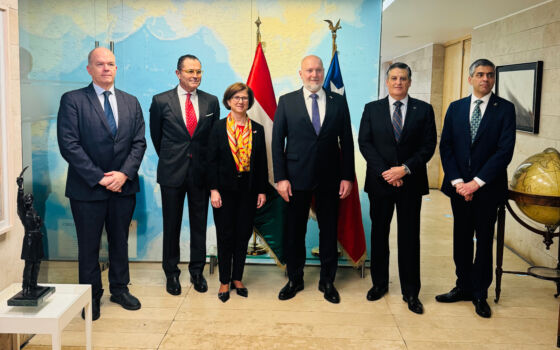
AthenaLab researcher on Radio Futuro: "The increase in homicides is very concerning, as we are not accustomed to this type of crime."
This article was translated automatically and may contain differences from the original. For reference, read the original.

“The Americas have the highest homicide rate in the world without having conflicts between states, which can be explained by drug trafficking gangs and extortion,” states Pilar Lizana, PhD in Government and Public Administration, on #FuturoPQN.
Today on Word That Is News we spoke with Pilar Lizana, PhD in Government and Public Administration, and researcher at AthenaLab.
Chile is recording 2.5 homicides daily, according to data from Carabineros and the Police Investigations. This is a concerning figure that also indicates that revenge killings now account for 30% of the total. This is not the only security issue at hand; we have also reported violent incidents resulting in death in the Southern Macrozone, which remains under a State of Emergency; this is now being replicated in the northern border of the country with the deployment of military personnel.
Increase in Homicides
“The increase in homicides is very concerning; we are not accustomed to this type of crime. There are many shootings in the north, Valparaíso, Santiago, so we are in a very worrying situation; however, if we compare ourselves to countries in the region, we are not doing so badly; but if we compare ourselves to a decade ago, it is indeed a very concerning figure. Homicides are on the rise compared to ten years ago,” states Pilar Lizana.
Situation in the Americas
“The Americas have the highest homicide rate in the world without having conflicts between states, which can be explained by drug trafficking gangs and extortion. There are gangs that engage in human trafficking, so we are in a complex context that we were previously distanced from, but due to globalization, it was undeniable that we would reach this situation. There are no longer just drug trafficking and organized crime gangs in Mexico; they have moved to Honduras and are expanding their business. With the connectivity we have today, we are all vulnerable to the interests of these gangs,” indicates the researcher.
Gangs
“These types of organizations operate with a business logic; they want their business to thrive and will do whatever is necessary to make that happen. These organizations have evolved according to the context. Previously, these cartels had a very vertical hierarchy; now it is more horizontal, like a network, because if the leader is arrested, the gang continues to operate,” suggests Pilar Lizana.
Strategies
“One always talks about state strategies, which must be preventive and reactive, and here it is difficult to have an immediate response because these problems have advanced in other countries and are worse than ours. We have intelligence agencies, civil police, and municipal security, so all these institutions must work together to create a strategy that can help us significantly. Another very important thing is to reclaim the cities, not to neglect these conflict areas, such as where the social outbreak occurred, for example,” indicates the researcher.
States of Exception
“Regarding states of exception, the Armed Forces operate in matters of war and external security, so they have different training to cope with violence. To provide a solution, we must have political will that allows us to achieve positive results in the Southern Macrozone, so the three branches of government must function in a coordinated manner,” concludes Pilar Lizana.
Source: Radio Futuro