DT16 | Illegal Economies: Factors Facilitating Organized Crime in Chile
This article was translated automatically and may contain differences from the original. For reference, read the original.
- por Pilar Lizana
- Investigación y datos
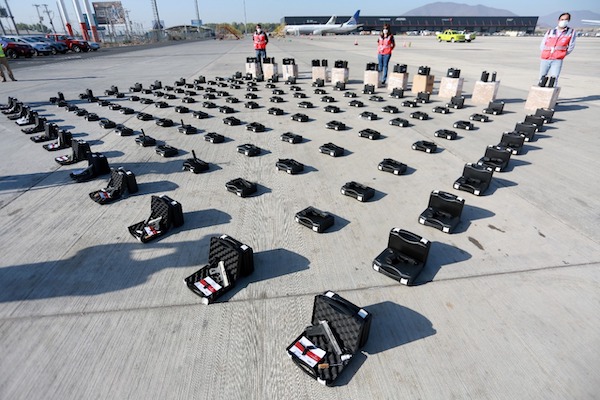
In Chile, since the early 21st century, organized crime activity has increased, leading to the development of more illegal businesses. In addition to the drug trafficking already occurring in the country, criminal activities that directly impact the main productive sectors have emerged. True mafias dedicated to the theft of copper, fish, and timber have arisen. In this regard, we pose the question of what makes Chile a conducive environment for the development of these organized crime activities, a question that this working paper seeks to answer through the study of the national context and what would allow the advancement of this transnational threat.
We are a country fully integrated into the world, with our main connection being a strong maritime foreign trade that places Chile at the center of the globalization process, a phenomenon that, combined with our level of international integration, presents a context in which transnational threats would inevitably arrive sooner or later. However, this does not necessarily mean that the business would establish itself on national soil, with all that this entails.
Thus, the purpose of this document is to study the Chilean environment in order to understand what makes Chile attractive to organized crime and allows for the development of its illegal economies.
To this end, a conceptual clarification on organized crime was presented, understanding it as criminal enterprises, and the existence of six factors that facilitate its development in the country is proposed. It is important to mention that while other factors may exist, these six have been selected due to their relevance to national development.
In this sense, understanding facilitating factors as those elements that create conditions or constitute tools for the development of criminal activities, the following were identified: 1) Institutional Weakness; 2) Conflict and Social Unrest; 3) Social Vulnerability; 4) Technology; 5) Infrastructure; and 6) Financial System.
Finally, it is worth noting that this document will provide the context for the production of a series of research papers aimed at studying the development of organized crime related to the theft of copper, timber, and fish, with the ultimate goal of presenting an analysis of variables that allow for an understanding of the phenomenon.