KEYS | Is there a paradigm shift in security in Colombia?
This article was translated automatically and may contain differences from the original. For reference, read the original.
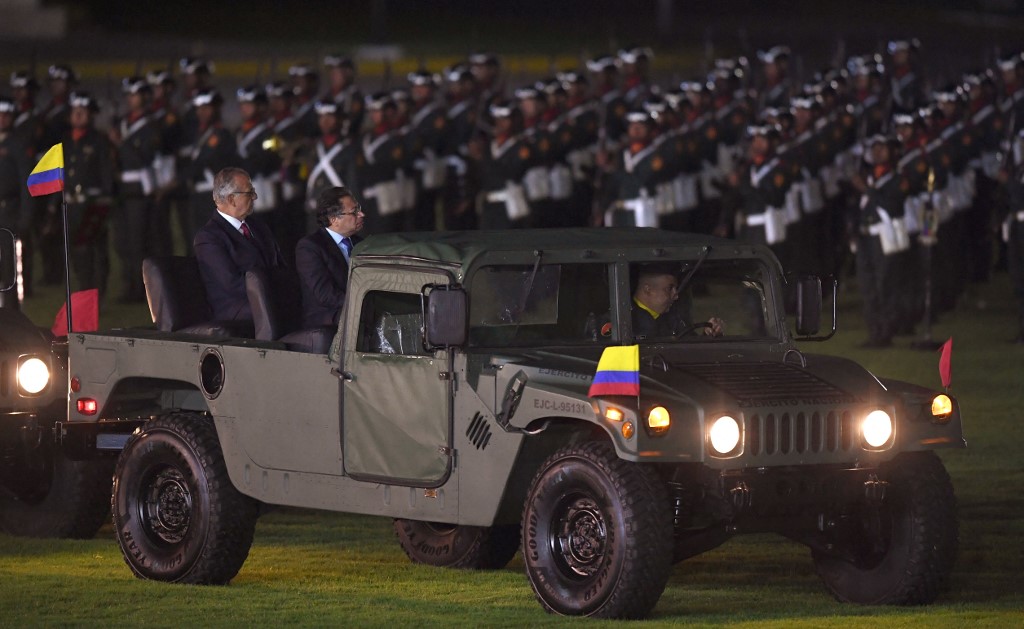
Less than a month into his term, President Gustavo Petro has made decisions that could have a profound impact on security management in Colombia, a country facing significant challenges such as drug trafficking, illegal mining, and active guerrilla groups.
Among other things, Petro has stated that he wants to rethink the frontal combat against the drug industry in a country that has historically been the world’s largest producer of cocaine, despite all the efforts made to combat this criminal sector.
COMMANDS In an unprecedented event, 24 generals have left the Army, while 21 have departed from the police. Although it is traditional in Colombia for a new president to appoint a new leadership for the security and defense forces that will accompany him during his term, the departure of more than 40 generals has drawn attention, especially those officers who were considered experts in the anti-drug war. The government cites issues of corruption or human rights abuses as justification. The appointment of younger officers has led to the departure of the more senior ones in this case. The removal of generals involves leaving institutions with leadership lacking the necessary experience to manage their strategic problems, weakening internal advisory and decision-making processes.https://www.semana.com/nacion/articulo/atencion-nueva-barrida-en-el-ejercito-salen-otros-13-generales-por-investigaciones-de-falsos-positivos-y-corrupcion/202206/.
EXTRADITIONS In discussions with representatives of the U.S. government, the president stated that he proposed changing the extradition policy for drug traffickers who enter negotiations with the state and seek legal benefits in exchange for not reoffending. However, extradition as a tool is the great nightmare for major criminals in Colombia. Guerrillas, paramilitaries, and traffickers have passed through U.S. prisons. Part of the reasons Pablo Escobar launched his war against the state was the approval of extraditions.
CROPS According to the White House, Colombia had at least 234,000 hectares planted with coca leaves in 2021, which allows for the production of more than 1,000 tons of cocaine annually. President Petro confirmed that he will advocate for the voluntary substitution of crops with farmers, but that forced eradication will continue against those who refuse. What is clear is that aerial fumigation with the chemical glyphosate will not be implemented due to health concerns, which allowed for covering large areas in less time. In terms of crops, the dilemma has always been the replacement rate between planting and eradication.
HUMAN SECURITY Petro, a former guerrilla of the M-19, has expressed his intention to promote “human security” as a concept, which centers on people and the circumstances affecting them, but not necessarily related to violence. The president has mentioned the reduction of hunger rates or the increased opportunities for young people to study as examples. In his view, advances in security cannot be measured in “kills” or “neutralizations,” which is why he wants “Armed Forces for Peace” (https://gustavopetro.co/seguridad/).
VENEZUELA Petro advocates for a complete reconfiguration of relations with Venezuela, which have been broken since 2019, when his predecessor Iván Duque aimed for the downfall of Nicolás Maduro. The dilemma is that for Colombia, the neighboring country represents a serious security problem, as it harbors guerrilla groups such as the dissidents of the Revolutionary Armed Forces of Colombia and the National Liberation Army (ELN). The lingering question is whether this presence is due to negligence or collusion with the Bolivarian government.
CONCLUSION Petro may be implementing a transformation of Colombia’s security paradigm, which for decades has involved a frontal and permanent attack on the drug trade and armed groups, always with the support of the United States as a primary ally. This attack included tools such as extraditions and aerial fumigations, as well as captures and kills through offensive operations.
The security situation in Colombia, where powerful criminal groups such as the Gulf Cartel, also known as Clan Úsuga, persist, requires professional forces capable of facing multiple threats. Their greatest successes have occurred when they have had direct political backing and clear guidance.
Although evolution is always necessary, sometimes paradigm shifts in security can be complex, as learned in Mexico. There, President Andrés Manuel López Obrador (AMLO) attempted to give a more social character to the problem of drug trafficking through his policy of “hugs, not bullets.” Today, with a record number of violence victims, AMLO has only assigned more tasks to the military and increased their budgets, while creating a National Guard that acts as a federal national police. Therefore, Petro’s gamble is very high, but unlike his Mexican counterpart, he knows the language of force due to his rebellious past.
AthenaLab Team
August 26, 2022