COMMENTARY | Russia-Ukraine War and Long-Range Ground Fires
This article was translated automatically and may contain differences from the original. For reference, read the original.
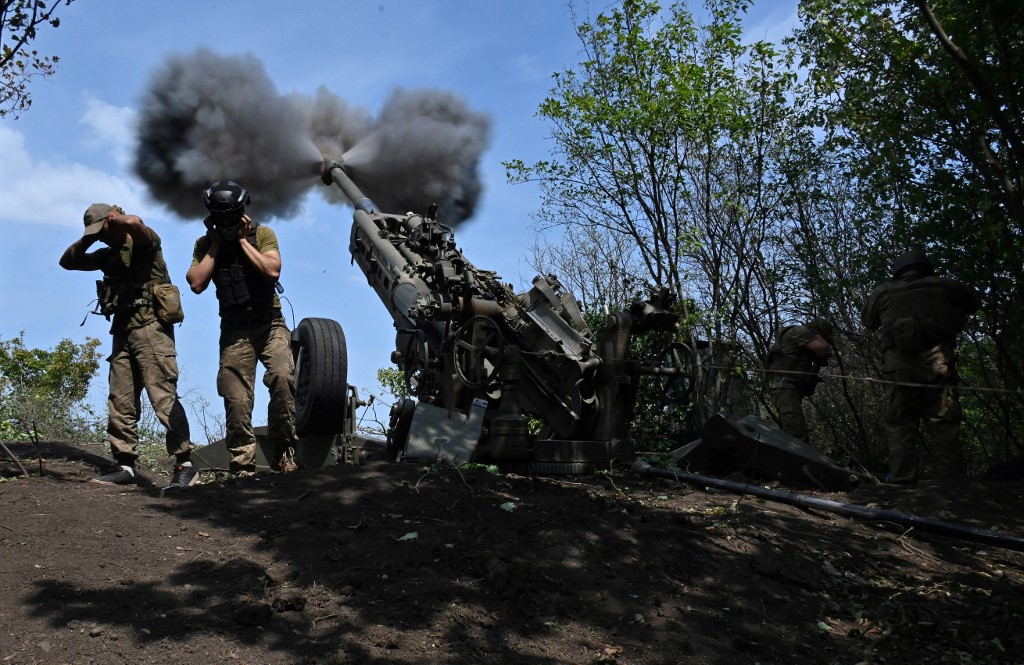
An old military adage states that “fire is what stops,” which is reflected in the fact that since World War I, ground fires, particularly artillery, have been the conventional weapons that cause the highest number of casualties on the battlefield. In combat, fires generated from various platforms are integrated into maneuvers, but undoubtedly the most relevant, due to their impact on the course of the battle, are those executed by long-range ground weapon systems.
It is said that reality is stubborn, as it imposes the rules. This is often repeated in war. Over the last few decades, with the development of air power, the military use of outer space, and the exploitation of cyberspace, there has been speculation about a radical change in how military operations are conducted. It is true that advanced weapons employed in suitable environments, in the required quantity and quality, are difficult-to-counter differentiating elements. However, once a measure is taken, a countermeasure is generated. This has occurred with ships, submarines, tanks, and aircraft. In the case of space and cyberspace dimensions, it is estimated that these still act more as facilitators or enhancers of the three traditional domains—land, maritime, and air—as discussed in the latest version of the Land Warfare Conference, organized by the Royal United Services Institute in June 2022, where AthenaLab was present.
The incorporation of air power, as well as the invention of missiles, provided significant benefits to military forces, such as precision and range. However, except in developed countries or those with strong defense investments like the United States, China, the United Kingdom, France, Russia, Sweden, and a few others, the availability of these and other advanced weapons is limited. Thus, the traditional use of ground fires remains a fundamental element of military power.
What has been observed in the last six months of military campaigning in Ukraine attests to this. While the Russians significantly employed guided weapons at the beginning of their offensive, over time their use decreased, and they began to rely heavily on their traditional artillery. It is estimated that the armed forces of Moscow fire around 20,000 artillery shells per day, with their ammunition reserves allowing them to maintain this rate for several years. The images of the siege of destroyed cities and the number of casualties inflicted on Ukrainian forces have been enormous. With this approach, supported by a historic and massive firepower, the Russians have compensated for deficiencies in their maneuver units and offset the good performance demonstrated by the defenders.
In contrast, the defense forces of Kyiv had little at their disposal at the beginning of hostilities to counter this imbalance, as they had less than 30% of the fire bases compared to Russia and much more limited ammunition stocks. However, the provision of advanced means by the West, such as the HIMARS rocket launcher system, has somewhat leveled the playing field, providing important tools for their defense. With these, the Ukrainians have been able to strike targets that were previously out of their reach, impacting supply chains, destroying artillery ammunition depots, and neutralizing command posts, among other effects.
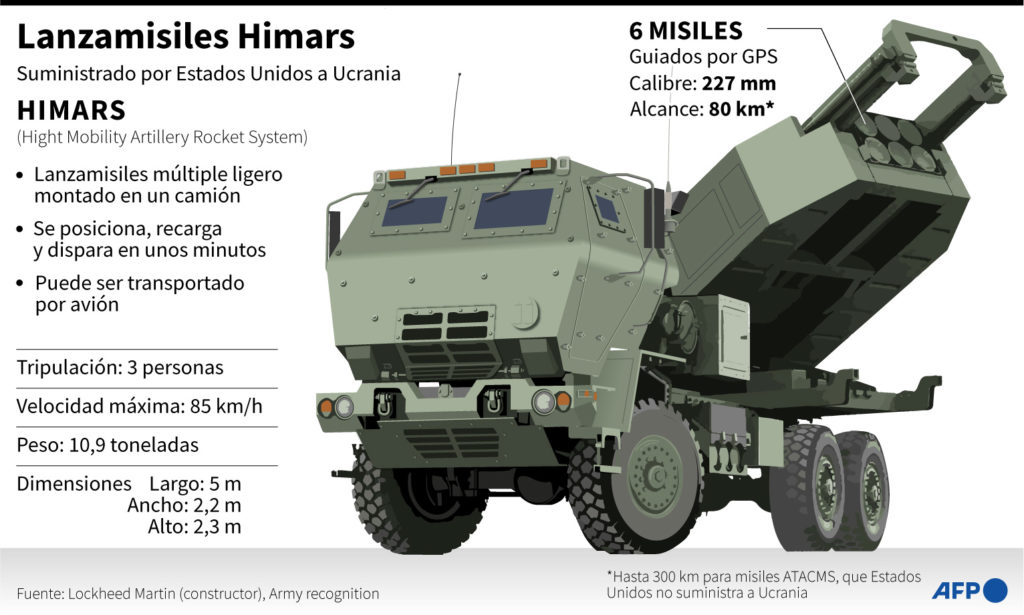
To achieve greater efficiency, any artillery unit requires three essential components: an element that seeks and locates the targets to be struck; one that processes the location data and transforms it into technical firing information; and finally, the units that physically execute the fires. This organization is general and replicates across all armies, differing in levels of technology and automation, as well as in the quality and development of the components.
Among the necessary elements for target search and location, it is fundamental to employ specialized ground or aerial observers from the artillery itself or from special operations forces. These units use various elements and techniques to achieve greater precision (range finders, GPS, etc.), including the use of reconnaissance drones. Similarly, there are specially designed systems to locate artillery units using radar. These systems detect projectiles in flight and can determine the point from which they were fired.
The current war has demonstrated that the civilian population, through the use of cell phones and social media, has become an important source of information and collaboration for target location. Undoubtedly, the use of satellites also allows for precise determination of target locations, which is not limited exclusively to military satellites, as several private companies can provide images with sufficient detail for this purpose, such as Maxar. The common factor in all of the above is that a target—fixed or moving—must be geographically located and that information must be delivered to a data processing center.
This processing, which constitutes the second fundamental element for the functioning of artillery, is carried out by fire direction centers. Through various techniques, which can be manual, computerized, or a mix of both, the information provided by the individual who located a target is transformed into technical data that the executing units use to aim and fire. This element is crucial for several reasons. First, the speed and accuracy of its calculations will significantly influence the outcome of the fires. Second, it is the body that decides whether a target is struck or not, as it evaluates and prioritizes the importance in the overall context of operations.
Finally, there are the units that receive the firing data and execute the fire. This includes rocket launchers, missiles, and artillery howitzers in general. They can be differentiated by various criteria. By type of weapon, where there are missiles, rockets, and tube artillery (cannons and howitzers) or by their range. They can also be recognized by their mode of propulsion, primarily distinguished between towed, self-propelled, and even, in high mountain environments, mule-drawn. The rate of fire is another distinguishing element, where multiple rocket launchers have the highest saturation capacity.
Precision and range are key aspects on the battlefield. In this regard, ammunition makes the difference. Regarding the former, the spectrum of alternatives ranges from “dumb” projectiles, which have no ability to alter their trajectory, to guided munitions, where missiles lead the way. Concerning range, it is normal for rocket artillery to exceed howitzers, while missiles achieve even greater distances. The correct combination of these two factors generates significant differences in the quality of fire support.
Another element is communications. The security of links, expressed in the non-interception or interruption of transmissions, is fundamental, as systems rely on information that must flow between components. Obviously, traffic can occur via voice or data transmission, which improves the quality, speed, and accuracy of processing.
Finally, the most relevant element remains the human factor. The crews, their training, and doctrine, among other aspects, make the difference that can even compensate for technological shortcomings or the quantity of available resources, as has occurred in the case of Ukraine.
The war in Ukraine has demonstrated the relevance and importance of artillery fires on the battlefield. In recent days, the Ukrainian offensive has had to rely on such ground fires, both to make various attacks more viable and to recover territory for their troops.
The above serves as an example for smaller and lower-budget states, such as Chile. It is necessary to have highly trained and skilled crews in various techniques, as well as to incorporate capabilities as described or develop them with the national industry. Target location radars or smart munitions are alternatives that allow for significant leaps in capability development with impacts at the tactical, operational, and even strategic levels.
Marcelo Masalleras, AthenaLab Researcher
September 12, 2022