COMMENTARY | Day of the "Glories of the Chilean Army": The Real Meaning of the Celebration
This article was translated automatically and may contain differences from the original. For reference, read the original.
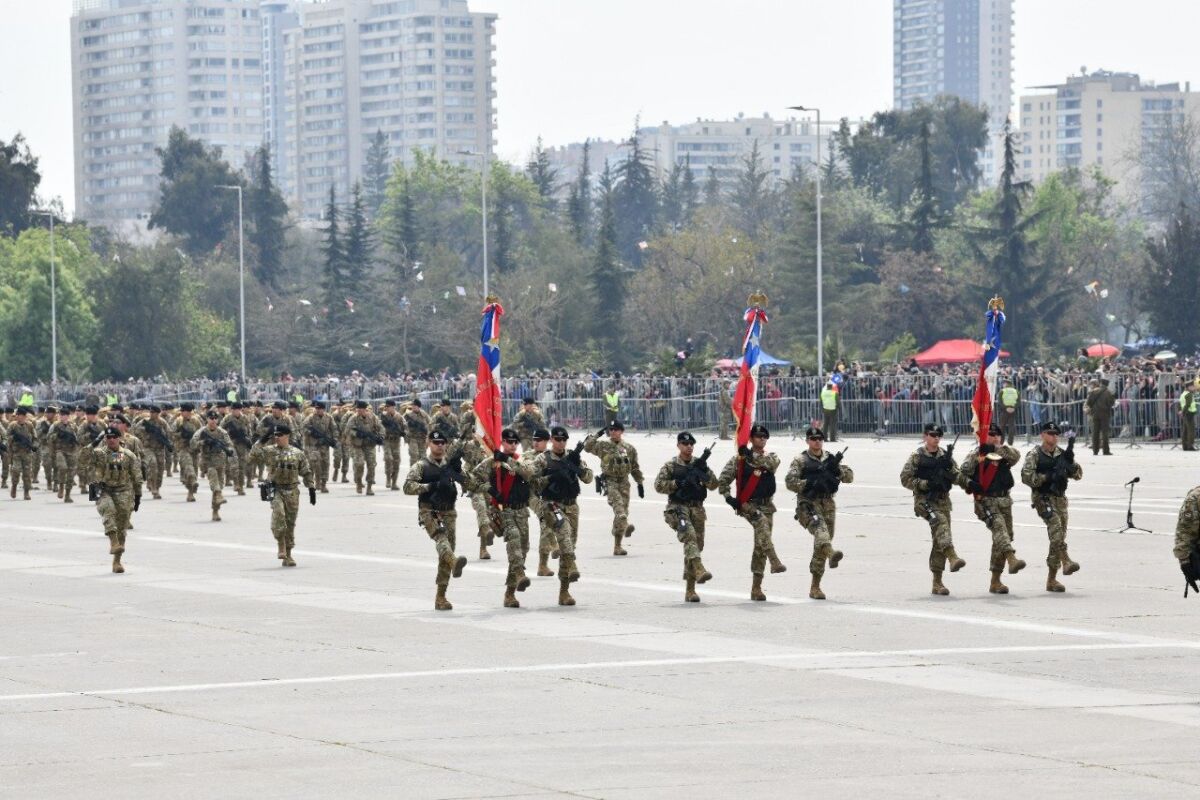
Every September 19, amidst the national celebrations for independence, Chileans witness the Great Military Parade. What is interesting, and often forgotten, is the true reason for the commemoration. What brings together Chileans of various backgrounds, cities, and political shades on this date is the celebration of the “Glories of the Chilean Army.”
Indeed, the Army is one of the permanent republican institutions that was born alongside the nation and has participated in and contributed to shaping its history, its present, and undoubtedly, projecting its future. It significantly contributed to the formation of the other branches of defense, first the Navy and, alongside it, the Chilean Air Force, as well as other state institutions, such as the Carabineros.
The Day of the “Glories of the Army” has been a national holiday since 1915, when the supreme government of the time signed a decree establishing the celebration in its honor. However, the participation of this military branch in the national celebrations can be traced back to the very origin of the Republic, since on September 19, 1810, citizens and troops of the Army gathered in the Plaza de Armas of Santiago to celebrate the proclamation of the act establishing the first National Government Junta, just one day prior.
It is difficult to find a better date than the one chosen, as it coincides with the date the Chilean nation commemorates its Independence, for Chile, Chileans, and their Army are one. It is impossible to find a specific day that commemorates a unique action—combat or battle—that stands above the others, as the displays of valor and patriotism of the Chilean armed forces, particularly of its Army, abound in national history. Names such as José Miguel Carrera, Bernardo O’Higgins, Bueras, Prieto, Bulnes, Colipí, Maturana, Baquedano, Rebolledo, Sotomayor, Carrera Pinto, Velásquez, or Salvo, to mention just a handful of heroes, recall the rich tradition of duty and love for the land of those born in this country.
What is celebrated concerns all Chileans, not just the military, as it honors the soldiers—all citizens—who fell in the line of duty to the homeland and commemorates the victories achieved, from the campaigns of National Independence, the War Against the Peru-Bolivian Confederation, the War of the Pacific, and even in the revolutions of the 19th century, in which national troops were commissioned by the government to confront them.
Despite the challenges faced in recent years, the Army continues to be, along with the other branches of national defense, one of the institutions that generates the greatest trust among the citizenry. This is not surprising, as most Chileans personally know or have a family member who is a soldier, sailor, or aviator, and from that knowledge, they understand that the military are good people, just like the vast majority of their compatriots, who seek the best for the nation, its well-being, and development, but from a basic, specific, and fundamental function of the state. This bond—citizen-soldier and community-Army—can be identified and repeated throughout the national territory, especially in those areas further from the center of the country.
The day on which the glories of the Army are celebrated is the day of the glories of Chile and, in the same way, the day of the glories of the Republic; it is the day to commemorate its Army. Throughout history, the Army has been the place where citizens have turned to defend Chile against external threats, constituting the main core of its defense.
However, this year’s celebration was affected by comments from the President of the Republic. Instead of celebrating the impeccable presentation of more than eight thousand men and women in the ellipse of Parque O’Higgins, Gabriel Boric preferred to attribute the Great Military Parade—firstly—to an act of mere subordination, rather than one of celebration and remembrance. In this regard, a couple of clarifications are necessary. The subordination of the Armed Forces (FF.AA.) is assured, there is no doubt about that, so if the president has any concerns on the matter, it would be worrisome. For this reason, the FF.AA. do not need to go through life performing “acts of subordination” to prove anything, as that condition is reflected every day in the dozens, if not hundreds, of tasks they perform and fulfill diligently, such as those that this very government has entrusted to them, for example, in the Southern Macrozone of the country.
Furthermore, according to the current political constitution, the FF.AA. are subordinate to the political power, represented by the president of the Republic, who is democratically elected and embodies popular sovereignty, not of civil society as the president expressed, especially at a time when that society does not overwhelmingly approve of the government in the polls.
Finally, what the highest authority of the nation must not forget is the reason that compelled him to move to Parque O’Higgins on September 19, which is nothing other than to celebrate the Glories of the Chilean Army, that of all Chileans, including his own, in a true republican act.
This year’s celebration has the particularity of taking place in a complex environment, following a constitutional process that divided rather than united Chileans, so the National Holidays and, within them, the celebration of the “Glories of the Chilean Army,” constitute an excellent opportunity to symbolize a meeting point, where civic sense and the unity and cohesion of a single nation prevail. Chile must always come first; those who belong to and have belonged to the Chilean Army know that on September 19, they celebrated, alongside their compatriots—in austerity, but in their best attire—the day on which their countless glories are commemorated.
Marcelo Masalleras, AthenaLab Researcher
September 21, 2022