KEY POINTS | North Korea Increases Frequency of Missile Tests
This article was translated automatically and may contain differences from the original. For reference, read the original.
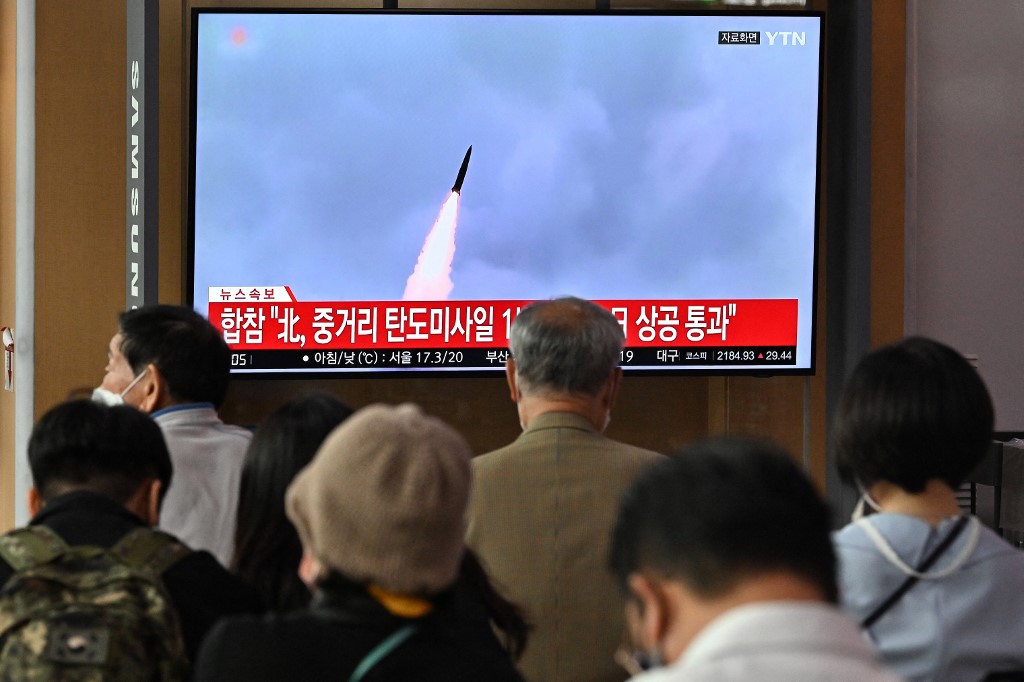
On October 4, alarms were raised again in Japan. This time, it was due to the launch of a ballistic missile from military facilities in North Korea, whose trajectory flew over territory in the northern part of the Japanese islands, reaching a distance of 4,600 kilometers. South Korea and the United States responded with an air exercise that included the use of precision bombs. The North Korean nuclear program, as well as its ballistic missile program, has been a headache for regional powers since the early 21st century. Here is a brief analysis from AthenaLab.
STRATEGIC SITUATION
Historically, the Korean Peninsula has been a contested area among various empires, including the Chinese, Japanese, and Russian. After World War II, the peninsula was divided into two, with the northern half under communist control supported by the Soviet Union and China, and the southern part transitioning to a democracy supported by the United States. Technically, North Korea and South Korea are at war, with an armistice in effect, signed in 1953, which froze the conflict between the two states, separating them with a demilitarized zone around the 38th parallel north latitude. Since the end of the Korean War (1950-1953), the security situation on the peninsula has been precarious, experiencing varying levels of tension, typically triggered by military demonstrations from the north (missile tests, nuclear trials, cross-border fire), from the south (military exercises involving U.S. assets), or border frictions, all fueled by strong rhetoric from the Pyongyang regime.
CONVENTIONAL MILITARY POWER
In conventional terms, North Korea’s military capability is inferior to that of its southern neighbor. In addition to its arsenal being considered outdated and in regular condition due to a lack of spare parts and old technology, the numbers do not favor the north. South Korea surpasses North Korea in the number of aircraft, helicopters, artillery, and warships, while North Korea has an advantage in the number of personnel, submarines, and tanks. This asymmetrical condition favoring the southern side of the peninsula significantly explains the commitment and importance that the Pyongyang regime assigns to its nuclear and missile programs, respectively.
MISSILE CAPABILITY
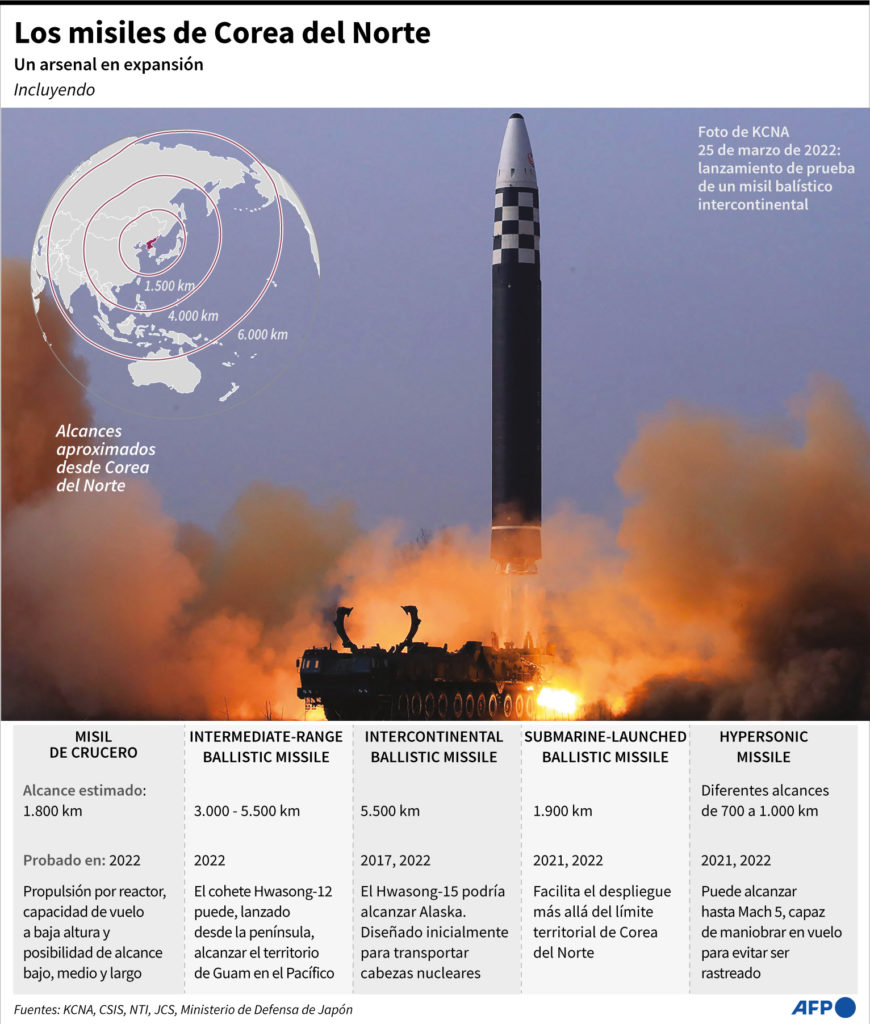
North Korea has conducted five tests involving the launch of eight missiles since September 25. If all tests from 2022 are counted, the total is estimated to reach 43 missiles, including both ballistic and cruise types (in 2021, only 8 tests of this kind were conducted). The missile arsenal includes more than twenty models at various stages of development and capability, which could reach distances estimated at up to 13,000 kilometers, threatening all of Asia, Oceania, Europe, and the west coast of the United States. While it is believed that North Korea already has the capability to mount a nuclear warhead on some models, there is doubt about whether its intercontinental ballistic missiles are operational with nuclear capability (to carry a warhead into space, survive re-entry, and accurately target their objective).
NUCLEAR POWER
It is estimated that the North Korean nuclear program began in the late 1990s, through contacts, technology, and experience obtained from Pakistan. A.Q. Khan, considered the father of Pakistan’s military nuclear development, played a significant role in the process that led to North Korea becoming a nuclear power. This process was reinforced by mutual interests, where the Pakistani government needed missile capability for its atomic bombs and offered the necessary technology for uranium enrichment. In contrast, the North Koreans sought knowledge, design, and experience for military nuclear development and had advanced missile manufacturing capabilities. Ultimately, the exchange benefited both states, granting North Korea the possibility of obtaining an atomic bomb in a short time, despite international opposition and condemnation.
Currently, according to information from the Stockholm International Peace Research Institute (SIPRI), North Korea may possess a total of 40 to 50 nuclear warheads. Regarding its destructive capacity, although the country claims to have detonated a hydrogen bomb, the most common estimates place its destructive power between 50 to 300 kilotons (for reference, the bombs dropped on Hiroshima and Nagasaki in 1945 had yields of 16 and 25 kilotons, respectively).
RESOLUTIONS AND SANCTIONS
As a result of the development of North Korea’s nuclear and ballistic missile programs, the international community has taken a relatively unified stance of condemnation, although there are nuances in how to address this issue. Since 2006, the United Nations Security Council has adopted nine resolutions condemning North Korea, urging it to cease its tests and halt activities deemed illegal, as they violate previous resolutions of the same council. All mentioned resolutions were adopted unanimously by council members, including China and Russia. Additionally, along with the imposed sanctions, the council authorizes UN member states to intercept and inspect North Korean cargo within their territory and, if necessary, confiscate and dispose of cargo deemed illegal. Similarly, they repeatedly invite North Korea to rejoin the Treaty on the Non-Proliferation of Nuclear Weapons, to which it originally acceded in 1985 but withdrew in 2003.
CONCLUSIONS
- Considering the numerical, technological, and logistical disadvantages, as well as other components of military capability, combined with economic restrictions and imposed sanctions, North Korea will not be able to substantially improve its conventional arsenal, relying instead on its nuclear capability.
- Given this condition, nuclear development for military purposes will continue to expand, alongside its intercontinental missile development program. This is considered vital for the security and survival of the Pyongyang regime.
- The proliferation of nuclear weapons is a real possibility, given the relatively easy transfer of technology. This situation has already been observed in countries such as Libya, Syria, and Iran, imposing significant levels of insecurity in the international system, as well as in each particular region, potentially triggering races to acquire such capabilities.
- It is estimated that the precarious security situation surrounding the Korean Peninsula is unlikely to improve in the short to medium term, repeating episodes like those experienced in recent weeks. Generally, when Pyongyang wants to make its presence felt, whether to initiate some form of negotiation or to obtain humanitarian aid, it increases the frequency of its missile tests. Therefore, these launches usually respond to a fundamentally political objective. This year, in which 43 tests have been conducted, a conservative president, Yoon Suk-yeol, was elected in South Korea, who believes in the need to strengthen his country’s military capabilities and resume large-scale exercises with its ally, the United States. This approach is very different from that of his predecessor, Moon Jae-in, who directly engaged in dialogue with Kim Jong-un in an effort to reduce tensions between the two states.
- This situation deteriorates the security and stability landscape of a region through which a significant portion of global trade transits, as tests like those of North Korean missiles affect navigation and flight security. If tensions escalate, it could impact Chile’s interests, as it has important partners and trade exchanges in the region. South Korea is our third-largest trading partner in Asia.
AthenaLab Team
October 5, 2022