COMMENTARY | Open Source Intelligence in the Russia-Ukraine War
This article was translated automatically and may contain differences from the original. For reference, read the original.
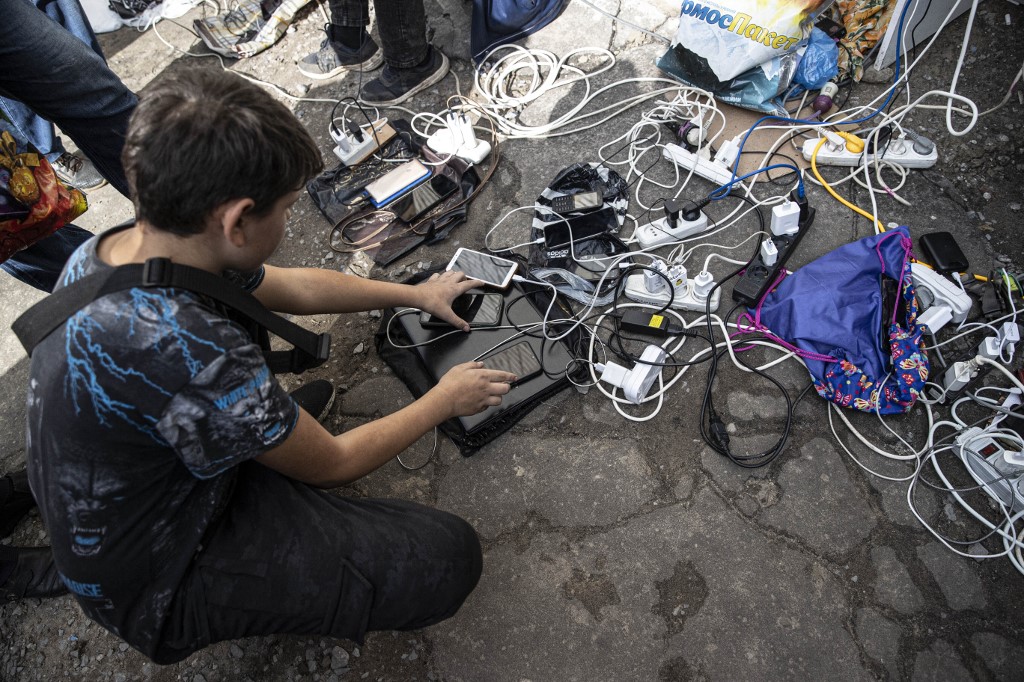
The military invasion of Russia into Ukraine has reached eight months, proving to be more difficult than all conflict specialists, including major intelligence agencies, anticipated. With the perspective of time, we can now affirm that Ukraine’s resistance to the Russian offensive is partly due to the role that open source intelligence (OSINT) has played in the confrontation. This information is greatly enhanced by the development of artificial intelligence, robotics, language, and machine learning, which characterize the Fourth Industrial Revolution, in the context of a new dimension of conflict such as cyberspace, alongside the other three traditional domains and outer space.
OSINT can be understood as unrestricted access information gathered from open sources and then subjected to the intelligence process or cycle, where it is processed, synthesized, and analyzed to be converted into intelligence. In other words, it is useful information that facilitates decision-making processes. Open sources today can range from commercial satellite imagery to unencrypted communications or messages, including access to social media. This has been amplified by the development of technology and the influence of the internet on a global scale. Consequently, this has empowered individuals like never before in human history, granting them the ability to become global actors.
In this sense, technology has enabled the empowerment not only of institutions but also of individuals, to the detriment of the traditional roles of the state as a form of political organization. This phenomenon is permeating commercial, diplomatic, economic, and, certainly, military activities, emphasizing the reality that the state is no longer the only relevant actor in intelligence generation. Today, the capabilities of the private sector often surpass the state’s ability to obtain and process information.
According to publications from the United States Defense Intelligence Agency, 80% of its intelligence comes from open sources; thus, any well-organized state can achieve a good level of intelligence if it exploits OSINT, as has been demonstrated in the current conflict between Russia and Ukraine, where Ukrainian decision-makers have leveraged this condition to their advantage. This has initially allowed them to confirm strategic deployments, operational and logistical centers of gravity, as well as movements of forces and reserves. Satellite imagery has provided greater detail on the adversary’s advances and high-value targets, enabling updated damage assessments for a precise operational picture.
The interception of unencrypted communications and others from commercial cell phones has also opened a window to understand the morale of Russian forces, identify high command, locate logistical centers, and pinpoint key leadership on the ground. Social media analyses have complemented this, while also being crucial in verifying the perceptions of personnel in the field regarding the conflict, identifying their specific positions. In this way, geolocation, combined with videos, phone communications, and social media, translates into a significant contribution to intelligence gathering. Additionally, the OSINT domain has been used to control the narrative in the development of the conflict and influence both one’s own forces, the adversary, and public opinion.
All of the above allows us to assert that Ukraine is making better use of OSINT resources, tipping the balance against a larger, more robust, and seemingly more technologically advanced Russian army.
From the perspective of International Humanitarian Law, OSINT also provides greater evidence of attacks on innocent civilians or protected targets, having a clear impact on international support for those who have suffered the effects of the illegal use of force. For example, in the city of Bucha, Ukraine, the execution of civilians prior to the withdrawal of Russian forces was confirmed by satellite images from Maxar, which established evidence of these murders. Additionally, it is possible to identify through open sources and social media which individuals were in a specific geographic area where the events occurred.
Various private companies today are capable of providing high-resolution images in real-time or with only a few hours’ delay, information from synthetic aperture radars (which provide nighttime images or images under adverse weather conditions), monitoring radio frequencies to identify troop movements and interfere with global positioning systems, thus demonstrating the power of OSINT, alongside actors such as Maxar Technologies or BlackSky.
In the case of the current conflict, this has been identified by Russian forces, who have targeted Ukrainian telecommunications infrastructure as a way to minimize potential operational advantages, estimating that to date, 20% of these capabilities have been affected.
Finally, it seems clear that the prevalence of OSINT in warfare is not a unique case in the current conflict between Ukraine and Russia, but rather a phenomenon that will continue to increase in future conflicts, due to technological acceleration, the prevalence of the internet, and the significant impact of social media on people’s daily lives in both peacetime and wartime. This presents us with the following future challenges:
- To distinguish within the ever-increasing volume of information, that which is true and useful for our purposes from that which is false or of little utility.
- To adopt mitigation measures to neutralize false narratives that affect both our personnel and our interests.
- To discriminate the veracity of that information both from the source and the medium to differentiate it from “fake news”.
- To use artificial intelligence, algorithms, and relational databases to filter, organize, clarify, and prioritize information, accelerating and facilitating the decision-making process of the organization.
John Griffiths S., Head of Studies at AthenaLab
October 27, 2022
The comments and opinions expressed in this document represent the thoughts of the authors, not necessarily those of the institution.