KEY POINTS | Brazil is back, but to what extent?
This article was translated automatically and may contain differences from the original. For reference, read the original.
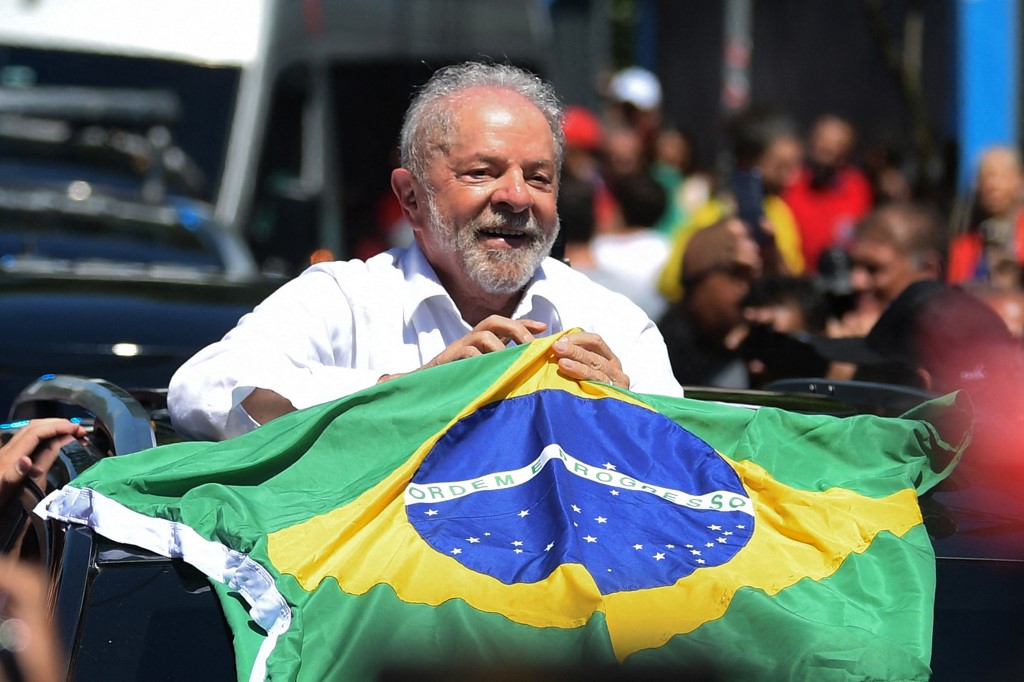
Lula da Silva’s victory in the recent presidential election has been framed within a leftist wave that colors governments from red to pink (pink tide). For those who argue that South America lacks a single voice to be heard, the hope that the Brazilian leader will occupy that space seems a real possibility, although they should consider his previous presidency.
Between 2003 and 2010, Lula positioned Brazil in international forums such as BRICS (Brazil, Russia, India, China, and South Africa), expanded its influence to continents like Africa, and further globalized the image of his country by organizing the World Cup and the Olympic Games.
However, that was a very different world from the one that will welcome the historical leader of the Workers’ Party (PT) starting January 1, 2023. The current international landscape is marked by competition among great powers, where China is a player on par with the United States, and Russia poses a threat to international security; the need to address climate change is not only important but urgent, and Latin America is shaken by political and economic instability, the impact of migration, and organized crime.
PT’S VISION
Much of the success of the foreign policy of Lula’s early governments was due to the harmonious articulation he achieved with his Foreign Minister Celso Amorim and his international advisor Marco Aurélio García. While the president brought charisma and a packed agenda of international trips, Amorim handled global issues, and García (now deceased) managed ties with Latin America, thanks to his extensive political networks.
Aside from the impossibility of recreating that triumvirate, Lula now has a much more heterogeneous support base (his vice president is a social democrat), a horizon of only four years—if he fulfills his campaign promises—a more polarized internal situation, and a minority in Congress. With all these factors, it becomes difficult for him to pursue a foreign and security policy as expansive as ideological, the same one that guided the Workers’ Party for 13 years (including Dilma Rousseff’s five years from 2011 to 2016) with specific axes and which involved the opening of 44 additional embassies.
The PT’s security foreign policy was marked by:
- Reciprocal multilateralism to democratize globalization through rules (Brazilian executives in charge of the Food and Agriculture Organization of the United Nations and the World Trade Organization);
- regionalism favorable to Brazil (Union of South American Nations and Southern Common Market);
- a focus on emerging powers centered on BRICS (from G-8 to G-20);
- South-South cooperation.
The defense and security policy, for its part, was marked by:
- The protection of the “Blue Amazon,” hydrocarbons, and marine resources in the South Atlantic;
- addressing unconventional threats at the borders;
- the modernization of the Armed Forces through construction with technology transfer (Prosub project);
- military cooperation within South America and deterrence towards the rest of the world.
POWERS
Before a crowd celebrating his victory, Lula mentioned the United States and the European Union (EU) as partners (“partners”), raising some expectations that in this third term he will lean more towards the West and less towards emerging powers like China and Russia.
In both cases, the departure of Jair Bolsonaro is as well received as the return of an old acquaintance. The current president of Brazil was one of the last to acknowledge Donald Trump’s defeat, and his positions on climate change clashed with the European green agenda. Moreover, during his term, Bolsonaro garnered few friends, even visiting Russian President Vladimir Putin weeks before he launched the invasion of Ukraine.
However, Lula also caused discomfort when he stated that Ukrainian President Volodymyr Zelensky was as responsible as Putin for the war in Ukraine. In an interview with Time , he also said that Putin “should not have invaded Ukraine. But not only Putin is to blame; the United States and the European Union are also guilty”[1].
Even acknowledging that Brazil depends on Russian fertilizers for its agribusiness and its membership in BRICS, the elected leader maintained that if Washington and Brussels had given Moscow guarantees that Kiev would not join the North Atlantic Treaty Organization (NATO), the invasion would not have occurred. This is a view shared by some realist thinkers, but it surprised many coming from a leader like Lula.
In any case, the relationship with the United States will be facilitated by the presence of a Democratic government and by Biden’s prior knowledge of Lula.
LATIN AMERICA
While many leftist leaders rushed to celebrate Lula’s victory, the elected president will notice that several of his contemporaries from his early governments are either dead (Hugo Chávez of Venezuela and Néstor Kirchner of Argentina) or out of power (Evo Morales of Bolivia and Rafael Correa of Ecuador). Furthermore, the boom in commodity prices that accompanied the then self-proclaimed governments of “21st Century Socialism” no longer exists.
In his triumphant speech, the elected leader stated that Brazil is too large to be “relegated to the sad role of a pariah in the world.” In this sense, it is very likely that his country will return to organizations such as the Community of Latin American and Caribbean States (Celac)—currently presided over by Argentina— or Unasur, in which Lula played a prominent role in its founding. Certainly, during Bolsonaro’s government, both instances were abandoned.
It is also likely that the Brazilian will restore relations with Venezuela, which were severed due to the outgoing president’s radical anti-communism.
In pursuit of South American unity, Lula made many sacrifices, such as accepting the nationalization of Petrobras in Bolivia and renegotiating the Itaipu Treaty with Paraguay. He was also a mediator between Chávez and Colombian Álvaro Uribe during times of high tension.
However, in a region marked by political instability, the economic repercussions of the pandemic, and a public security crisis of significant proportions, it will be very difficult to articulate any joint vision that transcends the current governments. It is worth noting that since the start of the great electoral cycle in Latin America between 2021 and 2024, during which all authorities will be renewed, the opposition has always won. Next year, elections will be held in Argentina, a significant country, where Alberto Fernández’s prospects appear complex.
Another crucial factor is that the collusion between construction companies and PT leadership, which allowed Brazil to gain regional influence, was exposed by the mega-corruption scandal of Odebrecht. Several political authorities ended up imprisoned or investigated in various countries. Therefore, this external leverage cannot be replicated.
It is also absolutely necessary to understand that “the fact that Brazil occupies a prominent position in the geopolitical environment, thanks to its economic and military-strategic attributes, should not be confused with a deliberate construction of a regional project”[2], as Hirst and Soares de Lima argue.
SECURITY
In his triumphant speech, Lula insisted on the expansion of the Permanent Security Council of the United Nations, which is the same as asking for a seat for his country. This aspiration during his early governments was supported by the important role played by Brazilian troops in peace missions in Haiti, Congo, and Lebanon, which is not the case today. Additionally, Brazil, together with Turkey, even promoted an unsuccessful mediation between Iran and Western powers. Moreover, the role of the United Nations in the current war between Russia and Ukraine is practically nonexistent.
For all the above reasons, Brazil’s aspiration, while it may garner some support in South America, is unlikely to be achieved today, when it has fewer assets to showcase. The country’s major security problem, which has regional repercussions, is the action of the First Capital Command and the Red Command, true “multinationals” of organized crime capable of expanding their operations unchecked. Lula will have a problem to address if he wants to contribute to the region.
CONCLUSIONS
- The global context in which Lula will assume office on January 1, 2023, is very different from that which accompanied him during his first two governments. Competition among great powers, a faltering global economy, and a highly fragmented Latin America will make it more difficult to implement an ambitious foreign and security policy. It is true that “Brazil is back,” but it will be nothing like the early mandates of the former union leader.
- One should not overestimate Lula’s potential regional leadership, as he will govern a highly polarized Brazil, with bolsonarism having become a political force. While he inherits an economy with good growth prospects and declining inflation, Brazil still faces many deficits in infrastructure, and the agribusiness sector has gained enormous political weight. His promised green policies could clash with this sector.
- The mere fact of Lula’s return to power will improve Brazil’s image in the world, just as it did with Barack Obama and Joe Biden in the United States. His life story, even tainted by corruption cases from his governments, will contribute to this, as will his charisma.
- Multilateralism will be a strong focus of his government. “We will strengthen Celac, Unasur, Mercosur, and BRICS,” he said in his triumphant speech. “We say enough to the policy that has made Brazil a pariah in the world.”
- A country like Chile, which has historically shared interests with Brazil, currently expressed in a free trade and investment treaty, must seek a pragmatic approach with the South American giant, even while managing differences. It is worth remembering that Lula has always viewed the Pacific Alliance with suspicion, although this bloc is currently quite weakened due to the lack of conviction among the leaders of its member countries. The important thing is that the relationship should never have been politicized, which applies to both sides.
Juan Pablo Toro, Executive Director of AthenaLab
November 3, 2022
[1] Time Magazine (4/5/2022). “Lula Talks to TIME About Ukraine, Bolsonaro, and Brazil’s Fragile Democracy.” Available at: https://time.com/6173232/lula-da-silva-transcript/
[2] Hirst, M. and Soares de Lima, M. R. (2015). “The Challenges of Brazil’s Foreign Policy in the 21st Century,” in Latin America, China, and the United States, R. Lagos and E. Iglesias eds. Fondo de Cultura Económica, p. 307.