COMMENTARY | Naval warfare in Ukraine is tactically innovative, but not revolutionary
This article was translated automatically and may contain differences from the original. For reference, read the original.
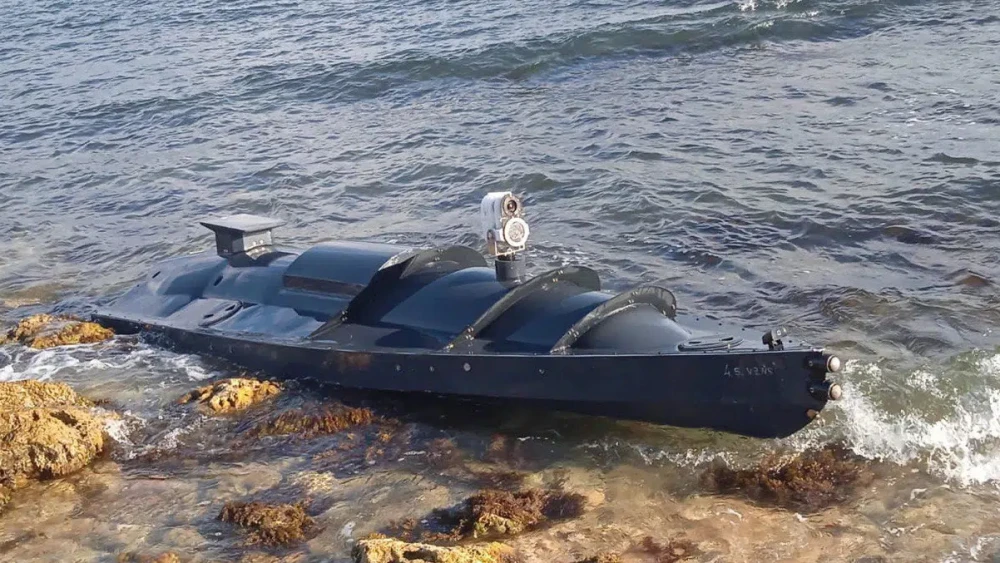
Naval warfare in Ukraine has recently returned to the center of international attention. In a scenario that has so far been defined by the Russian assault on Snake Island in the early stages of the invasion and the Ukrainian sinking of the cruiser “Moskva,” Russian sources reported that Ukrainian forces delivered a new blow. This time, unmanned surface and aerial vessels made a bold incursion into the naval port of Sevastopol.
Moscow authorities claimed that the unmanned capabilities involved in the attack were neutralized, although they also admitted to minor damage to a minesweeper and the port’s defense network. With limited information available about the overall damage from the battle, unlike the case of the “Moskva,” the extent of Ukrainian success this time remains unclear.
However, unverified video footage of the events suggests that the attack was much more significant than Russia claims. The footage indicates that the unmanned surface vessels reached their targets, including the current flagship of the Black Sea Fleet, the frigate “Admiral Makarov.” Russian social media circulated images of the damaged frigate at sea after the incursion. If confirmed, this would be a significant outcome.
The attack was carried out solely by drones, which in turn led analysts to speak of a revolution in naval warfare. In a technological triumph of David against Goliath, the small and affordable Ukrainian drones could seemingly destabilize the more powerful and capable Russian fleet. Is this really the case? Do recent events allow us to infer that technology is once again changing the character of naval warfare?
One must resist the temptation to conflate the revolutionary nature of what drones may or may not have achieved in this case. Tactically, the Ukrainian maritime feats were inventive and innovative.
Operationally, they were also bold. However, they did not amount to a revolution. Crucially, this technological approach obscures the more important observation that the events as we know them may indicate, rather, a shift in the Ukrainian operational approach in the maritime theater.
Unmanned surface vessels to attack a fleet, whether at sea or within the security of a naval base or in the shelter of a cove, have long been an established option in naval warfare. They conceptually rely on the use of fire ships from the age of sail. These were small unmanned vessels filled with explosives or fire, launched against surface combat ships to damage, incapacitate, or, in the most successful cases, sink them.
The Ukrainian unmanned surface vessels in this incursion add a contemporary expression to the tradition of fire ships from past eras. They are innovative solutions to an established practice. Indeed, in this sense, they speak to the growing competence of Ukrainian forces in integrating affordable military and non-military technology to exploit the asymmetry in capabilities with Russia, thereby achieving maximum effect. Tactically, these vessels serve as a powerful reminder of the crucial primacy of the people behind any piece of technology and their ability to envision military applications.
This brings us to the actual operational importance of the Sevastopol matter. Ukrainian forces conducted an offensive operation against the Black Sea Fleet, attacking the heart of where it felt most secure, its main base. This was a bold plan that, if not isolated, would indicate a shift to a more assertive form of operations in line with their broader push to regain control of lost territories, including Crimea.
Previously, especially in the case of the sinking of the cruiser “Moskva,” Ukrainian forces could only deny their opponent freedom of movement across the Black Sea. Now, they appear ready to actively seek out the enemy in locations of their choosing. Such a change will come with potential costs, where Ukrainian vessels—such as the tugs believed to have been involved in deploying the drones—will become targets for the Russians.
This, of course, leads to another conclusion. Technology affects the conduct of operations, but a good strategy is crucial to maximize its effectiveness, especially when one side possesses fewer capabilities. This latest Ukrainian success, once fully assessed, does not undermine or invalidate the value that modern and advanced capabilities have in shaping a maritime theater.
Undoubtedly, the Russian Navy in the Black Sea is today less secure, but it still retains the capacity to influence maritime dynamics in this theater. Naval warfare in the Black Sea is far from over and will be marked by more frequent attacks from both sides. Russian superiority in this theater is particularly important regarding the obstruction of grain shipping and access to and use of ports under Ukrainian control.
Therefore, despite the tempting pursuit of “silver bullet technologies” to advocate for revolutions in naval warfare, it is almost premature at this stage to assert that this incursion was a new event. Several pieces of the operational puzzle are missing. The lack of evidence regarding Russian passive and active measures and preparations is particularly relevant, especially since images of similar unmanned vessels stranded near Sevastopol had already circulated in September.
Instead, it seems that the Clausewitzian trinity of skill, luck, and audacity delivered a blow, a combination hardly unknown in naval history. However, and crucially, the incursion over Sevastopol may rather speak to where Ukraine is operationally headed, rather than where technology might take the future of naval warfare.
Alessio Patalano, King’s College London
November 8, 2022
*Reproduced with the author’s permission