COMMENTARY | The Diffuse Impact of Air Power in the Russia-Ukraine War
This article was translated automatically and may contain differences from the original. For reference, read the original.
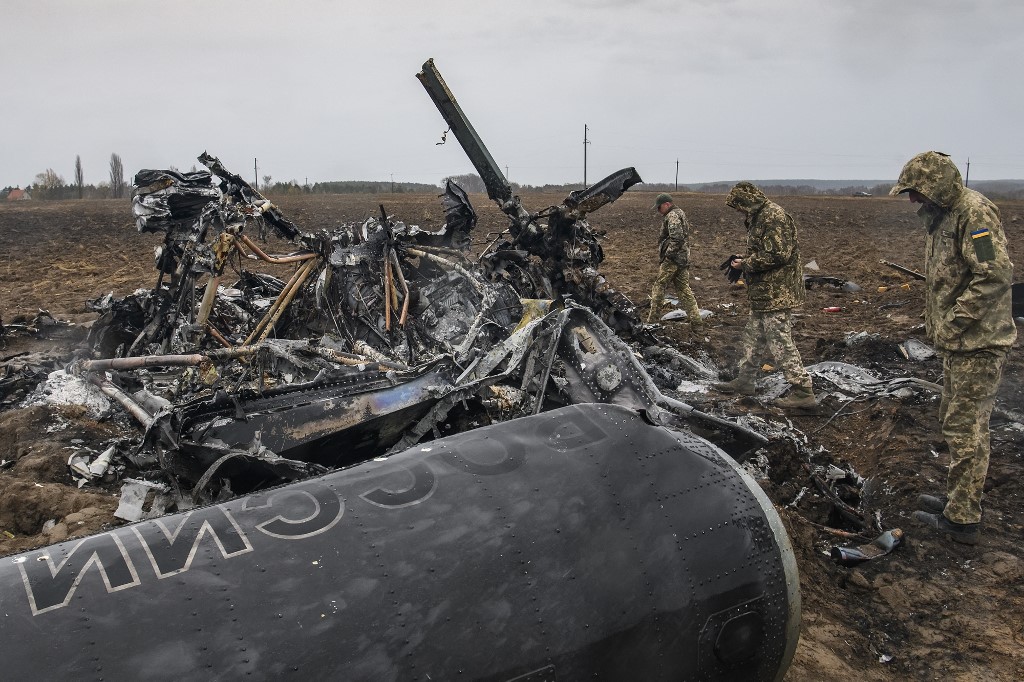
The war in Ukraine is approaching nine months in duration. While the conflict has unfolded across the five domains of operations—land, sea, air, space, and cyber—one aspect that has drawn significant attention is the limited role of air power, particularly from the Russian perspective.
In a recent document published by the Royal United Services Institute (RUSI) in London titled “The Russian Air War and Ukrainian Requirements for Air Defence” (available at: https://static.rusi.org/SR-Russian-Air-War-Ukraine-web-final.pdf), Justin Bronk, along with two other researchers, presents the findings of their work, which includes interviews with Ukrainian Air Force officials, members of the intelligence community, strategy centers, and field visits. Below are some insights to better understand what has transpired to date.
AIR OPERATIONS
The Russian offensive last February began with electronic operations, as well as missile strikes on positions of the Ukrainian air defense system. These attacks, combined with issues of integration and coordination of Kyiv’s defenses, granted the Russian Aerospace Forces (known as VKS, by its Russian acronym) the freedom to operate over Ukrainian territory, which was visible and effective during the initial hours. However, whether due to the ability of Ukrainian defense assets to recover and integrate, both air and ground-based, as well as apparent Russian limitations, the initial success did not sustain over time.
While Russian combat air patrols have been and continue to be very effective in detecting and shooting down Ukrainian aircraft approaching Russian positions, the means to execute attacks on ground targets have largely been neutralized. Both attack aircraft and helicopters, such as the Ka-52 and Mi-24, continue to conduct incursions; however, these are carried out practically without crossing the front line, from territory controlled by friendly forces, in order to avoid being shot down by air defense, particularly with the massive incorporation of portable surface-to-air missiles (MANPADS), such as the Stinger.
An undeniable fact is that, except for the first days of the war, Russian air power has not been able to achieve a degree of air superiority that would grant it some freedom of action since early March. This is especially notable considering the Russian superiority, both in numerical terms (combat aircraft, helicopters, missiles, radars, etc.) and in technological capability (more modern aircraft, longer-range ground and airborne detection systems; more modern and longer-range air-to-air, air-to-ground, and surface-to-air missiles). The lack of air superiority has significant repercussions in the war. On one hand, it prevents ground forces from receiving crucial support from aircraft, particularly to strike targets deep within Kyiv’s forces, beyond the reach of their artillery, without exposing their combat aircraft or helicopters to significantly high risks and losses. On the other hand, it means that the adversary’s air assets continue to have the capacity to operate and inflict damage on their own forces. Similarly, due to the need to strike strategic targets at long distances, the inability to employ aircraft forces Moscow to rely on its high-cost missile arsenal and, more recently, on attack unmanned aerial vehicles, such as the Iranian-origin Shahed-136 drones.
Among the factors described as reasons for the limited capacity of Russian air power, in addition to what has already been mentioned, is the training of combat pilots. As Justin Bronk notes in another article of his own,[1] a combat aircraft pilot from Western powers requires, at a minimum to maintain their capability, between 180 to 250 flight hours per year, in addition to access to modern simulators and having much more advanced cockpits than those of MiG or Sukhoi aircraft. In contrast, Russian pilots fly, at best, up to 120 hours a year, with the general average being around 100 hours a year or less. Furthermore, while these pilots have some experience in wartime situations, such as supporting Syria in its internal conflict, Russian training activities have focused on simpler actions, involving two or four aircraft, related to navigation and support for ground air defense training. Finally, Russian pilots do not have the opportunity to train with foreign counterparts in the same way that Western air forces do, such as in exercises like “Red Flag” or “Blue Flag.”
On the other hand, in the case of Ukraine’s air defense, despite the serious problems and wear faced in the initial hours of the war, the effectiveness of its defense has been centered on the ability to integrate and exploit various components, which are neither more numerous nor more modern than the Russian ones, but rather the opposite. The dispersion of their detection assets, as well as the firing positions of longer-range missiles (especially S-300 and SA-11 systems), has granted them greater survival possibilities, especially against Russian attacks with anti-radiation missiles. The aircraft used for air defense have been less effective against the Russians, who possess more and better detection platforms and longer-range missiles. It is worth noting the short-range air defense systems that the West has provided to Ukraine. The availability of these weapons, spread across many ground units, has severely limited the use of low-altitude attack tactics, both by aircraft and combat helicopters, particularly in areas with a high concentration of these systems.
Nevertheless, despite the success achieved in keeping the VKS out of their territory, Ukrainian air defense has experienced high wear and consumption of surface-to-air missiles in the last two months, in order to counter and attempt to shoot down the multiple Russian missile and UAV attacks. With the rate of missile consumption, as well as the need to operate while exposing their systems to Russian detection and interdiction, it is essential to maintain Western support to sustain operations, expressed both in the provision of missiles to replace consumption, longer-range weapons, radar-controlled anti-aircraft guns (to counter UAVs, with a lower operational cost than missiles), longer-range detection systems, as well as evaluating the delivery of combat aircraft. Failing to meet this task will likely mean that Ukraine’s defense will weaken, allowing Russia to impose air superiority that would grant advantages that, until now, were only seen at the beginning of the war and could be decisive in the development and conclusion of the conflict.
Regarding material losses, according to the report published by Stijn Mitzer (available at https://www.oryxspioenkop.com/2022/03/list-of-aircraft-losses-during-2022.html), the confirmed losses of Russian combat air material—likely higher—so far in the conflict can be summarized as follows: 62 combat aircraft (mainly configured for attacking surface targets), 67 helicopters of various types (mostly Ka-52 with 27 shot down), 4 attack UAVs (unmanned aerial vehicles) and 145 reconnaissance UAVs. For its part, Kyiv has lost at least 51 combat aircraft (mostly MiG-29 and Su-25), 22 helicopters (mostly transport), 17 attack UAVs, and 34 reconnaissance UAVs. While it is true that the confirmed losses are relatively similar in the case of combat aircraft, the availability of Russian material is immensely greater than what is available in the Ukrainian inventory, so attrition plays in favor of Moscow.
SOME CONSIDERATIONS
- Air power cannot be measured solely in terms of the number of aircraft, nor exclusively in how sophisticated they are. It must also incorporate efficient, reliable, and long-range weapon systems (missiles, guided bombs, electronic warfare means, etc.). Similarly, the detection capability from various platforms (ground-based, airborne, maritime-based) is an essential element. Likewise, air defense assets are an indispensable part of the equation. Finally, the most relevant factor is the value of the crews, in number and training, capable of forming an efficient air power that can sustain long-term operations.
- Pilot training is a decisive element, for which the necessary means must be available to allow effective flying, advanced simulators, as well as the opportunity to participate in exercises with other countries to gain experience and adequate training levels.
- The experiences of this and other conflicts demand the practice and training of various components, in order to improve procedures and avoid friendly fire, whether from air to ground or vice versa.
- Dominating the airspace remains one of the major tasks and priorities in modern military operations. To date, except for the initial hours of the war, Ukraine has prevented the VKS from achieving a superiority that would grant them freedom of action, limiting a force that on paper appeared very superior.
- The loss of material has been significant on both sides, with a greater impact for Kyiv, given the limitations in replenishing material and the stock available to each side. To put it in perspective, according to data from the “Military Balance 2018”, the 62 Russian combat aircraft and the 51 Ukrainian ones confirmed as lost are almost equivalent to the total combat assets of the Peruvian Air Force (68) and the Chilean Air Force (58), considering that all material is operational or available, which is hardly the case.
- The continuous Western material support, in relation to air defense assets, at this stage of the Russian-Ukrainian conflict, takes on superlative relevance. The high consumption of missiles required for defense against missile and drone attacks in recent weeks, as well as the wear inherent in nearly nine months of war, have created a critical condition for Ukraine. The currently efficient Ukrainian air defense has prevented Russian air power from imposing itself, which could change dramatically if support from friendly powers is not maintained, potentially altering the course of the conflict.
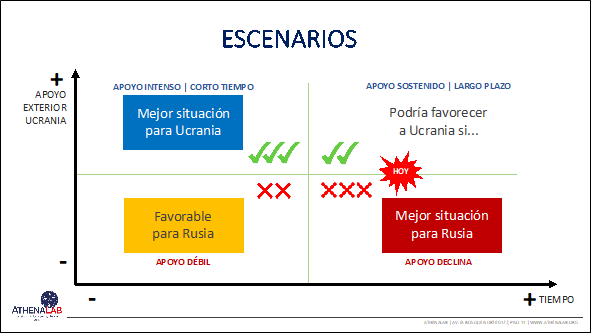
- Ultimately, the fate of the war and the probabilities of success for Ukraine or Russia depend significantly on two factors above all else: Timely and sustained Western support and time. If material and economic support diminishes or ceases, Ukrainian military capabilities will be strategically limited, lacking stocks to face a scenario of isolation. However, while Western sanctions impact the Russian military industry, whether due to the large available arsenal, the ability to evade sanctions, or the time required for these measures to have a deeper impact, Russia can sustain its war effort despite the significant wear it is experiencing. Western support is a matter of life or death for Kyiv.
- In contrast, if the determined support of some powers for Ukraine is maintained over time in the same manner, combined with the unwavering will to win that drives the Ukrainian people, Kyiv has options to improve its strategic position. However, if the provision of military material intensifies and includes other, more modern long-range weapon systems, even considering combat aircraft, the balance could decisively tilt in favor of the defenders, given the questioned Russian performance on the battlefield thus far in the war. Russia is aware of this and, among other considerations, seeks to wear down and weaken Western commitment to Ukraine’s war effort, taking advantage of the effects of winter on European households due to energy restrictions, and ultimately improving its position for favorable negotiations.
Marcelo Masalleras, AthenaLab Researcher
November 17, 2022
[1] Justin Bronk, “Developments in Russian Combat Air Spending and Likely Operational Implications”, in Pentti Forsström (ed.), “Russian Concept of War, Management and Use of Military Power” (Helsinki: Finnish National Defence University, 2022), 100-101.