KEYS | To Understand the Phenomenon of War
This article was translated automatically and may contain differences from the original. For reference, read the original.
In light of the current conflict between Russia and Ukraine, public opinion has been subjected to a series of comments regarding the war, its characteristics, evolution, nature, and character. In these interactions, concepts and notions are articulated that are not necessarily appropriate according to strategic studies. Below, we provide further information for your understanding and application.
What is War?
War is a confrontation of wills, through the use of armed violence to achieve political objectives. The Prussian military strategist Carl von Clausewitz defined it as: “the realm of uncertainty or friction” or “the continuum between politics and armed violence.” Alternatively, as described by British military historian Sir Michael Howard, “it is an act of force to compel an adversary to do our will.” The international relations theorist Hedley Bull argued that it is “organized violence carried out by forms of political organization,” clearly referring to states. Additionally, British historian John Keegan framed it as a cultural phenomenon, based on the premise of appealing to human nature, recalling what Thucydides expressed regarding the fact that this nature is always influenced by fear (phobos), interest (kerdos) and the desire for honor and glory (doxa), as factors generating conflict. Ultimately, war is essentially a political phenomenon, expressed through armed violence and possessing cultural, strategic, legal, economic, technological, geopolitical, and geostrategic dimensions, being a human expression that requires interdisciplinary, multidisciplinary, and transdisciplinary analysis.
When Does the Concept of Self-Defense Operate?
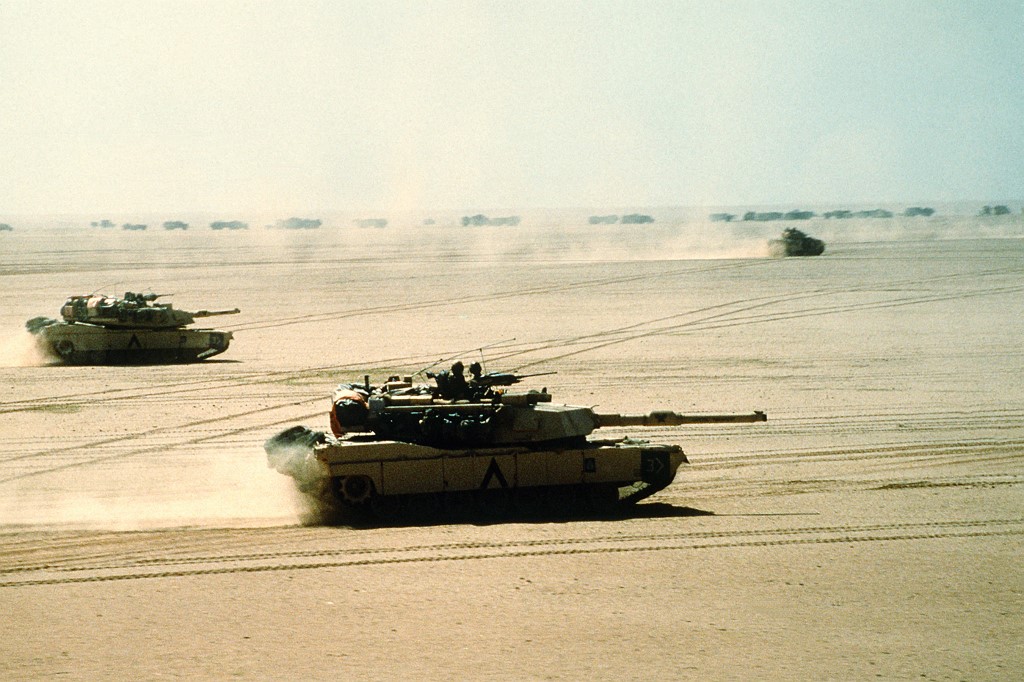
The United Nations Charter of 1945 does not use the word war in its content. It does refer to the use of force, which it prohibits as a threat or use, in Article 2, paragraph 4. It only exceptionally authorizes the use of force in Article 51, which enshrines the legitimate right to individual or collective defense when facing an “armed attack,” provided that the response of force adheres to three principles of international law: the necessity of confronting it, the proportionality of the response, and communication to the UN Security Council. Consequently, the concept of the inherent right of self-defense operates either individually or collectively. It will be individual when the state reacts to an “armed attack” and collective when the Security Council authorizes the formation of a coalition of countries for that purpose. An example of the first case is the aggression of Russia against Ukraine on February 24, 2022, a blatant violation of the territorial sovereignty of an independent state. In the second case, the aggression of Iraq against Kuwait in 1990 is recalled, which triggered the formation of a coalition led by the United States to expel Iraqi forces from that country. Traditionally, the legal interpretation of the concept had been applied to aggressions from one state to another. However, following the terrorist attacks against the United States in 2001, the Security Council classified those acts in New York and Washington as an armed attack, authorizing this country to use force against the Taliban regime in Afghanistan.
The key to the above is the existence of an armed attack, which can be defined as the unlawful use of armed force between states, to which the eventual reaction of the attacked state in exercising the right of self-defense is subordinated. For the purposes of the above, it is necessary to consider a use of force of certain intensity as such. For example, the fall of a missile on the territory of a sovereign state does not necessarily involve the qualification of an “armed attack” that requires the use of force, so the context and intent of that should be evaluated. This is in reference to the Russian-made S-300 missile fired by Ukraine’s air defense forces in response to Russian cruise missile attacks this month, which impacted Polish soil, resulting in two lost lives and which Polish authorities described as an “isolated incident.”
Does War Have a Nature and Character?
There is consensus that war, as a political, cultural, sociological, and legal phenomenon, among other factors, possesses a nature and character. Its nature relates to immutable aspects: the political purpose of its objective and the use of violence against another actor. Its essence can be cultural or human, as Keegan asserts. It could be added that, as part of its nature, it is the realm of uncertainty or the emergence of unforeseen events. At its core, it is a struggle of wills, hence moral force is a key element of this condition.
The character, on the other hand, is always evolving based on context, technology, relevant actors, or other factors, such as at the beginning of the 20th century, when the advent of aerial weaponry occurred, or at the end of the same century, when the spatial and cyberspace dimensions were introduced.
The words of Sir Michael Howard are more relevant than ever, as to understand the continuity and change of war, one must study its history. First, in its “breadth,” that is, how the phenomenon of war has developed over an extended period. Second, in its “depth,” for which one must study its campaigns in detail, seeking primary sources, as well as various theories and interdisciplinary approaches. Finally, it is necessary to understand its “context,” which can be social, cultural, economic, political, and psychological, among others, since the deep reasons for victory or defeat are often far removed from the battlefield. Military professionals tend to study war based on the type of threats, missions, the impact of technology, and lessons learned, through a deep understanding of military history. This is not because history necessarily repeats itself, but because it rhymes, as Mark Twain would say. Furthermore, Edward N. Luttwak asserts that military history is the only possible database for the study and understanding of war and, therefore, is the essence of military education.
When is a War Being Won or Lost?
War, being essentially a political phenomenon, must be evaluated based on the achievement of defined political objectives. One can be victorious on the battlefield and still lose the war, as demonstrated by the case of the Vietnam War (1965-1975). Hence, military forces must be prepared not only to combat and defeat potential enemies but also to translate the defined political objectives into military objectives that effectively signify the achievement and realization of those political objectives. Not every military victory is useful if it does not serve the achievement of political objectives. Additionally, it is unwise to be swayed by ideas that imply a departure from the political nature of war, through false promises of quick and cheap victories in terms of costs or about efficient and definitive solutions based on new and advanced technologies.
Consequently, war is won or lost based on the achievement, or lack thereof, of defined political objectives, which must additionally be oriented towards achieving or obtaining peace, as a result of the effective and efficient use of force, beyond mere and apparent military victory, as history demonstrates time and again. For example, one can cite the cases of the First Punic War (264 to 241 BC) or the First World War (1914-1918). In the first example, Carthage’s loss of the war later led to the Second Punic War and the rise of Hannibal, who challenged Rome’s power. In the second case, a victory with unjust treaties was one of the factors that led to the end of peace and the Second World War.
John Griffiths Spielman, Head of Studies at AthenaLab
November 23, 2022
Recommended Bibliography
- Carl von Clausewitz (2021). “On War.” Madrid: Ediciones Obelisco S.L.
- Hedley Bull (2005). “The Anarchical Society: A Study of Order in World Politics.” Madrid: Los Libros de la Catarata.
- Michael Howard (2011). “The Causes of War and Other Essays.” Madrid: Ministry of Defense of Spain.
- John Keegan (2014). “A History of War.” Madrid: Editorial Noema.
- Edward Luttwak (2005). “On War: The Strategy of Peace and War.” Madrid: Editorial Siglo XXI.