ANALYSIS | Basins and Borders: Projections of the ICJ Ruling on the Silala River
This article was translated automatically and may contain differences from the original. For reference, read the original.
INTRODUCTION
The ruling announced by the International Court of Justice (ICJ) in The Hague continues the trend of undermining Bolivia’s legal strategy to alter its border with Chile and the resources that exist there, disregarding what was agreed upon in the Treaty of Peace and Friendship of 1904. While in 2018 the court was emphatic in stating that Chile had no obligation to negotiate an outlet to the sea with its neighbor, due to the supposed expectations created by various dialogue instances over time, it also acknowledged the reality that the Silala is a course of “international water” and that “the parties agree that they have the right to equitable and reasonable use according to customary international law.”
It should not be forgotten that the idea of bringing Chile before the ICJ was suggested by veteran Peruvian diplomats, who thus saw the possibility of forming a simultaneous judicial front, given that Torre Tagle had built the case for the pending maritime delimitation for over 30 years. However, the strength of the arguments behind the claims of Lima and La Paz proved to be very different when considering the respective rulings.
Thus, nearly 10 years after Bolivia filed its first lawsuit in 2013, the country’s judicial maneuvers have proven to be fruitless. The lengthy judicial path initiated, in addition to being costly for that country due to payments to lawyers and law firms, must also be frustrating due to the expectations sown in the population by the governments of the Movement for Socialism led by Evo Morales (2006-2019) and today by Luis Arce (2020-present). As is well known, actions against Chile have been used internally as a unifying factor in the highland country on several occasions.
However, Bolivia’s diplomatic, political, and legal actions will not cease, although they may decrease in intensity, since the Constitution of the Plurinational State of Bolivia (2009) includes a permanent mandate for its leaders regarding the search for an outlet to the sea.
In its fourth chapter titled “Maritime Claim, Article 267,” it stipulates: “I. The Bolivian State declares its inalienable and imprescriptible right over the territory that grants it access to the Pacific Ocean and its maritime space,” and: “II. The effective solution to the maritime dispute through peaceful means and the full exercise of sovereignty over said territory constitute permanent and inalienable objectives of the Bolivian State”. This is not a minor detail, as it serves as a framework for any approach to Chile.
It is estimated that Bolivia’s attitude towards Chile, reflected in its judicial claims and other contingent and historical facts, may influence Chileans’ perception of their neighboring country, as demonstrated by the Third Foreign Policy and Security Survey by AthenaLab/IPSOS, released last May. When asked about Bolivia’s position regarding Chile, only 13% of the general population perceives it as a partner, 32% considers it neutral, and 36% sees it as a competitor, while 18% said they did not know or did not respond. In the expert panel, the values were 8%, 33%, 57%, and 3%, respectively.
Although he expressed support for an outlet to the sea for Bolivia when he was a deputy in 2018, as President of the Republic, Gabriel Boric has stated that sovereignty is not negotiable, in a message that reflects his positive change of opinion.
After learning the content of the ruling, President Boric stated that “the will of our country is, from now on, to continue working with the sister Republic of Bolivia, having resolved this matter, in a spirit of good neighborliness, collaboration, and integration.” Therefore, this must now occur “in all matters requiring cooperation between both states, deepening our ties and continuing the work that began during the previous government of President (Sebastián) Piñera, known as the Agenda of 12 Points,” he specified.
However, Bolivian Foreign Minister Rogelio Mayta offered a different interpretation of the ruling. In his view, it was established that “Chile has no acquired right to the totality of the Silala.”
One of the most urgent problems to resolve with Bolivia before considering any reopening of diplomatic relations, which have been broken by Bolivia’s decision since 1978, is the improvement of border control, assuming that borders always have two sides. It is essential to curb drug smuggling from Bolivia and the smuggling of stolen cars from Chile, as well as to regulate migratory flows. Working on common interests is a first step to restore trust, as attempting to advance by prioritizing irreconcilable positions has led to the current scenario. First, concrete gestures, then words, and only finally diplomatic relations.
HISTORICAL CONTEXT
The relations between Chile and Bolivia have been complex throughout history. The latest chapter in this series involves the Chilean claim and the Bolivian counterclaim regarding the use of the waters of the Silala River.
Chile and Bolivia settled their territorial issues through the “Treaty of Peace, Friendship, and Commerce” of 1904, following the end of the Pacific War (1879-1883). This legal framework established certain obligations for Chile (free transit through Chilean territory, construction of the Arica-La Paz railway, and other financial obligations), and in the case of Bolivia, it ceded and recognized Chile’s sovereignty over those territories west of the Andes Mountains, between the Loa River and the 23rd parallel south latitude, in perpetuity.
However, various Bolivian governments have turned to Chile or other instances to recover a potential sovereign access to the Pacific. In this trajectory, which has characterized and defined bilateral relations, in 1978 Bolivia unilaterally chose to break diplomatic relations with Chile, which have yet to be reestablished, despite Santiago’s manifest interest.
BORDER SITUATION
The Chilean-Bolivian border, as stated, was fixed and established by the Treaty of Peace and Friendship between Chile and Bolivia in 1904. Thus, Chile shares a border with the neighboring country from the northern tripoint between Chile, Peru, and Bolivia, to the southern tripoint between Chile, Bolivia, and Argentina. This length separates the Bolivian departments of La Paz, Oruro, and Potosí from the Chilean regions of Arica and Parinacota, Tarapacá, and Antofagasta across the Andes Mountains. The non-linear length is estimated at 850 km. Additionally, there are more than 100 crossings between both countries, of which no more than ten are formally controlled. This area, referred to as the border, establishes a binational interaction area in both directions that triggers cultural, social, economic, and, certainly, security processes on a permanent basis.
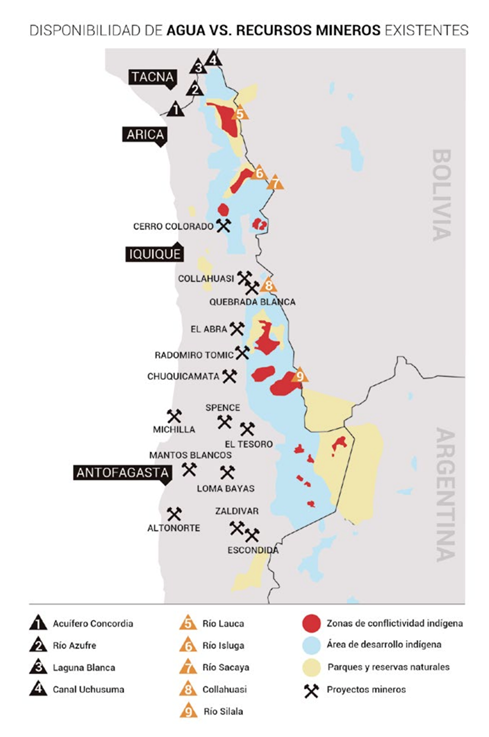
In terms of natural resources, the binational water flows with Bolivia are the most tension-filled aspect of bilateral relations in recent times. In general, the binational water resources have utilized the principle of “watershed delimitation” and have left in Chilean territory the rivers that flow towards the Pacific and those that flow towards Bolivia in its own territory, although there are exceptions to this rule. Without intending to document all the shared binational basins between Chile and Bolivia, we will mention the main ones, as shown in Figure No. 1 that accompanies this text: the Lauca River basin, the Isluga River basin, the Sacaya River basin, and the Silala River basin.
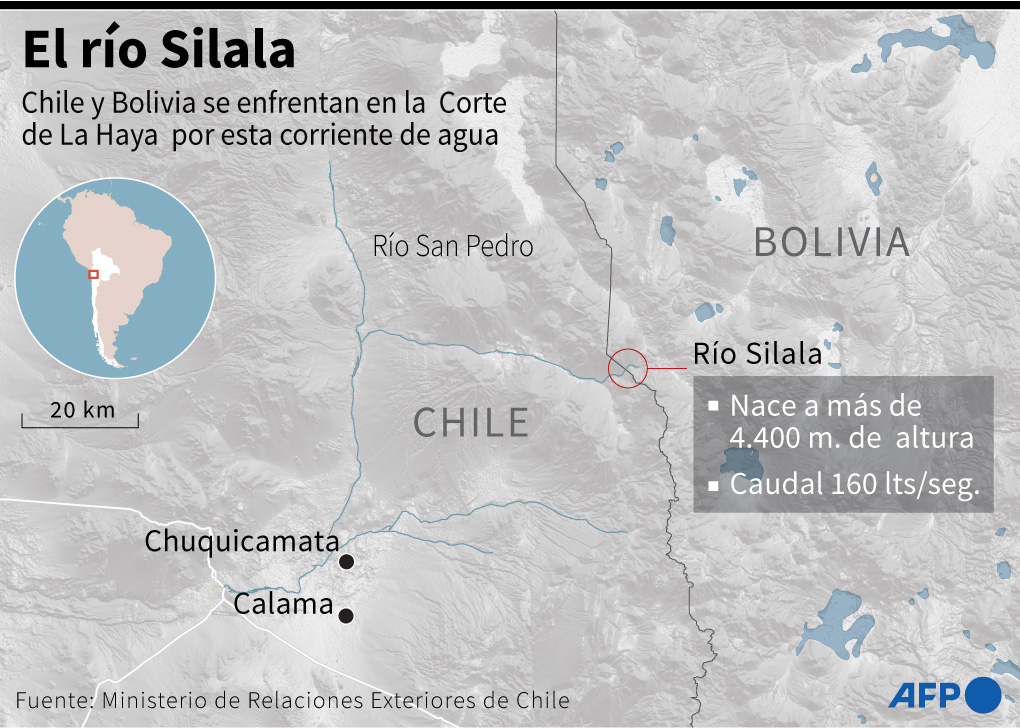
It is important to highlight that the totality of the binational watersheds has an approximate flow of 10,000 liters per second. Of this total, the Lauca River basin has a flow of 3,190 liters/second, while the Silala River, an international watercourse that originates in Bolivia and flows towards Chile by descending gradient, has a flow of about 170 liters/second.
RECENT MANEUVERS
In recent decades, Bolivia began to question the status of the Silala River as an international watercourse, demanding that Chile compensate La Paz for its historical exploitation. In this regard, in 2009 there was a draft agreement between both states to define the distribution of the water volume of the Silala River; however, La Paz withdrew from the process due to opposition from Potosí, a region that sought to demand payment for the use of the waters in the past.
By 2016, the government led by Evo Morales proposed the idea of an action before the ICJ, through which it would claim sovereign rights over 100% of the flow. In this scenario, in March of the same year, Chile preemptively filed a lawsuit, requesting: 1) that it declare the Silala River as an international watercourse; 2) that Chile has the right to reasonable and equitable use of its waters; 3) that its current use complies with such principles; and 4) that Bolivia adopt appropriate measures to prevent pollution of the Silala River and that this country notify Chile of measures that could contaminate the river’s course. The most relevant aspects, undoubtedly, are those related to the international status of the river and Chile’s legitimate right to use and benefit from it, thus no compensation to Bolivia would be warranted, either past or future.
THE RULING
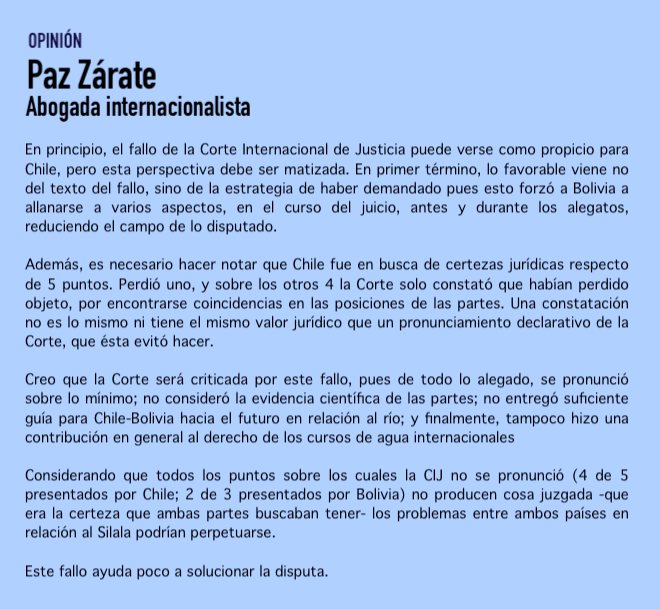
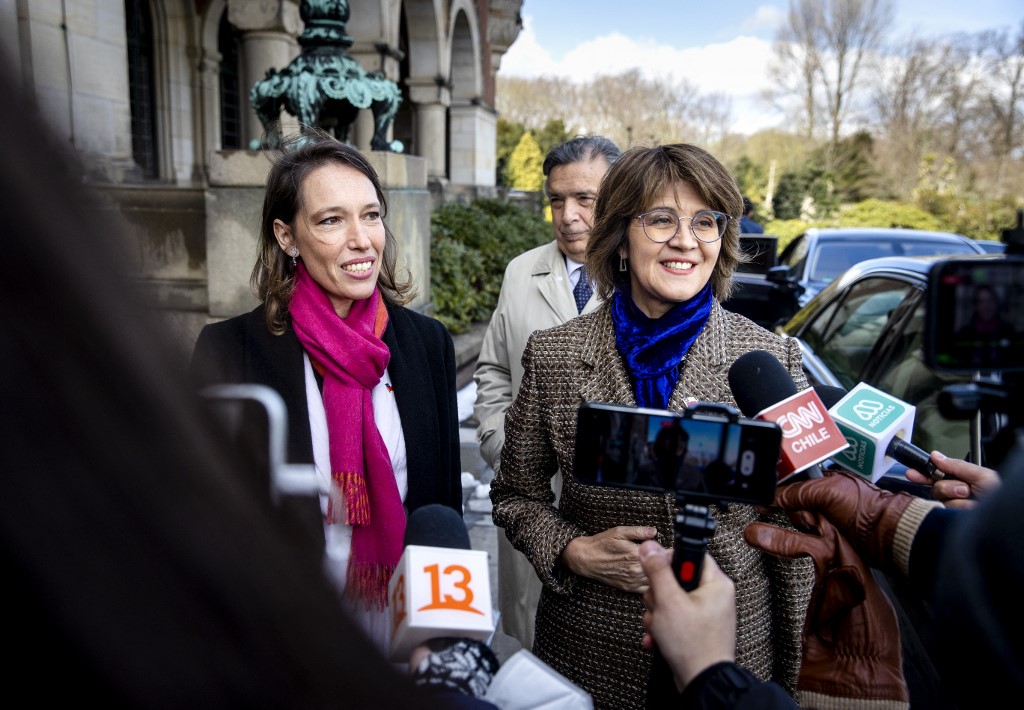
Finally, on Thursday, December 1, 2022, the ICJ ruled in favor of Chile regarding its main assertions, recognizing the international status of the Silala River, thus granting Chile the right to equitable and reasonable use of its waters, which is currently exercised in accordance with these principles, without any obligation to compensate Bolivia. Although the court decided not to address most of the demands of both states, considering that, either before or during the judicial process, Chile and Bolivia had smoothed their positions and reached agreement on many points.
CONCLUSIONS
- The ruling favored Chile in all relevant aspects, especially by recognizing the international status of the Silala River, granting Chile the right to reasonable and equitable use of its waters, which is currently exercised in accordance with these principles, thus no compensation to the Bolivian state is warranted in this regard.
- Bolivia suffers a significant and new setback, especially considering Evo Morales’ statements at the beginning of the process, where he claimed that Chile was appropriating the waters of the river in question and that it would be made to pay for the alleged accumulated debt.
- It is noteworthy that the ICJ did not rule on most of the points demanded, considering that there were no longer differences or that an agreement had been reached between the parties. In summary, the dispute was largely resolved during the trial process, leading to the estimation that Chile’s position was solid and, on the other hand, that there is always room for a diplomatic solution to such situations.
- However, the success achieved, which closes another chapter of controversies with La Paz, is not expected to improve bilateral relations, and questioning Chile will continue to be a factor used in Bolivian internal politics, so new conflicts cannot be ruled out, particularly those related to access to the sea, an aspect established in the same Bolivian political constitution.
- The need for Chile to remain subscribed to the Pact of Bogotá for the peaceful resolution of disputes and recognizing the jurisdiction of the ICJ must be debated, as, although the rulings have been relatively favorable—especially against Bolivia—it has created a conducive scenario for facing Chile with artificially fabricated cases, against which, at best, Chile remains the same, with potential possibilities of losing something, especially if the ICJ acts imaginatively, as was the case against Peru.
- It is important for the Ministry of Foreign Affairs to conduct an assessment of all potential border conflicts, so that it can proactively strengthen Chile’s sovereignty and deactivate any future maneuvers by neighboring countries. The main objective of the Foreign Ministry is to promote and defend national interests.
AthenaLab Team
December 1, 2022