COMMENTARY | From Canada to South Korea: New Strategies for the Indo-Pacific
This article was translated automatically and may contain differences from the original. For reference, read the original.
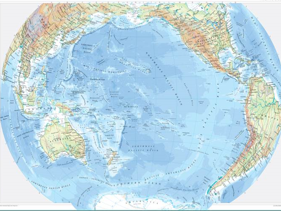
As 2022 was drawing to a close, two countries unveiled their long-anticipated strategies for the Indo-Pacific, responding to a more challenging geopolitical landscape. Following the path of an increasing number of powers, nations, and blocs that have adopted this concept, Canada and South Korea issued their respective documents, reflecting their positioning towards a region that is critical to their interests, as the future is at stake there.
In addition to validating their natural geographic projections, highlighting their status as open democracies, and committing to international institutions, both countries place significant emphasis on the importance of the Indo-Pacific’s “stability” and the loss of this stability due to challenges to international norms from unilateral actions.
However, while Ottawa is very emphatic in holding China accountable, Seoul maintains a great deal of caution towards Beijing, which can be explained not only by its historical relationship but also by the need to have an influential interlocutor with the ever-dangerous North Korea. Thus, differences and nuances emerge.
“A Pacific country”
Canada’s strategy[1] considers that the growing influence of the Indo-Pacific represents a “global” generational change, requiring a comprehensive response to secure national interests in this new context.
Crucial to this approach is the stance towards China, described as “a global disruptive power,” which seeks to shape a more permissive international order aligned with its objectives and values; particularly through unilateral actions in the South China Sea or economic coercion practices.
For this reason, Canada warns that it will not hesitate to confront China when discrepancies arise on issues such as respect for human rights or interference in internal politics, but it will cooperate when there are commonalities; for example, in combating climate change.
Among the measures to be adopted for the defense of its interests, Ottawa aims to strengthen its existing alliances with countries like the United States and deepen relations with Australia, Japan, India, and South Korea, among others. The document emphasizes the role of shared values among liberal democracies and the need to enhance the resilience of supply chains among them.
In Canada’s vision of the Indo-Pacific, there is no mention of Latin American countries on the Pacific coast, aside from the indirect reference to those who are members of APEC or the TPP. Interestingly, Chile is mentioned by name when highlighting the Digital Economy Agreement, also signed by Singapore and New Zealand.
The important thing is that Canada is adopting a more assertive stance, following the lead of its closest partners, largely due to the deterioration of its relationship with Xi Jinping’s China; certainly, this will increase its military and diplomatic presence in the region. As an open country, and here lie the opportunities, there is a clear intention to seek new partners, where relations could be deepened; especially in areas such as maritime affairs and the exploitation of key minerals for the energy transition, such as lithium.
“Global pivot state”
South Korea’s strategy[2], on the other hand, embraces the concepts of “free” and “open,” both already incorporated in most such documents, but adds the adjective “peaceful,” something understandable for a country living with a threatening neighbor.
In the case of Seoul, this represents a true “Copernican turn,” as this country always tries to maintain a delicate balance in its relations with the United States—essential for its defense—and with China—its main trading partner—key to keeping Kim Jong-un in check.
Although the document warns of a loss of stability, an increase in security uncertainty, and a democratic backslide in the region, it does not point to anyone in particular as responsible, as other countries have done. In fact, China is considered a “key partner,” with which a “more mature relationship” is expected, based on mutual interests and benefits, and respect for international norms and rules.
Thus, Beijing has not openly criticized Seoul for its new positioning, although the United States did celebrate the publication of this document. The mere act of stating “Indo-Pacific” today is synonymous with adherence to international behavioral rules, economic openness, and, at best, a democratic life. Furthermore, the strategy’s development was announced during President Joe Biden’s visit, a gesture that is more than symbolic.
What seems to have changed in South Korea’s calculations is Beijing’s more assertive attitude in the South China Sea—where it has occupied islands and reefs in dispute with its neighbors—and the fourth crisis in the Taiwan Strait. Should these conflicts erupt, commercial maritime and air routes would be seriously compromised; especially for an exporting power of industrial goods and an importing power of energy. Additionally, global disruptions in supply chains due to COVID-19 and the war between Russia and Ukraine have added another layer of uncertainty.
As lines of effort, Seoul proposes to increase trilateral cooperation with the United States and Japan, which is very logical, but also aims to overcome the traditional distrust with Tokyo arising from a traumatic history of occupation. There is also a key commitment to deepen its presence in Southeast Asia and with like-minded nations; that is, those that share common interests and values. Throughout the text, unilateral changes to the status quo through force are rejected.
The most novel idea is to take charge of the new “strategic height” of South Korea and what the world expects from it. Now self-defined as a “global pivot state,” this country declares its willingness to use all kinds of tools to enhance its international positioning, from its technology for manufacturing nuclear reactors (essential for rapid decarbonization) to K-pop music and television series.
Finally, there is an explicit reference to Latin America, a region described as a major partner where friendly relations exist. Chile is mentioned by name, in its capacity as a member of the Pacific Alliance.
Conclusions
Canada and South Korea join the long list of countries—such as Australia, New Zealand, India, Indonesia, Japan, the United Kingdom, and the 27 members of the European Union (led by France)—that have adopted the concept of the Indo-Pacific, which is both a place defined by the confluence of two oceans and a vision where prosperity arises from trade openness and adherence to international behavioral codes.
The updating of Seoul’s and Canada’s positions speaks fundamentally to a more challenging geopolitical landscape, where both countries feel compelled to design new pathways and align resources to ensure their prosperity, which requires making decisions about partners and rivals.
It is increasingly evident that, with the notable exception of Japan and France, countries adopting the concept of the Indo-Pacific do not view Latin American nations with Pacific coastlines as part of the broader strategic framework. For this reason, states like Chile will need to demonstrate that they indeed are, in that their prosperity depends on the stability of the region. One way to start is to move beyond the outdated concept of Asia-Pacific, replace it, and from there design a strategy of their own. There are already plenty of models from like-minded countries, both in interests and values.
Juan Pablo Toro, Executive Director of AthenaLab
January 6, 2023
[1] Government of Canada (2022), Canada’s Indo-Pacific Strategy. Available at: https://www.international.gc.ca/transparency-transparence/indo-pacific-indo-pacifique/index.aspx?lang=eng
[2] Government of the Republic of Korea (2022), “Strategy for a Free, Peaceful and Prosperous Indo-Pacific Region.” Available at: https://www.mofa.go.kr/eng/brd/m_5676/view.do?seq=322133