ANALYSIS | Notes on Finland's Accession to NATO
This article was translated automatically and may contain differences from the original. For reference, read the original.
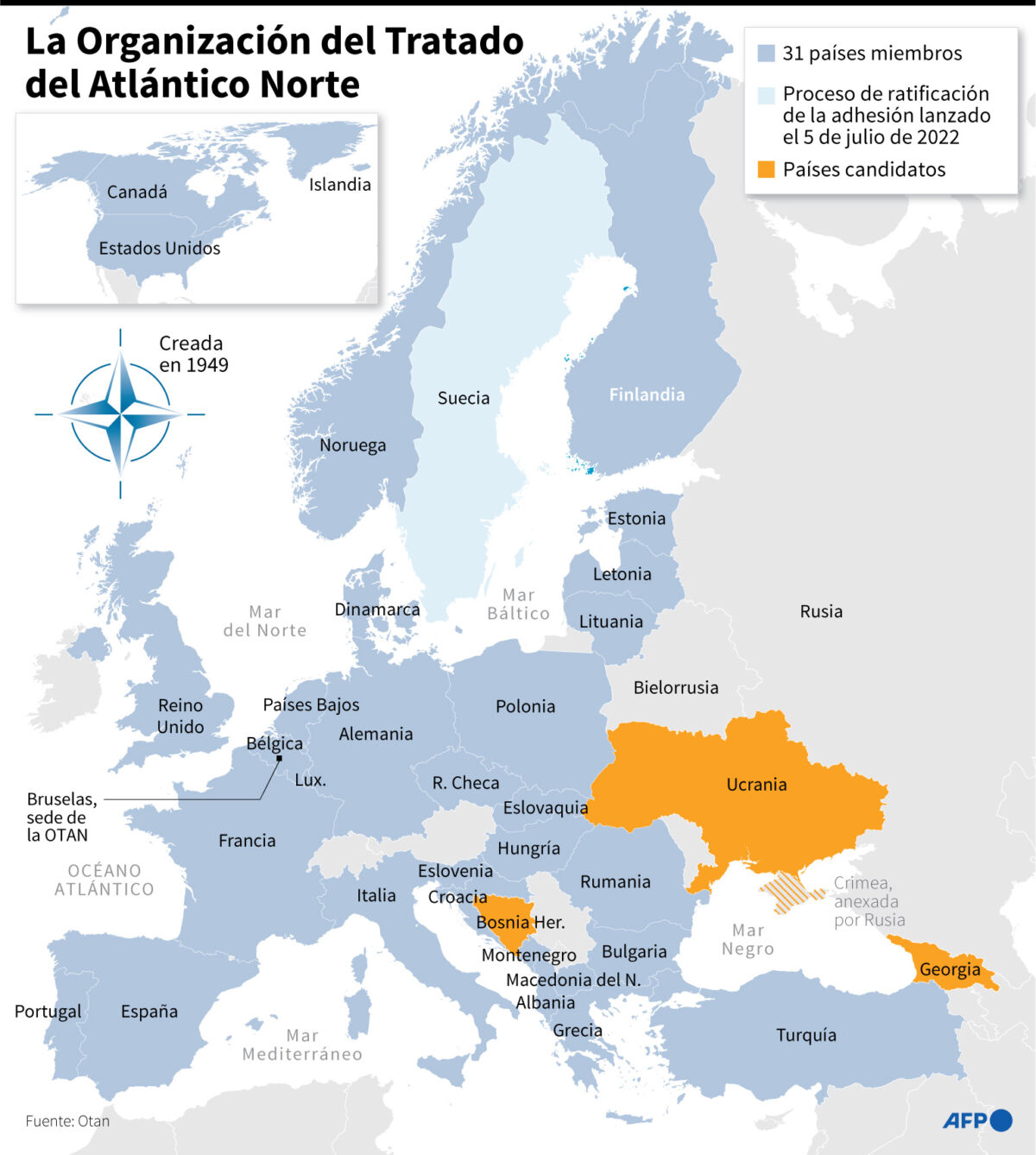
Just as the sniper Simo Häyhä did during World War II, Finland has taken a direct shot at Russia’s security calculations by joining the North Atlantic Treaty Organization (NATO) today, the largest military alliance in the world.
The decision, far from easy, is a consequence of the shock caused by the illegal and unprovoked aggression of Vladimir Putin’s regime against Ukraine and the conviction that the country’s security needed to be enhanced in the face of a more dangerous neighbor.
Undoubtedly, this accession is a milestone for Finland, likely the most significant since its entry into the European Union in 1995, and also for regional security as a whole. Below are some consequences of what has occurred.
End of ‘Finlandization’: During World War II, the Finns fiercely resisted Soviet advances, as evidenced by Häyhä’s actions, who is credited with the deaths of 500 Russian soldiers. However, lasting peace only came in 1948, when, through a treaty, Helsinki agreed not to integrate into Western military structures, and Moscow committed to respecting its neighbor’s borders. This policy of neutrality gave rise to the concept of ‘Finlandization’ to describe the behavior of countries that did not seek to take sides during the Cold War. With Finland’s accession to NATO, the term has become a thing of the past.
Extended Borders. If Russia aimed to prevent this neighboring country from joining NATO by invading Ukraine, it has now expanded its border with the Atlantic Alliance by 1,340 kilometers due to Finland’s accession, effectively doubling the current length. This only reinforces Moscow’s belief that the West has been tightening its strategic encirclement since the end of the Cold War, through successive NATO expansions that included Baltic and Eastern European countries that were previously within the Soviet sphere. Russia has announced that it will strengthen its northwest flank, although most of the troops stationed there have been sent to Ukraine due to the war.
NATO Lake. The Baltic Sea has practically become a ‘lake’ of the Atlantic Alliance, with Finland and Estonia controlling the access points to and from St. Petersburg. The Finnish Armed Forces, while not very numerous, possess significant firepower with 100 Leopard 2 tanks, over 60 F-18 fighters, and four missile boats[1], all operated by personnel highly trained in cold climates and who, in fact, were already interacting with their NATO counterparts. Unlike many European partners, the Finns never significantly reduced military spending after the dissolution of the USSR.
Setback for Putin. No one knows for whom he works. It will be difficult for Putin to explain how he has managed to revitalize NATO, which French President Emmanuel Macron diagnosed as having ‘brain death’ in 2019. Now, with Russia transformed into a present and real threat, the Atlantic Alliance expands and strengthens by having a clear purpose: to contain Russia. Other theaters, such as the Arctic, will greatly benefit from the inclusion of Nordic countries.
Next up: Sweden. Along with Finland, the idea was for Sweden to join NATO, but its membership is stalled due to Turkey’s refusal, which demands the extradition of militants from the Kurdistan Workers’ Party, who are granted refuge but whom Ankara considers terrorists. The pressure from NATO leaders for Stockholm to join the club will continue on the Turks, as Sweden also has a very powerful military industry that produces fighters, submarines, patrol boats, armored vehicles, and anti-tank missiles, among other equipment.
AthenaLab Team
April 4, 2023
[1] IISS (2022). The Military Balance.