COMMENTARY | Naín-Retamal Law and Its Impact on Public Order Control
This article was translated automatically and may contain differences from the original. For reference, read the original.
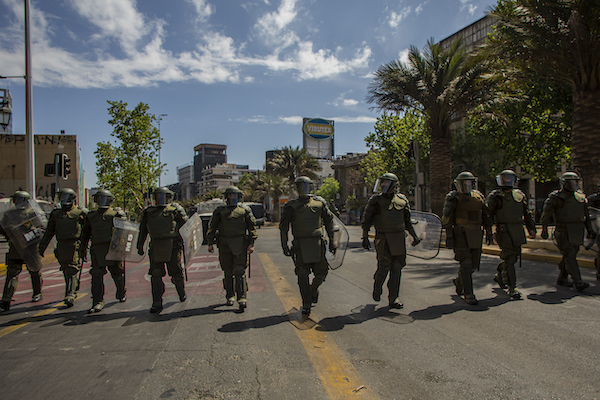
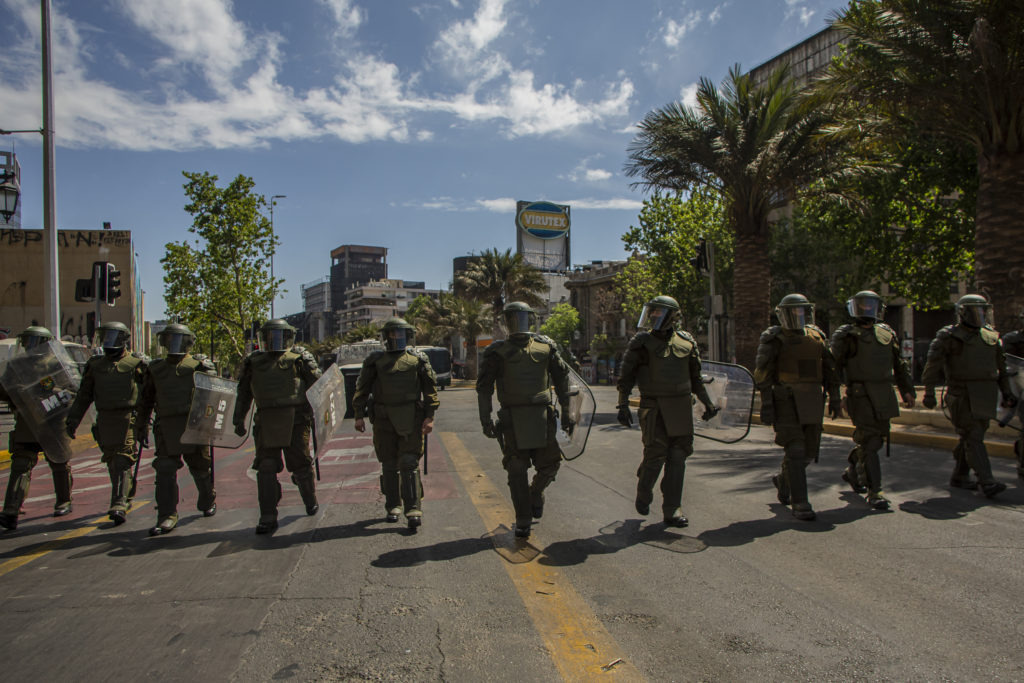
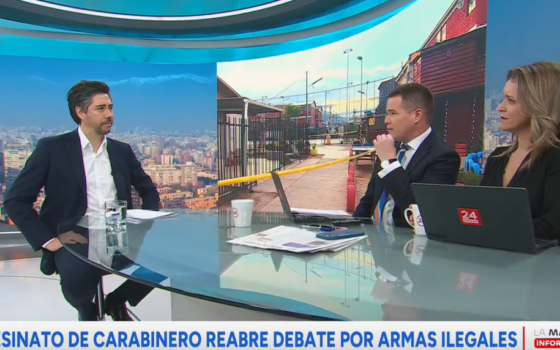
Since its establishment, Carabineros de Chile has recorded 1,233 martyrs, recently reaching the unfortunate record of three officer deaths in 23 days. This occurs within the context of legislative discussions on various security-related bills; one of these is Law 21.560, published on April 10 in the Official Gazette and known as the Naín-Retamal Law.
Although the discussion in the Senate was delayed after its approval in the Chamber of Deputies, and a sector of the ruling party expressed its intention to appeal to the Constitutional Court, the death of First Corporal Daniel Palma, which occurred during an identity check in downtown Santiago, marked a national turning point that expedited the promulgation and entry into force of this law.
Two key aspects of the new law relate to the increase in penalties for those who assault or kill police officers or members of the Armed Forces while performing public order duties, and the presumption of legitimate defense as a cause for exemption from criminal responsibility, known as privileged legitimate defense.
In the case of the Armed Forces, the law applies when military personnel are performing their duty
“in the context of public order safeguarding functions, such as those exercised during states of constitutional exception, in protection of critical infrastructure, safeguarding borders, and police functions, when applicable or when they are performing their supervisory duties.”
Regarding assaults on police or military personnel, the regulation states that when crimes are committed against an officer due to their position or in the course of their duties, the applicable penalty ranges from minor imprisonment at its minimum degree[1] to major imprisonment at its medium to maximum degrees[2], depending on the severity of the injuries. In the event of killing an officer, penalties range from maximum major imprisonment to qualified life imprisonment[3]. If the death occurs under the following circumstances, the penalty will be qualified life imprisonment:
- If committed for payment, reward, or promise, or any other type of benefit for oneself or a third party.
- If executed with the assistance of armed individuals or persons who ensure or provide impunity.
- If the accused acts with their face covered to conceal their identity.
Regarding privileged legitimate defense, this was precisely the point that generated the most political debate. In this regard, the law states:
“The police officer who, in the exercise of their duties or on the occasion thereof, uses their service weapon, less-lethal weaponry, or non-lethal elements to repel violence or overcome resistance against authority, shall not be removed from their duties nor have their remuneration affected, until the respective administrative investigation concludes.”
This has led some sectors to argue that this could lead to abuse of force and a lack of respect for human rights, but the law itself can counter this, as it states:
“The public employee who, in violation of the respective regulations, acts abusively in their position or who, in the exercise of their duties, applies, orders, or consents to the application of unlawful coercion or other cruel, inhuman, or degrading treatment that does not reach the severity to constitute torture, shall be punished with penalties of minor imprisonment at its medium to maximum degrees and the corresponding accessory penalty. The same sanction shall be imposed on the public employee who, knowing of the occurrence of these behaviors, does not prevent or cease the application of coercion or other treatments, having the necessary authority or power to do so and being in a position to do so.
If the behavior described in the previous paragraph is committed against a minor or a person in a vulnerable situation due to disability, illness, or old age, the penalty shall be increased by one degree.”
Additionally, the law includes a series of provisions related to ensuring the training of personnel who will use force, as well as the authority to conduct preventive controls and accessory penalties[4] of expulsion for any foreigner who assaults or kills police or military personnel. Furthermore, this regulation provides more protective tools by incorporating conduct classified as attacks in the Arms Law, such as throwing corrosive substances, Molotov cocktails, or similar items, while also exempting state agents who drive vehicles used in a police pursuit from liability.
Reflections and Considerations
In the context of the security crisis in Chile, this new law directly addresses the problem of protecting police and Armed Forces personnel in the performance of their duties, aligning institutional responsibilities with the necessary powers for the execution of their work. This is particularly relevant after episodes like the one that occurred at the Pío Nono bridge, where, without waiting for an investigation, a police officer was accused of attempted homicide, an accusation that was unfounded after the analysis of images confirmed that the officer was acting within the scope of their duties.
While the newly published law fulfills principles and mandates committed to the international community in the “Code of Conduct for Law Enforcement Officials”[5], adopted on December 17, 1979, by the UN General Assembly through Resolution 34/169 and reinforced at the Eighth United Nations Congress on the Prevention of Crime and the Treatment of Offenders[6], it is important to mention that its provisions add categories of protection not only to those considered police under constitutional organic laws but also to National Defense officials while they are performing public order duties in the context of a state of exception[7].
However, this regulation is better known for the procedural presumptions it incorporates into organic laws; first, it addresses a problem regarding due process[8] that affected officials involved in the use of their service weapon, as they were separated from the institution and stripped of their salary and benefits while the administrative sanctioning investigation was ongoing, which affected the constitutional and procedural guarantee of the principle of culpability and the presumption of innocence. This is because, before their responsibility was effectively determined, measures were already taken that affected those guarantees.
In addition to regulating the above, no other restrictive precautionary measures would be applied to the official enforcing order until evidence arises proving the existence of a crime.
Another profound modification relates to the hypothesis of privileged legitimate defense. In this regard, the official exercising their powers of order and security, repelling or preventing an aggression that may affect their life or that of a third party, will have the procedural status of victim or witness, unless their criminal participation is proven. In this way, it is presumed that all requirements for legitimate defense as a cause for exemption from criminal responsibility have been met.
This point is especially relevant, particularly in a context of institutional weakening that has its most compelling antecedents in the social outbreak of 2019, where a political narrative gradually undermined security and defense institutions, especially Carabineros de Chile. Thus, a significant part of the debate during the legislative process sought to strengthen political support for the Carabineros institution, which currently enjoys one of the highest levels of citizen approval, at 79%, according to the latest CADEM survey[9].
Along with the clarification regarding privileged legitimate defense, it is important to mention that the law establishes that this applies as long as there is no criminal participation, and specifies that those who violate this will be sanctioned. Thus, the arguments raised about the protection of human rights and the abuse of force would not be valid, as legitimate defense must still be proven. The difference lies in the status of the police officer during the investigation. Previously, their guilt was assumed; now, their innocence is presumed. This is a basic condition in any democracy to protect the rule of law.
In this sense, the amendment of Article 150 D of the Penal Code is relevant, which imposes a serious penalty of minor imprisonment at its medium to maximum degrees and the corresponding accessory penalty on officials who abuse the norm and those who are aware of such abuse and do not prevent it, with an additional degree of penalty if the abuse is directed against a person considered vulnerable. This is a decisive response to sectors that have criticized the law, indicating that it would lead to abuses, as the penalties are quite clear and severe.
Another noteworthy aspect is that in various parts of its provisions, the phrase “(the official) who is exercising their functions” is replaced with the following: “by reason of their position or on the occasion of the exercise of their functions.” This may be relevant to protect officials who act due to their position, outside of a specific mission or instruction; for example, those who are off-duty with their service weapon.
All these measures do not repeal or affect in any way the penalties that the law has already determined regarding personal and state responsibility for the abuse of rights and guarantees by its agents, both at the administrative level and the criminal or civil penalties. However, it is a law that will facilitate police action, which has been significantly impacted by the criminal intensity present in our society.
The text strengthens the role of the State in guaranteeing order and security, adhering to principles of international law, with the legitimate monopoly on the use of force that remains limited by fundamental guarantees and human rights, which doctrinally and legally is not synonymous with violence.
With this text, harsher penalties are imposed, and the integrity and property of law enforcement agents are protected. Additionally, regarding legitimate defense or other exemptions from criminal responsibility, these tools were already inferred from existing laws; therefore, this text serves to clarify and standardize a guiding criterion for judges, prosecutors, and even the hierarchical superior of the official, who in criminal or administrative matters had practically abandoned the presumption of innocence and due process by advancing necessary measures to apply with culpability. Furthermore, this law highlights a deeply political issue and also a social valuation of these norms, which for now will have a more limited and favorable interpretation and application for the official to effectively fulfill their duty.
In terms of public order, the regulation also reflects the sentiment of the population regarding an institution that is a fundamental pillar for the State and that, beyond the discussion about its modernization, has regained the perception of its social value for security, development, and well-being. The challenge now lies with the Judiciary, which must apply the laws and sanction those responsible.
Finally, the law grants legal powers to the Order and Security Forces, extendable to the Armed Forces, when they are fulfilling internal security missions, aligning the responsibilities conferred by the State with the corresponding powers. This aims to strengthen the already weakened rule of law, without which it is not possible to provide an adequate level of security to citizens, which is fundamentally a political responsibility.
Notwithstanding all the above, the recent bill on rules for the use of force largely nullifies what has been described here, given its content and the manner in which it is drafted. What was advanced with the recently promulgated law is regressed with this new initiative, which was supposed to be complementary. It appears more as a political effect of “stalemate” than a genuine interest in supporting the function of the order and security forces. In simple terms, it is estimated that for a police officer or soldier, their actions in controlling public order are mandated by the corresponding authorities (as applicable, the judiciary, public ministry, or political authority in charge of public order for the police or the President of the Republic for the Armed Forces). As they are mandated, it is the responsibility of the mandator who orders the use of the legitimate force of the State to create rules that are genuinely enabling for the performance of their function. Exemptions from responsibility are a sign of the weak political will that fundamentally exists to confront crime and disorder.
Pilar Lizana
Researcher at AthenaLab
Constanza Araos
Research Assistant at AthenaLab
APRIL 12, 2023
[1] Minor imprisonment at its minimum degree ranges from 61 to 301 days.
[2] Major imprisonment at its medium degree ranges from 10 years and one day to 15 years, while at its maximum degree, from 15 to 20 years.
[3] Qualified life imprisonment corresponds to life imprisonment, with the possibility of accessing parole after serving 40 years in prison.
[4] An accessory penalty is understood as one that is imposed together with a principal penalty.
[5] United Nations, “Code of Conduct for Law Enforcement Officials.” Available at: https://www.ohchr.org/en/instruments-mechanisms/instruments/code-conduct-law-enforcement-officials
[6] United Nations, “Report of the Eighth United Nations Congress on the Prevention of Crime and the Treatment of Offenders,” Havana, 1990. Available at: https://www.unodc.org/documents/congress/Previous_Congresses/8th_Congress_1990/028_ACONF.144.28.Rev.1_Report_Eighth_United_Nations_Congress_on_the_Prevention_of_Crime_and_the_Treatment_of_Offenders_S.pdf
[7] It should be noted that public order functions can be delegated to other officials, as indicated in the Constitution and Laws, such as municipal guards, for example, during states of constitutional exception. For more information, see the ruling of the Comptroller General of the Republic No. 9.080. Date: May 14, 2020. Available at:
[8] Due process corresponds to a constitutionally protected guarantee in Article 19, numeral 3, and has been a relevant institution as a minimum fundamental right within any judicial or administrative procedure.
[9] CADEM, “Public Plaza Survey,” study 482, first week of April. Available at: https://cadem.cl/wp-content/uploads/2023/04/Track-PP-482-Abril-S1-VF.pdf