ANALYSIS | A review of the legislative "fast track" in public security
This article was translated automatically and may contain differences from the original. For reference, read the original.
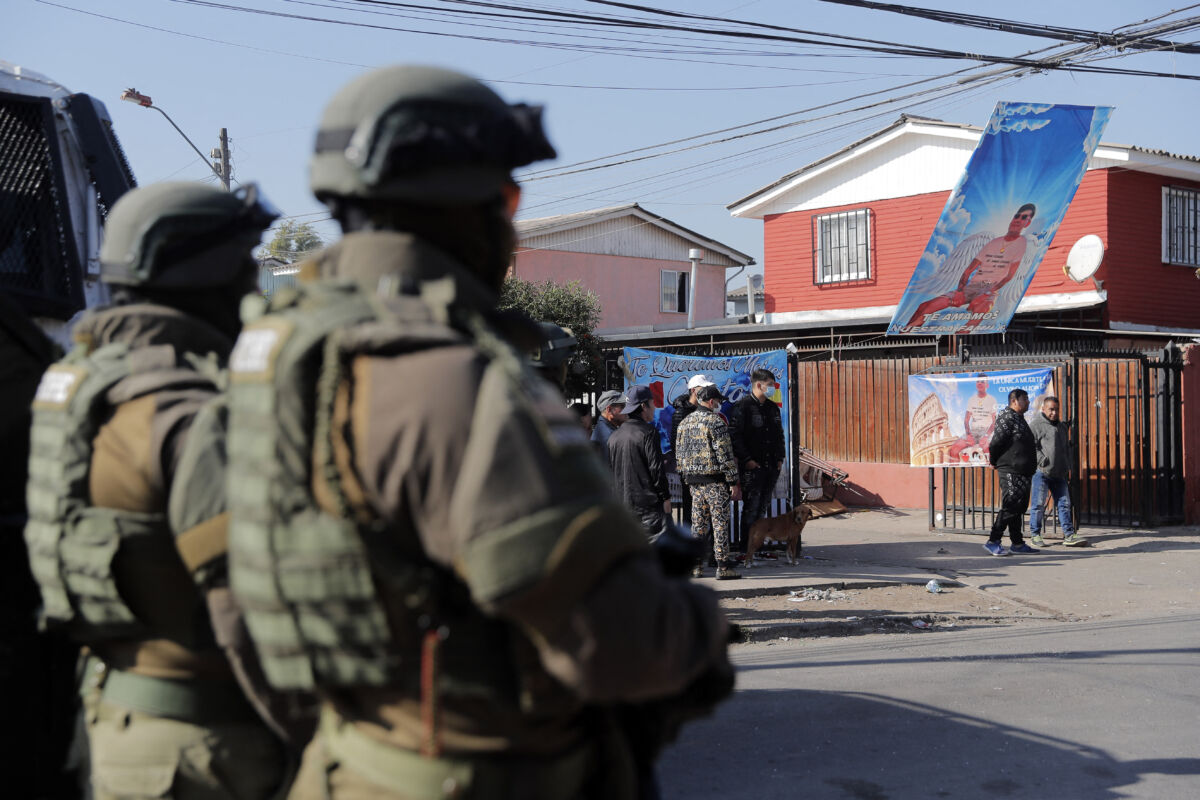
Photo: France Presse
The government of President Gabriel Boric proposed a “fast track” legislative process with 31 bills (PDL) to be dispatched with varying urgency. Some within 75 days, others within 150 days, and the last group by the end of the year. This prioritization responds to a security context marked by an increase in homicides and a series of shootings in various areas of the country. These projects are an effort to respond to and act against the threat of organized crime. The more than thirty projects can be grouped into the following categories:
| Development of institutions (5) | Framework Law on cybersecurity and critical information infrastructure Creates the Ministry of Public Security Strengthens and modernizes the State Intelligence System Creates Access to Justice Service and Victim Advocacy Creates a supraterritorial prosecutor’s office and makes other adjustments for greater effectiveness in criminal prosecution |
| Pursuit of assets of illicit origin and effects of crime (6) | Includes the entry or extraction of money from the national territory in the crime of smuggling Economic crimes law, which modifies various legal bodies to expand the criminal liability of legal entities, and regulates the exercise of criminal action regarding crimes against the socioeconomic order PDL to be presented by the Executive that establishes the obligation to initiate activities for individuals operating in foreign trade PDL to be presented by the Executive on financial intelligence to pursue crime, specialized capabilities of the SII and Customs Agencies, lifting of banking secrecy in cases of organized crime, and creation of a final beneficiary registry. PDL to be presented by the Executive to regulate the disposal of seized assets PDL from the Executive that modifies the customs ordinance to increase the statute of limitations for the crime of smuggling from 3 to 5 years |
| Criminal policy (5) | Law that penalizes preparatory acts of contract killing Establishes greater requirements for obtaining parole Improves criminal prosecution, with an emphasis on recidivism and crimes of greater social significance PDL to be presented by the Executive that allows the Public Ministry to initiate investigations in certain smuggling crimes PDL from the Executive to incorporate the existence of multiple arrests as a criterion for preventive detention |
| Migration (3) | Modification of Law No. 20,931, to grant Carabineros the authority to request immigration documentation and present to the oversight authority those who cannot prove regularity Modifies the Immigration and Foreigners Law, in order to add alternative forms of notification for the initiation of administrative expulsion procedures PDL that regulates the enabling of identity control for individuals located in border areas and routes (up to 10 kilometers from the border) and establishes a prior admissibility analysis before being recognized as a refugee applicant |
| Public order (10) | Modifies the penalties for the crime of usurpation Penalizes damage to public passenger transport and the infrastructure associated with that activity Modifies the Traffic Law, to prevent the sale of stolen motor vehicles and penalize the indicated behaviors PDL to be presented by the Executive to prohibit the carrying of fuel in the context of protests Establishes the duty to conduct audiovisual recording of autonomous police actions in criminal proceedings Rules on the use of force in matters of public order and security PDL to be presented by the Executive that strengthens the preventive role of municipalities in crime PDL that authorizes the Public Ministry and police to request passenger lists from national air transport PDL to be presented by the Executive to modify the service call law and hiring by resolution of Carabineros Regarding private security |
| Prison policy (2) | Criminalizes the possession of technological elements that allow incarcerated individuals to communicate with the outside PDL to be presented by the Executive on simplifying procedures for building prisons and strengthening the criminal investigation unit of Gendarmería |
In light of the above, it is important to highlight certain aspects regarding the prioritization proposed by the government:
- Considering the nature of the current criminal phenomenon, the development of an organic security structure is required to address it. In this sense, those projects that allow for the development of institutions will have the greatest contribution in this regard; therefore, it is not possible for some of them to be listed for dispatch within the next 150 days, as they should be the first to be debated.
- While the intention of the proposal seeks to emphasize measures for the pursuit of assets resulting from illicit activities, as well as the effects of crime itself, it seems that this intention is relegated to a secondary priority with six proposals; consequently, it would not be framed within a legislative debate that genuinely seeks to regulate and provide tools to combat this type of criminality.
- Regarding criminal policy, there are norms both to deal with crimes specific to organized crime (contract killing), with a particular phenomenology, and others that seek to improve judicial action in matters of common crime (crimes of greater social significance). In this sense, it is important that the debate is directed towards neutralizing the various natures of the criminal phenomenon according to its different dimensions and the depth of the legal goods affected, in order to establish priorities.
- The “fast track” legislative process falls short in matters of migration and prison policy. The lack of control in the former has allowed for the construction of a privileged context for the entry of organized crime into Chile, while the latter lacks a modern design that allows for rehabilitation, reintegration, and the separation of the penal population to prevent the transfer of criminal knowledge, maintain gang organization, and provide first-time offenders with a real option for rehabilitation.
- While some of this is addressed in the projects, it is important to mention that they must be associated with a prison policy that allows for the aforementioned and addresses the current issue of lack of space. In this sense, it is also essential to mention that, to ensure compliance with effective sentences, greater prison infrastructure must be implemented and effective reinforcement of Gendarmería’s actions is necessary.
Conclusions
In light of the analysis of the bills, the State continues to fall short, as it lacks an architecture that efficiently responds to the current security challenges that have been increasing for at least a decade, and merely generating a legislative debate on the matter is not enough to present effective solutions.
A threat as complex as that arising from transnational organized crime requires a profound modernization of the State, as well as both penal and administrative processes.
To achieve the above, it requires:
- Generating specialized institutions that lead strategies and coordinate public security measures.
- Incorporating a systematic perspective when developing institutions in order to advance towards effective inter-agency work. Likewise, updating coordination and training procedures of the State in response to this threat.
- Modernizing the law-making process to respond in a timely manner to new criminal phenomena.
- Having an efficient and effective Public Ministry, with the appropriate procedural tools to pursue new crimes.
- Continuing to deepen anti-corruption measures throughout the State in order to protect its institutions from the co-opting power of illicit money.
Finally, the above must be developed under an institutional umbrella derived from a robust security structure. It will be the power of the State expressed in a strong institutionality that provides sustainability to specific measures to combat crime and delinquency.
Pilar Lizana T., researcher at AthenaLab
April 21, 2023