AthenaLab researcher speaks with Emol Social Facts about attacks on infrastructure in Valparaíso
This article was translated automatically and may contain differences from the original. For reference, read the original.
Three explosive attacks on infrastructure in six days: The events, the ongoing investigation, and their implications for the country
Marco Zecchetto Rocco
The recent attacks have mobilized authorities, while experts and lawmakers discuss the methods and the alleged motivations of the perpetrators.
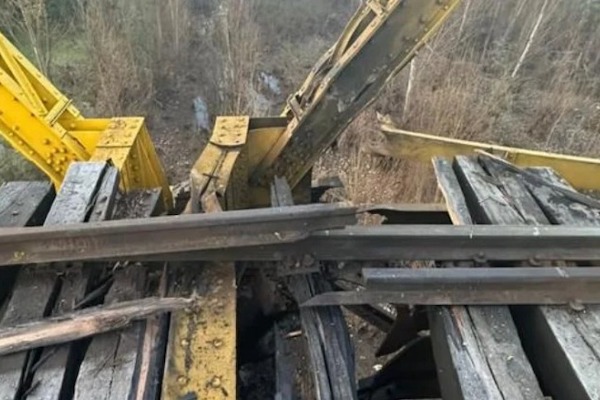
Following the recent explosive attacks against two high-tension towers in Valparaíso and Cañete (Biobío Region), as well as a third attack that destroyed part of the railway line at the Itata bridge in the Ñuble Region, the Undersecretary of the Interior, Manuel Monsalve, ruled out the application of the Anti-Terrorism Law.
“The Law on Control of Arms and Explosive Devices is much more effective for pursuing, identifying, and severely sanctioning those responsible,” stated the official.
In the case of the attack in the Valparaíso Region, investigators from the OS-9 of Carabineros identified that it involved an explosive device detonated, which was affixed with plastic tape to the bars of the tower.
This explosion caused a cut in the optical fiber located in a high-tension tower that remains in place and provides electricity to the areas of Placilla and Curauma. According to initial investigations by the Prosecutor’s Office and Carabineros, the attack may have originated from “environmental protest.”
Both the Prosecutor’s Office and the Government expressed concern, as the three explosions caused damage to critical infrastructure, in addition to cutting off the power supply in the case of the high-tension towers. So far, investigations have not provided any official clues regarding the authors of these attacks.
For his part, the President of the Republic, Gabriel Boric, stated: “I want you to know that we will use all the tools provided by the law, without any complexes, to pursue those who commit attacks, plant bombs, and intimidate the population. (…) They will feel the full weight of the State, of the law, and in this regard, the Chilean State has no fissures.”
The modalities of attacks, the factors, and their impact
Constanza Araos, a researcher at AthenaLab, indicates that the modality of the attacks may be shifting, moving from “pyroterrorism” primarily focused on the timber industry to an openly general civil target against the entire population, arguing that, already in the Southern Macrozone, there had been attacks against civilians in their homes, schools, or churches, for a political reclamation objective.
According to the specialist, all these events emphasize what characterizes a terrorist attack; which doctrinally, she explains, is characterized as an action with a political and violent objective, that indiscriminately affects the civilian population, aiming to provoke terror as a psychological effect.

“The attack on critical infrastructure constitutes an attack on the most sensitive legal interest related to National Security, because it affects installations, physical systems, or essential services for health, the normal development of activities, or the survival of the population or the State, which is also characterized by the fact that, if these are affected, they cannot be replaced or are very difficult to restore as an essential service,” asserts the researcher.
Araos mentions that the recent cases warn that the factor of impact of behaviors has changed, and she maintains that “previously, actions were carried out through violent usurpations, but now they indiscriminately affect the entire civilian population.”
Challenge to the State
Deputy RN and member of the Security Commission, José Miguel Castro, expresses that terrorism is a crime, arguing that these actions pose a challenge to the State, and aim to intimidate the population into being victims of crimes on a massive scale. “It is a challenge and an attack on the essential foundations of the democratic State, and seeks to infringe upon the exercise of fundamental freedoms,” he adds.
Deputy and head of the PDG bench, Karen Medina, asserts that these attacks are of a terrorist nature, and according to the parliamentarian, the power outage and the direct damage to the functioning of the city violate the rule of law, affecting not only material aspects but also the people living in this area of the country and the safety of families.
The measures and responses that the State must provide
Constanza Araos adds that, in addition to reinstating the rule of law, it is necessary to:
• Reestablish order and security: Not only through the Law Enforcement and Security Forces or the Armed Forces, but also by all other State bodies responsible for guaranteeing the rule of law, such as the Public Ministry, the Courts of Justice, and the sectoral bodies that assist in decision-making, all in an inter-agency manner.
• Prevention: By restructuring the institutions and regulations regarding Intelligence, to effectively detect the authors of these attacks and dismantle them.
• Generate a Security architecture: By establishing an institution that facilitates dialogue among the different ministries, that interrelates both financial and behavioral information of these groups, in addition to examining their use of weapons, their relationships with other organized crime gangs, and whether this has a local or international scope.
“The State and its current legislation must be updated. We are close to the creation of the Ministry of Public Security, and it is essential to create a specialized unit against terrorism that generates the necessary actions to preserve the critical infrastructure of the country, social stability, and national security with a focus on the borders. So that once consolidated, we can prepare the country and the region for collaborative work that could very well be part of what the UN does through the United Nations Counter-Terrorism Centre,” states Alejandro Vega, director of Fundación País Seguro.
Source: Emol