COLLABORATION | Organized Crime as a Proxy Agent: When Criminals Meet Rogue States and Actors in Latin America
This article was translated automatically and may contain differences from the original. For reference, read the original.
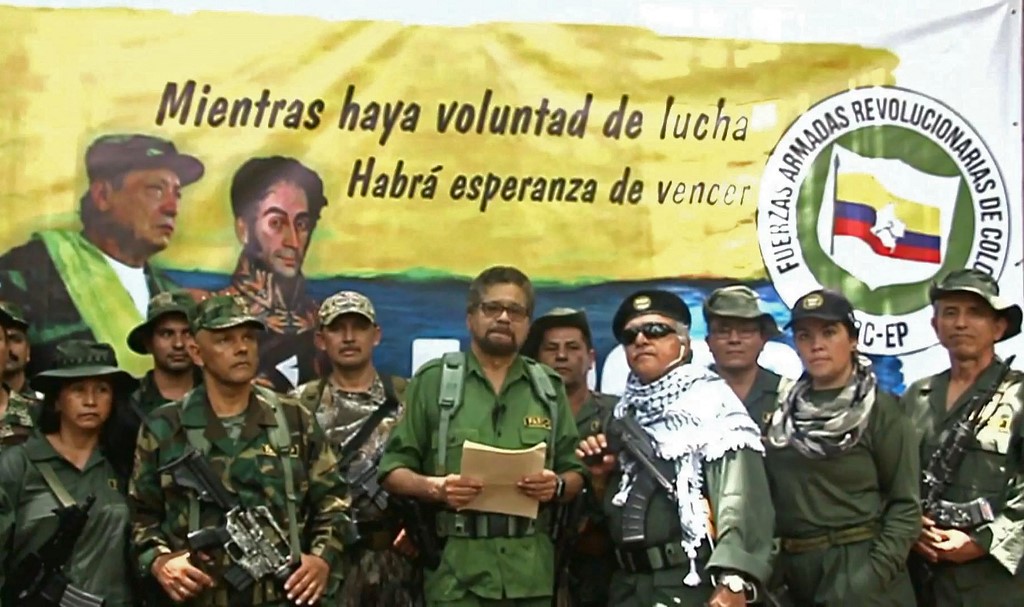
Over the past three decades, the use of organized crime groups (OCGs) in Latin America as proxy agents for foreign actors has become increasingly evident for financial, operational, and paradiplomatic reasons. While the criminal convergence among OCGs has been extensively studied, the growing convergence between these groups and foreign state and non-state actors has largely been overlooked, despite representing a rising threat to national security.
The Three Pillars of a Symbiotic Relationship
In many cases, states have built alliances with OCGs for economic reasons. For years, the “Soles” cartel, formed by high-ranking Venezuelan military officials, has been accused of establishing alliances and using the Revolutionary Armed Forces of Colombia (FARC) and other OCGs as cocaine suppliers. The fact that national OCGs are legitimized by local elites and considered part of the governing political structure facilitates their role as service providers for foreign actors. For example, it has been discovered that Iran is trafficking illicit gold from Venezuela to countries in the Middle East. Additionally, other states benefit from the criminal activities of OCGs. The Chinese fleet, which engages in illegal unreported unregulated (IUU) fishing, operates at the edge of the Ecuadorian and Argentine Exclusive Economic Zones (EEZ) and has received substantial support from the Beijing government through subsidies, while being repeatedly linked to OCGs. Since the war in Ukraine, Russia has sought to exploit OCGs abroad as a source of income for covert operations.
The second pillar of OCGs as proxy agents is linked to operational benefits. In 1992 and 1994, Argentina suffered two terrorist attacks. Both attacks were the result of Hezbollah cells, supported by Iran, operating from the Triple Frontier area between Argentina, Paraguay, and Brazil. In exchange for money, local criminal groups were enlisted to handle the required logistics. This same pattern can be seen today. Hezbollah is still operational in the area, and some of the suspects still reside in the triple frontier. Similarly, in 2016, nearly 400 kilograms of cocaine were found hidden in the annex of the Russian embassy in Buenos Aires. While no links to the Russian government were found, former Russian diplomatic officials were tried in a non-public trial, and a local police officer with ties to Russia is currently imprisoned in Argentina.
Finally, the other reason why foreign actors seek to use local OCGs as representatives is due to paradiplomatic reasons. For many years, Cuba has had strong and solid ties with the FARC. For Cuba, this narco-insurgent group provided the best opportunities for the revolution to expand in Latin America, thus receiving substantial support. Another country that has provided foreign actors with a platform for paradiplomacy is Bolivia, which has been repeatedly identified by the U.S. government as unable to do enough to address cocaine production and trafficking. Since the mid-2000s, Bolivia has provided Iran with a strong foothold in Latin America, including the possibility of developing a counter-narrative that favors Iranian interests. In 2012, Bolivia signed a rather unique agreement with Iran that included training for anti-narcotics units, and then Iranian President Mahmoud Ahmadinejad visited the country at least three times.
More recently, in July 2023, Iran signed a controversial memorandum of understanding with the government of Bolivia, currently led by Luis Arce, who was elected with the support of Evo Morales, who publicly acknowledged during his term that drug cartels permeated all levels of government and who expelled the U.S. Drug Enforcement Administration (DEA) from Bolivia in 2008. Similarly, in Nicaragua, the criminally infiltrated government of Daniel Ortega conducts a U.S. counter-narrative that supports Russian interests.
Strengthening Responses to OCGs: State Threats
Evidently, there is an increasing interrelation between states that have been deeply penetrated by organized crime, SOC groups, and foreign state and non-state actors that exploit this situation to pursue their own strategic interests. In some cases, these interactions have involved terrorist groups, but in other cases, the state-crime interaction involves relevant global powers such as China and Russia. For example, a recent article from The Informer highlighted how the Knights Templar, a renowned Mexican OCG, has acted as a supplier of iron ore for Chinese companies that are significantly controlled by the People’s Republic of China. Similarly, in a recent study by the Royal United Services Institute (RUSI) for the European Union’s Global Illicit Flows Programme, China is a major destination for illegally harvested timber from Ecuador and Peru.
Since these interconnections fall into a gray area where they cannot be considered purely an internal security issue or a defense issue, countries that are victims of these operations find it problematic to address them adequately, and most lack a comprehensive strategy to confront them. In many cases, foreign influence through OCGs in local politics is the first step to achieving a strategic advantage, as demonstrated by Russia’s recent actions regarding Ukraine and the Gerasimov doctrine, where politics becomes the continuation of war.
Therefore, a strategy to contain this growing trend should provide states with the capabilities to develop flexible and adaptable responses to this hybrid threat. First, it must include the use and exchange of intelligence to identify the ultimate beneficiary, also known as the end user, of these illicit operations to quickly and decisively identify the involvement of a foreign actor. Intelligence agencies, anti-money laundering units, and financial intelligence must lead this effort, while the investigative capabilities of local police agencies should be enhanced.
In addition to investigative and enforcement powers, local legislation must be strengthened to provide legal provisions to address these hybrid actors, as most legislation in the region is poorly drafted to tackle these new threats from gray areas. For example, despite the fact that Hezbollah members have transited through Brazil for years, the terrorist organization is still not classified as a terrorist organization under local laws. In Argentina, the national security framework prevents the military from engaging in operations supporting law enforcement.
States suffering foreign influence through the use of OCGs must also develop an attribution strategy, especially when those operations affect national interests. Cases in which state-sponsored OCGs pose a threat to the rule of law and democratic principles must be publicly exposed in international forums such as the United Nations Office on Drugs and Crime.
Finally, and perhaps most critically, states must draft national security strategies that comprehensively address the entire spectrum of security and defense threats, including this gray area OCG threat. Countries like Argentina not only lack a national security strategy but also a National Security Council and even a national security advisor. This negatively impacts the state’s ability to first identify and then address national security threats that operate at the margins of the traditional security and defense spectrum.
Martin Verrier[i]
August 1, 2023
The opinions expressed in this article are those of the author and do not necessarily reflect the views of AthenaLab.
[i] Martin Verrier served as Undersecretary of State for Drug Control in Argentina from 2015 to 2019. He holds a master’s degree in Strategy and Geopolitics from the Argentine Army War College and a Bachelor’s degree in Political Science in International Relations from the University of Belgrano in Buenos Aires. He also has a Postgraduate Certificate in Combating Transnational Organized Crime from the European Security Studies Center at the George C. Marshall Center, Garmisch Partenkirchen, Germany. He is an Associate Fellow at RUSI.
*Article reproduced with permission from its author and originally published by RUSI. Available at: https://shoc.rusi.org/blog/organised-crime-as-a-proxy-when-criminals-meet-rogue-states-and-actors-in-latin-america/