COMMENTARY | Did the Ukrainian Counteroffensive Fail?
This article was translated automatically and may contain differences from the original. For reference, read the original.
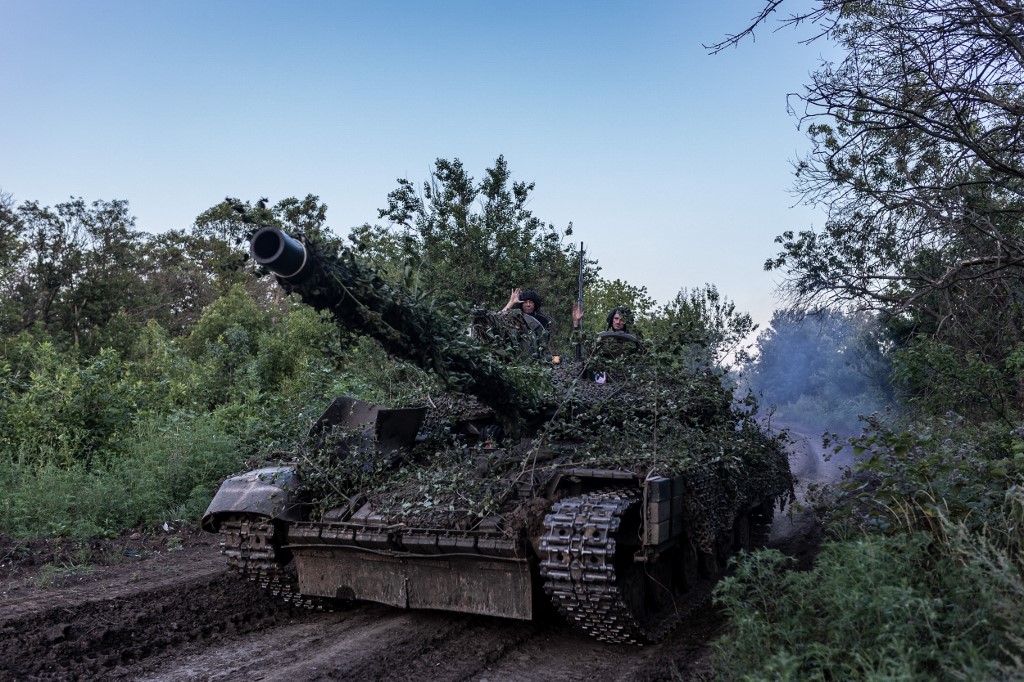
Two months after the start of the long-anticipated Ukrainian counteroffensive, the most notable aspect has been the deployment of new brigades organized around Western armored material. This involves nine units, 63,000 soldiers, and approximately 150 battle tanks.
While it is true that an offensive of this magnitude and nature should be evaluated over months —rather than days or weeks— it is also possible to assert, at this stage of the operation, that Kyiv’s counteroffensive has not evolved as expected. Its advances have been less than anticipated, despite the high cost for both sides, which has been acknowledged by Ukrainian authorities.
In this context, can we assert that the counteroffensive has failed? To answer this, this text will review what has occurred, present some plausible explanations for it, and propose conclusions that could help address the posed question.
WHAT HAS HAPPENED?
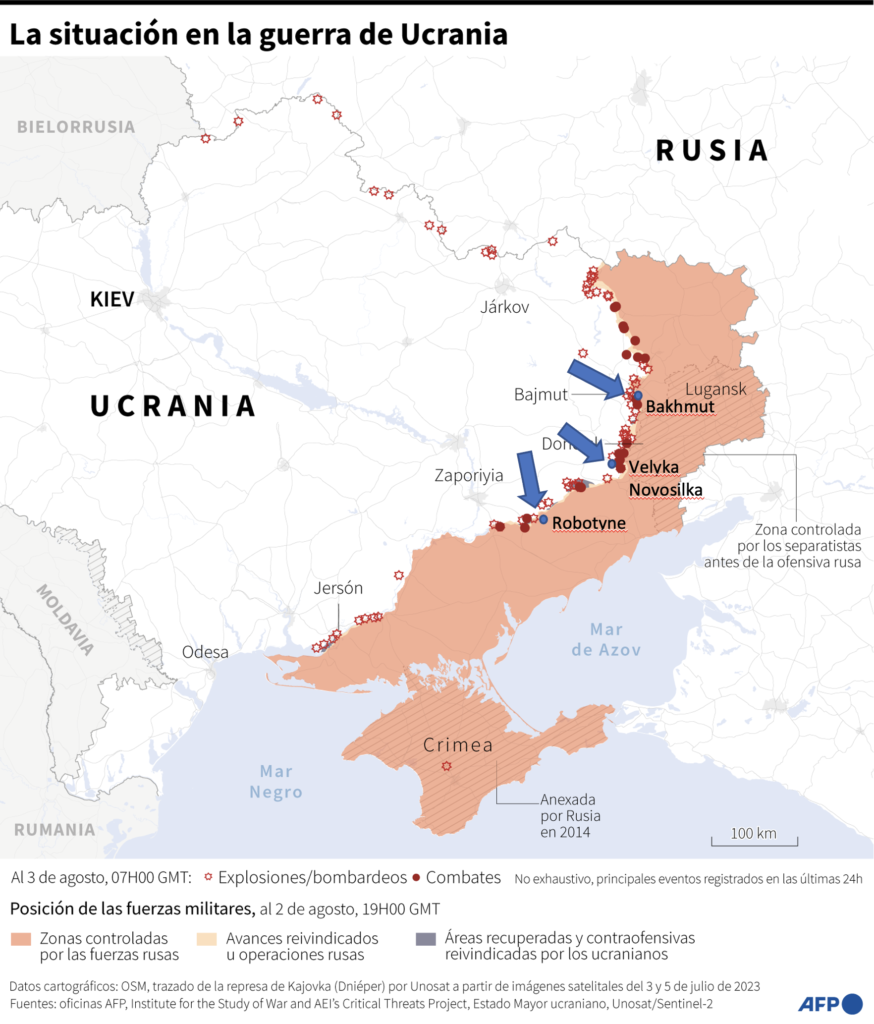
The aforementioned and anticipated offensive began on July 4. According to the Institute for the Study of War (ISW), the operation consists of three main axes of attack, which focus on: Bakhmut (Donetsk), Velyka Novosilka (the border between Donetsk and Zaporizhia), and Robotyne (Zaporizhia).[1]. Public opinion and many experts generated high expectations regarding this, anticipating a rapid breakthrough of the defensive position to allow armored and mechanized units to exploit success deep into the Russian deployment and, ideally, reach the Sea of Azov, thereby dividing the invading forces and recapturing significant portions of territory.
After more than a month of operations, no breakthrough was achieved in the Russian defensive front, the loss of material has been significant (including equipment provided by NATO countries), and the anticipated maneuver warfare offensive has progressively mutated into a struggle characterized by attrition, stalling the intended advance.
WHAT COULD EXPLAIN WHAT IS HAPPENING?
It is risky to evaluate the results of a military operation while it is still ongoing and public knowledge of the planning is limited or almost nonexistent. At this point, many analyses are based on logical assumptions, but nothing concrete or certain. However, beyond reviewing what has occurred on the ground, it is possible to identify some ideas to explain what has happened so far based on various open sources regarding the advances and setbacks of Ukrainian forces:
- EXCESSIVE EXPECTATIONS. The results of Ukraine’s defensive actions, combined with the success of last year’s offensive, led to very high expectations regarding the results of the ongoing offensive. However, the situation is very different from what was experienced previously, in many respects. Thus, it is estimated that the real capabilities of Kyiv’s forces were overestimated, facing an enemy that is now better prepared (this will be addressed later). Additionally, it should be noted that the best units and experienced personnel have suffered wear and casualties during 17 months of war. In short, despite the anxiety for quick results, it must be acknowledged that the offensive has stalled, which was not the desired outcome.
- LATE AND INSUFFICIENT AID. It is impossible to overlook the indispensable support from the West for Ukraine’s war effort, which exceeds $50 billion. However, it must also be recognized that this support has not arrived in the form or timing requested by the defenders. On many occasions, the countries supporting Kyiv initially responded negatively to requests for tanks, air defense systems, and long-range rocket artillery, among others. Only the passage of time and the dynamics of war have changed the minds of European and North American leaders. Therefore, while support has not ceased throughout the war, it has not arrived at moments that could have generated substantial changes. Furthermore, it should not be forgotten that this war caught Western powers with low stocks of ammunition and a diminished defense industrial capacity, complicating the delivery of supplies, as other strategic obligations of NATO, such as the Mediterranean (southern flank) and now the Indo-Pacific, cannot be neglected. The recent decision by the United States to deliver cluster artillery munitions reflects a depletion of conventional ammunition inventories, necessitating reliance on other stocks of rapid availability. Ultimately, it seems that decisions arrive too late, and it would be much better —and more cost-effective in the long run, as it would shorten the war with a victory for Ukraine— for the delivery of support to be in sufficient quantities of material, so that Kyiv can create a substantial difference in potential on the battlefield.
- LITTLE TIME TO GENERATE COMBAT POWER. The delivery of material to form the new armored brigades was only authorized at the beginning of 2023 and began to accumulate in the first quarter, followed by the training of new tank crews. Consequently, the time available to train units to operate in a complex and hostile environment has been far below what is necessary to generate effective combat power and, above all, to scale to larger units, such as brigades or divisions, considering that the new units total around 63,000 soldiers and more than 150 Western tanks. The coordination of infantry units in contact with the adversary with ground fire support assets, combined with the need to breach minefields, all simultaneously and under ground and aerial fire (joint operations), requires months of training to achieve the minimum efficiency to operate, which was not feasible for the operation launched two months ago. Additionally, there was an intention to incorporate Western employment doctrine, associated with the idea of maneuver warfare, into a force that has traditionally been trained, instructed, and successfully fought according to a Soviet-era doctrine. Implementing all these changes involves a lengthy training process that cannot skip steps. Apparently, stubborn reality has indicated that some of the recently formed units have reverted to their traditional employment forms[2].
- LEARNING AND ADAPTATION BY RUSSIA. While the performance of the Russian armed forces has been disappointing across a wide range of means and dimensions, the Russians have also learned from their mistakes. During the more than six months that Moscow’s forces had to prepare their defense in the south, organized defensive positions were built in three main lines. Each of these includes minefields, tank obstacles, trenches, bunkers reinforced, planned artillery positions and fires, and reserve forces to repel any penetration of the front. Additionally, Russian troops have improved their communications, relying significantly on difficult-to-intercept telephone cable systems, have adapted their fire coordination procedures, and, very importantly at this stage of the war, have the support of helicopters and attack aircraft, given that Ukrainian air defense assets are far removed from the operational area. In summary, the Russians are also gaining experience and improving their performance in this war.
- LACK OF CONDITIONS FOR THE DEVELOPMENT OF MANEUVER WARFARE. Given all of the above, it is possible to conclude that against a prepared, planned, and fortified positional defense, maneuvering is difficult. If we add to this that the weather has been rainy, which creates problems for the transit and mobility of heavy units; that Ukraine has a relative superiority in the quality of tube artillery fire support, but not in volume or range of fire, let alone in rocket artillery; and that Russia can apply the advantages of air power from the territory it controls, all of this works against executing actions characteristic of this operational doctrine. The stalling of the offensive has led to adopting actions to break the defense, such as employing small infantry units to infiltrate and attempt to seize positions that allow penetration of the Russian front, all with a high toll in lives and resources. Far from the idea of maneuver warfare.
DID THE OFFENSIVE FAIL?
To assess and gauge the outcome of the ongoing operation, the evaluation must be based on the fulfillment of defined objectives and the determination of recovered terrain and the number of casualties on both sides (human and material). At this moment, considering that the offensive has been underway for two months, the operation appears to be in full execution, and not all available forces have been committed by Ukraine, therefore, it is not possible to definitively state whether it will be successful or not. So far, it has not been as successful as initially thought; however, it is not possible to dismiss a positive outcome for Kyiv.
What can be asserted is that the future of military action will depend, to a large extent, on Ukraine’s ability to maintain the initiative —which is being challenged by the Russians on some fronts— postponing the goal of reaching the peak point as close to the northern hemisphere winter as possible and inflicting maximum damage on President Vladimir Putin’s forces[3]. Additionally, it is essential to demonstrate advances and recovery of territories, as this keeps both the morale of the population and support for the war effort active.
Western military support remains and will continue to be fundamental until the end of the war. In this regard, the outcome of the counteroffensive has a dual evaluation. On one hand, Ukraine must demonstrate efficiency in the use of the costly resources that the West is providing, to show that victory is feasible and that the expenditure will be justified. On the other hand, the countries involved in supporting the war effort must evaluate whether what has been done so far has been adequate, in terms of quantity, quality, and timing, or if they need to adjust their efforts to create real opportunities that lead to the success of Ukrainian forces, who have, by far, suffered the most losses in the conflict.
FINAL CONSIDERATIONS
- The result should not be surprising, as an action against a prepared position for more than six months will always be complex and demand a high cost. However, stagnation in operations is evident; the success of the offensive will need to be measured in the future, according to the fulfillment of objectives, the attrition caused, the area of territory recaptured, and, above all, by the extent to which the result creates conditions for final victory in the war.
- Defense is a form of waging war that is stronger than offense[4], as it has physical and psychological advantages. However, it is recognized that it does not directly lead to victory; in the current circumstances of the war in Ukraine, defense is functional for Russia’s purposes, as it is Kyiv that bears the burden of recovering territory lost to Moscow, and the application of an organized defense allows for the degradation of war potential, especially of resources provided by the West, imposing enormous wear, which could facilitate the retaking of the initiative lost months ago.
- Considering the evolution of actions, it seems difficult for the war to conclude in 2023, so operations should be projected at least until 2024, unless one of the two actors collapses.
- Ground fire support, as has been emphasized throughout the war, remains crucial on the battlefield, whether in terms of precision, range, detection, and mass action. Similarly, the integration of this support with units in contact is fundamental when it comes to breaking a prepared defensive setup, as well as to stopping an ongoing attack.
- Air control is a determining factor. In more than 16 months of war, Russia has not been able to impose its air superiority, as it has encountered a well-organized Ukrainian air defense, along with significant capabilities provided by the West. However, by acting defensively over the past two months within territory controlled by Moscow’s forces, it has forced Ukrainian air defense assets to be deployed out of reach of Russian artillery; helicopters and aircraft have gained some freedom of action to attack and destroy ground assets.
- The need for a minimal defense industry that ensures a certain operational availability is a strategic decision for states, as demonstrated during the war in Ukraine, both for the belligerents and for the countries supporting them. In this sense, the ability to manufacture ammunition, although it may be considered economically inconvenient, is vital and must be developed and maintained, as it provides strategic independence and operational autonomy for any state.
- The dichotomy posed between a war of attrition or a maneuver war is not absolute. War as a violent phenomenon, regardless of how it unfolds, necessarily involves the attrition of the participants. In fact, while the operational doctrine of maneuver warfare indicates the coordinated use of fire and movement to avoid the adversary’s strongest part, it does not mean that there will be no wear, as ultimately, the one who capitulates will do so due to the loss of power, typically achieved through attrition.
- The use of technology has proven to be decisive. The employment of drones of various characteristics and sizes, cyberspace, space capabilities, precision munitions, target location radars, long-range and precision fires, etc., are examples of how the inclusion of technology provides significant advantages to those who possess it. On this, a couple of ideas. Technological development must facilitate the adaptation of means to the new characteristics of the battlefield. Thus, with sensors and drones capable of detecting armored assets at long distances and with ground and aerial fire bases capable of striking them before they come into contact with their own troops, the effectiveness of tanks is diminished. However, Azar Gat proposes that rather than nullifying their necessity or utility, it requires adapting their design to one that offers greater survival possibilities, such as incorporating sensors and active defense measures, as occurred with warships during the 20th century[5].
- Nevertheless, the war in Ukraine repeatedly demonstrates that, for lesser powers, the development of conventional combined arms capabilities remains, at least for now and in the coming years, the best alternative for force preparation, leaving the technological innovations developed and employed by more advanced and wealthy countries as useful force enhancers, but whose economic realities and access prevent their mass use.
- Finally, despite all that has been discussed, it should be kept in mind that the perspective provided by time is fundamental for evaluating actions occurring in a war, and it is most advisable to wait for the fog that always hangs over it to dissipate, which complicates its full and most accurate understanding.
John Griffiths, Head of Studies at AthenaLab
Marcelo Masalleras, Researcher at AthenaLab
August 4, 2023
[1] Institute for the Study of War, available at: https://www.understandingwar.org/backgrounder/russian-offensive-campaign-assessment-july-31-2023
[2] “The Ukrainian army commits new forces in a big southward push.” The Economist. July 27, 2023. Available at: https://www.economist.com/international/2023/07/27/the-ukrainian-army-commits-new-forces-in-a-big-southward-push
[3] Freedman, Lawrence. “Ukraine’s Counter-Offensive: Setting Expectations.” July 30, 2023. Available at: https://samf.substack.com/p/ukraines-counter-offensive-setting?utm_source=substack&utm_medium=email
[4] Claus Von Clausewitz, On War, trans. Michael Howard and Peter Paret (New Jersey: Princeton University Press, 1976), 428.
[5] In a recent article by Azar Gat, published by the Institute for National Security Studies at Tel Aviv University, it is questioned whether the current characteristics of tanks, particularly their excessive armor, are appropriate for the future battlefield. In this regard, Gat presents as an alternative what has been the evolution of warships and combat aircraft, where armored protection has been sacrificed for electronic protection. Available at: https://www.inss.org.il/publication/tanks/