ANALYSIS | Multilateralism Attempts to Regain Momentum with the "Rise of the Rest." Will It Succeed?
This article was translated automatically and may contain differences from the original. For reference, read the original.
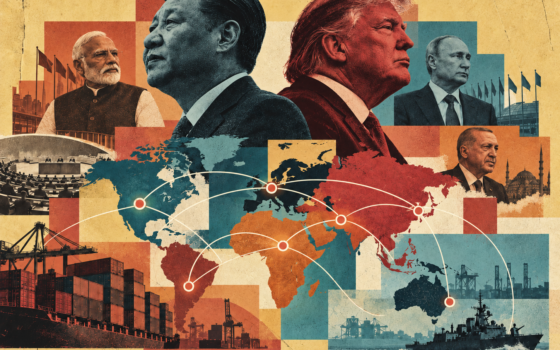
In this era of competition, multilateralism is not faring well. International organizations are either paralyzed (like the United Nations Security Council) or are subject to excessive influence attempts (like the World Health Organization).
However, a series of international summits have taken place in locations such as Johannesburg, Jakarta, and New Delhi, with results reflecting the relative loss of influence of the West and the emergence of an international system with greater prominence from the so-called “Global South,” a concept filled with geographical ambiguities but currently in vogue. Apparently, the United States and the European Union are not entirely forgiven for their initial lack of solidarity during the COVID-19 pandemic and the collateral effects on markets from the Russian-Ukrainian conflict (yet another European war).
That said, merely gathering leaders in one place does not guarantee the success of forums, and even the absence of joint statements or the lack of so-called “family photos” can highlight the deep divisions that persist.
BRICS+

Members: Brazil, Russia, India, China, and South Africa
Meeting Location: Johannesburg, South Africa
Date: August 22 to 24
The big winner of this summit was China. Although President Xi Jinping did not stay for the entire event, he was the only leader to attend in person, which already indicates a preference for this forum of emerging countries that reject the use of sanctions as a tool of economic coercion against nations like Russia and Iran, and therefore believe in the need to progressively decouple their internal transactions from the US dollar.
Despite not being present due to fears of the International Criminal Court, Russian President Vladimir Putin used the forum to promote the formation of a “global majority,” where, of course, democratic credentials do not matter.
In this context, the big news from the BRICS summit was the invitation to Argentina, Egypt, Iran, Ethiopia, Saudi Arabia, and the United Arab Emirates to join starting January 1, 2024. However, it was not specified how the new members will be managed within an expanded bloc, and the deep rivalries among some of them were overlooked.
ASEAN
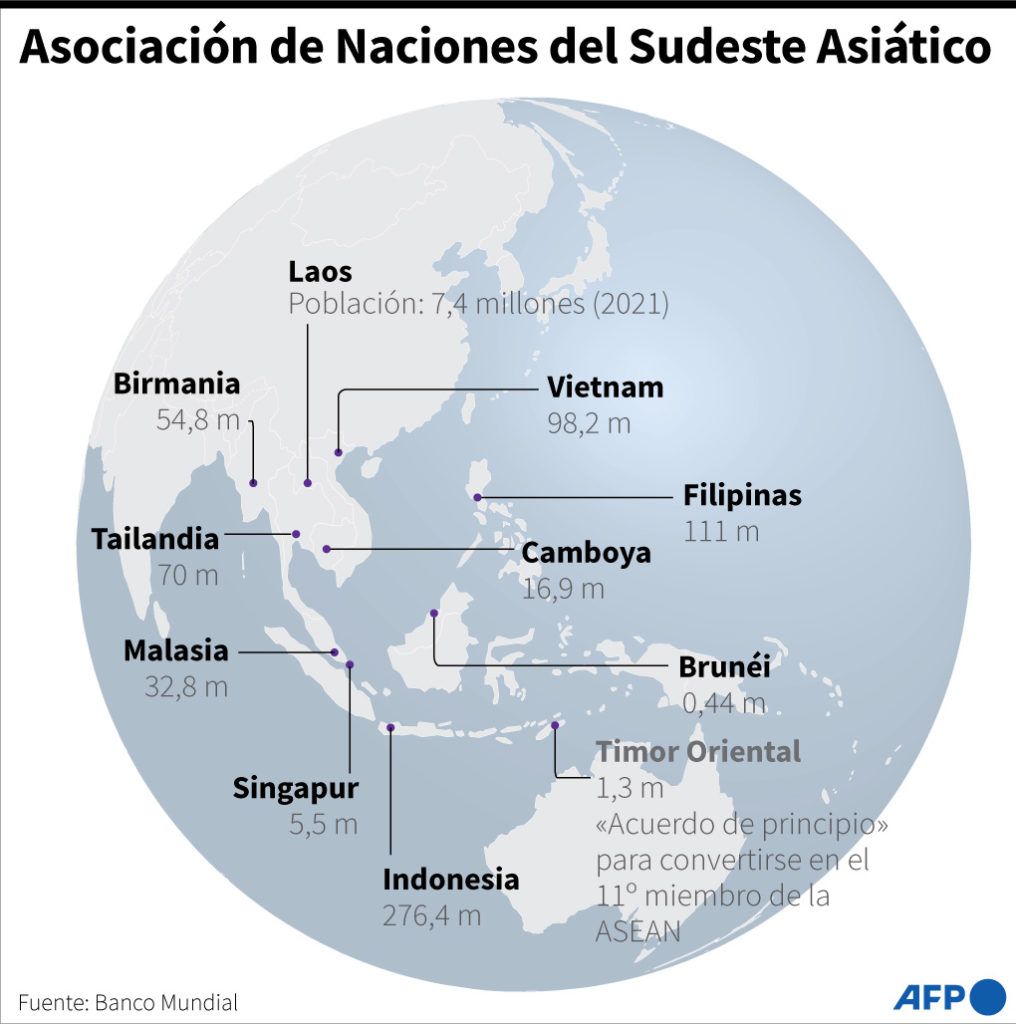
Members: Myanmar, Brunei, Cambodia, the Philippines, Indonesia, Laos, Malaysia, Singapore, Thailand, and Vietnam.
Meeting Location: Jakarta, Indonesia
Date: September 5
Due to its geographical position and economic dynamism, this bloc of nations holds a central place in the Indo-Pacific. However, this enormous potential has not translated into greater prominence, due to a lack of concrete results in shaping its environment.
At the last summit held in Indonesia, little progress was made in securing a commitment from Myanmar for the ruling military junta to open a path back to democracy. A code of conduct for unexpected encounters in the South China Sea, which is subject to overlapping territorial disputes, was also not established. Several ASEAN members have raised concerns about the inclusion of territories in Chinese maps and have also denounced harassment of vessels by the People’s Liberation Army Navy.
Indeed, this forum seems to be caught in a larger game of influence between Washington and Beijing. While U.S. Vice President Kamala Harris called for respect for international behavioral norms, Chinese Premier Li Qiang urged avoiding a “New Cold War” and criticized alliances like AUKUS (Australia, the United States, and the United Kingdom) and the Quad (Australia, the United States, India, and Japan). And ASEAN? Just fine, thank you.
G-20 (19 major economies + the EU)
Members: Germany, Saudi Arabia, Argentina, Australia, Brazil, Canada, China, the United States, France, India, Indonesia, Italy, Japan, Mexico, the United Kingdom, South Korea, Russia, South Africa, Turkey, and the European Union.
Meeting Location: New Delhi, India
Date: September 9 to 10
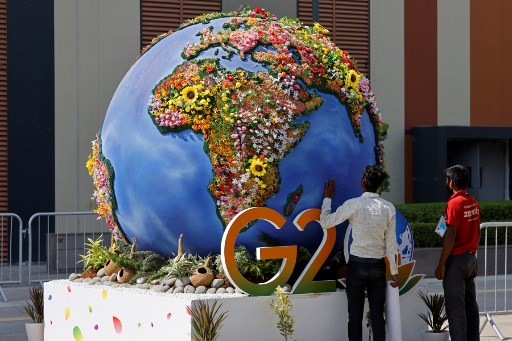
At this summit, hosted by Prime Minister Narendra Modi, President Xi Jinping did not attend, which was interpreted as a sign of the poor state of relations between India and China, which have open territorial disputes in the Himalayan heights. In contrast, U.S. President Joe Biden attended, as his country seems increasingly convinced of attracting New Delhi into its orbit.
It was surprising that a consensus was reached to issue a joint statement, where, although Russia was not condemned for its aggression against Ukraine, at least the suffering caused by that conflict was acknowledged, and states were urged not to use force to annex territories. The African Union (representing 55 countries) was even invited to join the economic forum.
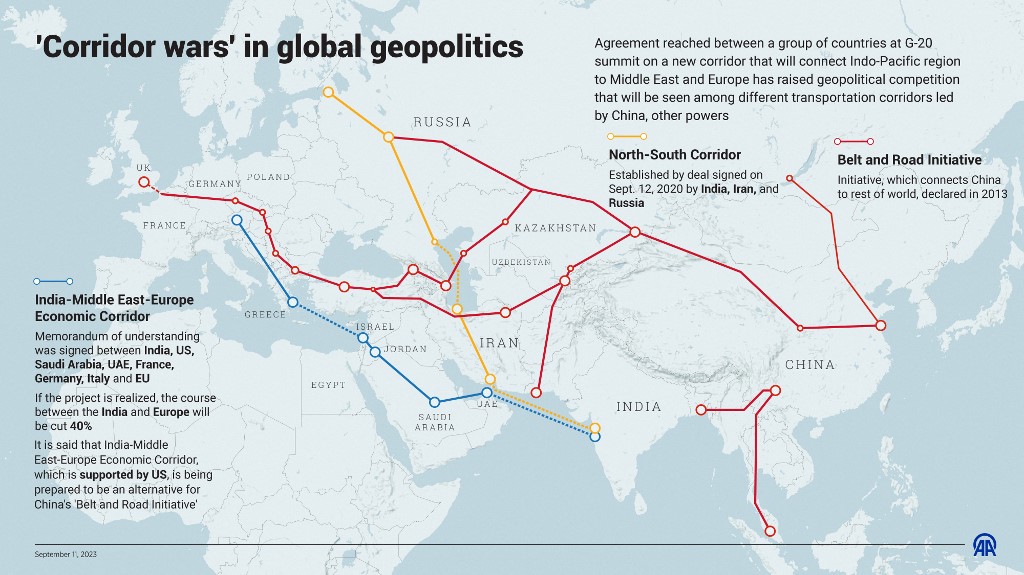
Perhaps more importantly than all of the above was the agreement among several attending countries to develop connectivity infrastructure corridors between India, the Middle East, and Europe, in a project that directly rivals China’s Belt and Road Initiative (see infographic).
However, there was no “family photo,” despite the summit’s slogan being “One Earth, One Family, One Future.” Certainly, appearing alongside Russian Foreign Minister Sergei Lavrov would have been asking too much.
UN GENERAL ASSEMBLY
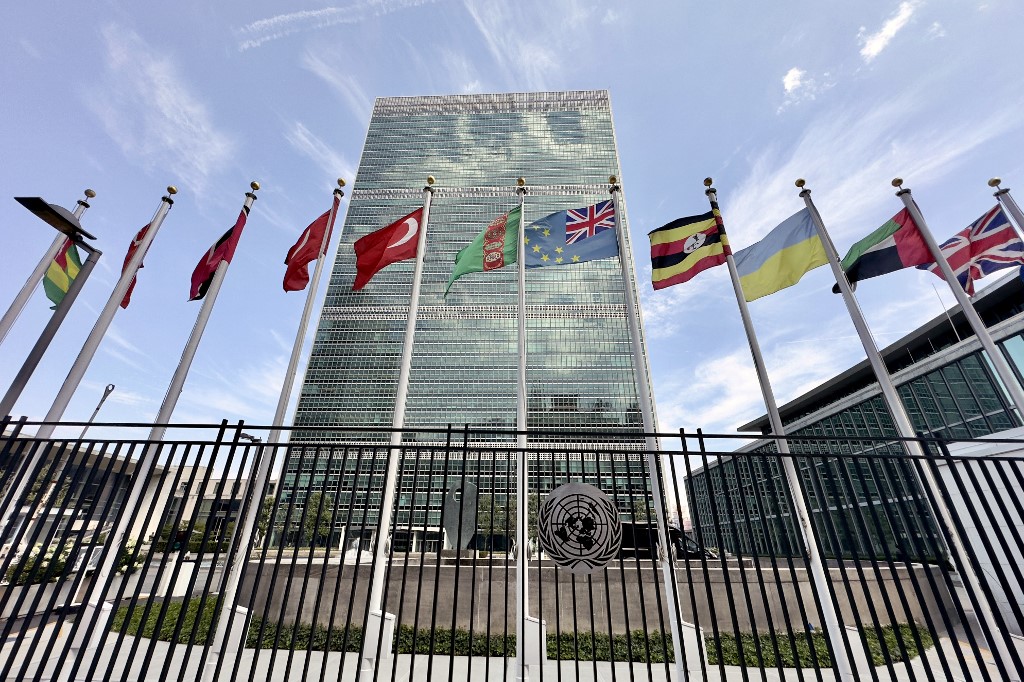
Members: 193 states, plus the addition of the Holy See and Palestine
Meeting Location: New York, United States
Date: September 18 to 23
This enormous gathering of leaders serves as an annual platform to discuss a wide range of topics, a venue where interpellations and sarcasm are not lacking. It is expected that this year’s United Nations General Assembly will address issues that generate broad consensus, such as the fight against climate change and the achievement of the Sustainable Development Goals 2030; although deeply divisive topics will also be discussed.
Of course, it is impossible for Russia’s invasion of Ukraine not to be one of the main topics of discussion, as this war has seen all kinds of violations of the norms contained in the United Nations Charter by a member of the Security Council. Furthermore, Moscow’s incursion has jeopardized the food security of several countries due to Russian blockades of Ukrainian grain exports through the Black Sea.
This last paradox will also be an argument for those advocating for an expansion of the permanent Security Council, which includes the United States, China, Russia, France, and the United Kingdom among its members. Countries from the so-called Global South and other emerging powers seek a forum that is more representative of the current world, which is more multipolar, less hierarchical, and therefore much more disorganized. However, the truth is that the Assembly itself often yields little more than anecdotes and quotable phrases.
CONCLUSION. Having moved past the pandemic lockdown, there seems to be a renewed interest among countries and their leaders to meet and engage in dialogue, which is certainly positive; especially when there are so many challenging and urgent issues, such as resuming economic growth, addressing climate change, and regulating artificial intelligence.
Nevertheless, this willingness to cooperate does not always prevail over competitive dynamics, which arise from the ongoing tension between the United States and China or from the deep divisions that exist between the West and Global South countries regarding the Russian aggression against Ukraine.
In 2008, Fareed Zakaria, in “The Post-American World: And The Rise of the Rest,” warned of a relative loss of power by the United States and its allies due to the increasing strength of emerging nations like China, India, Brazil, Turkey, and others. Well, that moment seems to have arrived. Of course, the “rest” seems more content to call itself the “Global South” and participate in forums like BRICS, where uncomfortable common values are not always at stake, the behaviors of regimes towards their populations are not commented upon, and, of course, it is in poor taste to judge wars of aggression.
For the United States, Europeans, and allied countries, the paths ahead are complex. Retreating into forums like the G-7 is one option, perhaps the easiest. Another, as difficult as it is necessary, is to solidify a sphere of interconnected liberal democracies through reliable supply chains, transparent finances, secure communications, military alliances, and shared values, all wrapped in the conviction of the importance of common international norms. Sitting back and watching how the “rest” is configured or how the “Global South” takes shape should not be an option.
Juan Pablo Toro V.
Executive Director of AthenaLab
September 13
Photos and Infographics: France Presse