ANALYSIS | The Maritime Aspect of the Conflict Between Israel and Hamas
This article was translated automatically and may contain differences from the original. For reference, read the original.
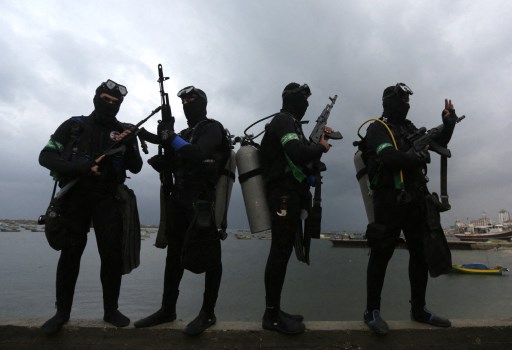
While the conflict between Israel and the Palestinian militia Hamas is primarily fought on land, it is important to remember that the Gaza Strip has a 40-kilometer coastline facing the Mediterranean Sea, constituting the least monitored border of the Palestinian enclave. Although it has received less attention, interesting developments in the maritime aspect of the conflict can be observed.
INFILTRATION BY SEA. Among the new capabilities developed by Hamas in recent years is a new combat diver unit that has been trained to use explosives against Israeli vessels and ports, operate boats prepared to explode, conduct infiltrations from the sea, and launch anti-tank missiles from the coast.[1].
Members of this elite unit of the Ezzedine al-Qassam Brigades, the armed wing of Hamas, participated in the military offensive launched on October 7, during which 1,300 Israelis were killed and hundreds were kidnapped.
On its part, the Israeli naval command group Shayetet 13 has been involved in retaliatory operations against the radical Islamic group, both in retaking captured checkpoints and in neutralizing high-ranking members of Hamas’s naval force.
Thus, the use of special forces from the sea proves to be useful in this asymmetric conflict, especially when it comes to exploiting one of the most difficult flanks to monitor.
PATROL BOATS AND CORVETTES. The Israel Defense Forces (IDF) have a navy primarily dedicated to coastal protection and area denial, as evidenced by the composition of their fleet, which includes corvettes, missile boats, and conventional attack submarines.[2].
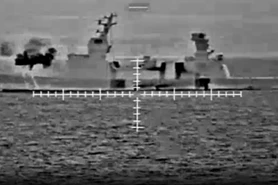
In the current conflict, Dvora-class patrol boats (45 tons) from Squadron 916 have been observed attacking boats crewed by Hamas fighters. Additionally, Defender-type vessels from the Snapir unit have been seen with their crews firing mounted machine guns and rifles and using depth charges against militants and divers.
Bombardments from the sea have also been carried out against Gaza docks and Hamas infrastructure, from which terrorist operations have reportedly been directed. For the first time, the modern Saar 6 corvettes (1,900 tons) have been used to attack land targets using 76-millimeter cannons.[3].
In this regard, it is worth noting that exactly 50 years ago, the IDF navy became known for its efficient use of small vessels for complex missions. In the Yom Kippur War, Israeli missile boats unprecedentedly employed surface-to-surface missiles and electronic warfare measures, allowing them to sink Syrian vessels and leave that country’s navy confined to its ports for fear of losing more ships.
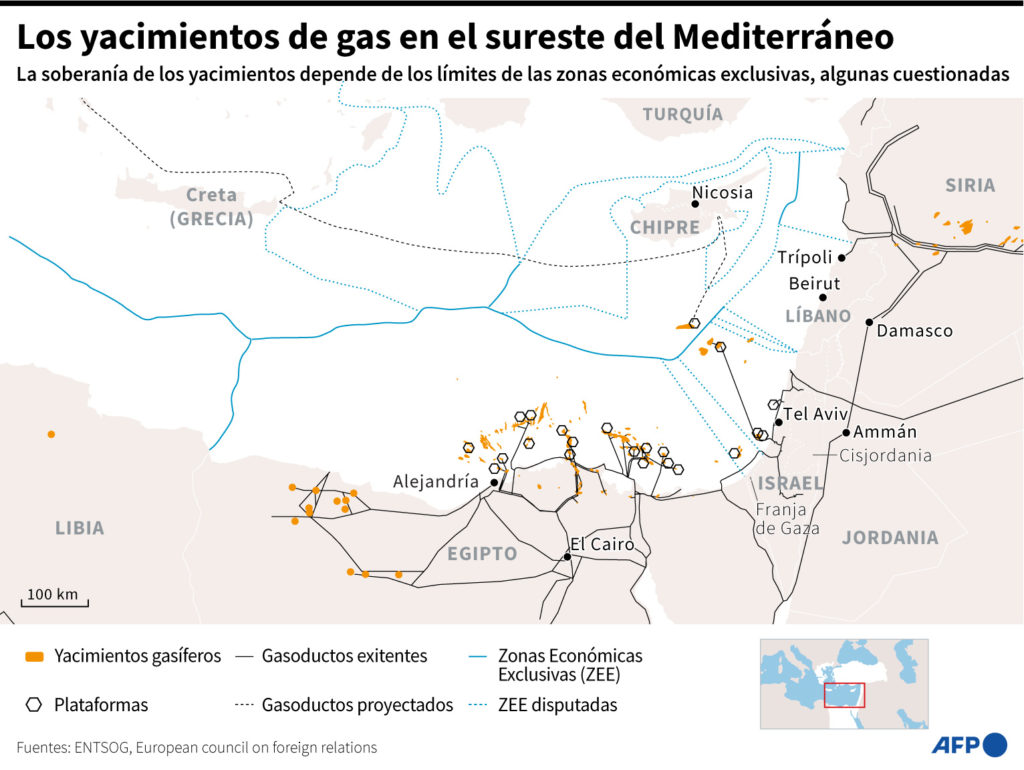
GAS FIELDS. The Eastern Mediterranean has strategic importance, among other things, because it connects to the Red Sea via the Suez Canal and has witnessed countless naval battles throughout history.
However, it has recently gained greater relevance due to the natural gas fields discovered on the seabed, generating a true rush to delineate the exclusive economic zones of neighbors who do not always have easy relations.[4]. The Tamar and Leviathan extraction fields are near Israel; Aphrodite offshore of Cyprus; and Zohr near Egypt. The deposit off Gaza has not been exploited due to Israeli restrictions.
One of the IDF’s concerns is that Hamas combat divers may attack energy infrastructure at sea, which is why training in the protection of ports, tankers, and extraction platforms has been enhanced. Additionally, the group’s missiles have sufficient range to reach the wells, although they lack the necessary precision.
Following the European Union’s decision to cut its imports of Russian gas in response to the invasion of Ukraine, Mediterranean fuel has gained special relevance for the bloc, and it is expected that European naval presence in the area will be reinforced.
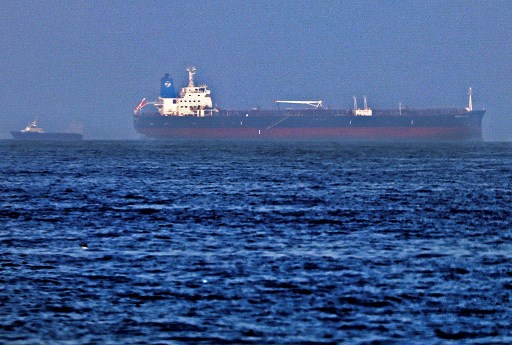
TANKER WAR. The Iranian regime acts as a direct sponsor of Hamas, which it does not even attempt to hide with warnings from high-ranking officials that it will not remain idle in the face of the announced Israeli retaliation in Gaza[5], whose anticipated severity relates to the fact that the radical Islamic group has shifted from being a terrorist challenge to becoming an existential threat.
Israel and Iran have been waging a shadow war for years through covert operations and cyberattacks, but their hostility has also been evident at sea[6]. Dozens of Iranian freighters and many operated by Israeli companies have suffered sabotage to their equipment, explosions from magnetic mines, or drone attacks, particularly in the Red Sea and the Persian Gulf. In the case of Israeli actions, several have aimed to disrupt the supply of arms to Syria and groups like Hezbollah, the Lebanese militia that threatens to open another front in the current war.
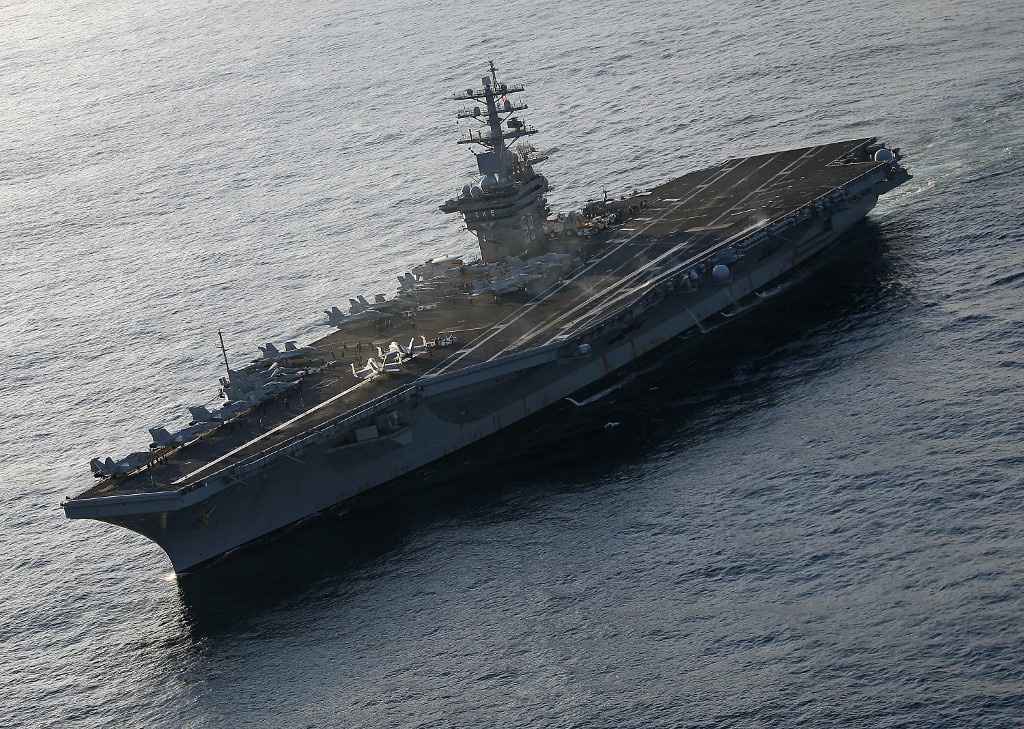
DETERRENT DEPLOYMENTS. Israel’s main historical ally responded to the Hamas offensive by mobilizing two aircraft carriers with their respective battle groups, which will involve the deployment of 11 ships from the United States Navy[7].
The “USS Gerald R. Ford,” which was conducting exercises with the Italian Navy, was immediately redirected to the Eastern Mediterranean. Subsequently, the Pentagon announced that the “USS Dwight D. Eisenhower” would also set sail for the area as part of an “effort to deter hostile actions against Israel or any effort to escalate this war following the Hamas attack.”
The message is clear: the primary objective of this deployment is to deter Iran from launching any direct actions against Israeli targets and to help prevent the supply of arms to Hamas[8].
U.S. naval forces could help monitor the aeronaval space around Israel, supply munitions to their IDF counterparts, immobilize arms shipments for Palestinian militias, and even intercept missiles launched by groups like Hezbollah from Lebanon.
The United Kingdom also announced the deployment of two logistical vessels, “RFA Lyme Bay” and “RFA Argus,” which transport three helicopters and a hundred marines, in addition to having medical capabilities. Aerial surveillance assets will also be based in Cyprus. Although this does not compare to the deployment of the U.S. Navy, the British message has the same recipient: “those who wish to inflame tensions”[9].
It is understood that the reasons for Washington and London to “project maritime power,” defined as the ability to project power from the sea to influence the behavior of people and ongoing events[10], have both a political component, supporting Israel in the face of aggression, and a military one, preventing the expansion of the conflict through the use of the waters of the Mediterranean and Red Sea.
CONCLUSION. It is expected that the current conflict between Israel and the Hamas militia will primarily be fought on land, with air support, once the IDF conducts a massive or selective incursion into Gaza. However, naval aspects can also be observed: the use of special forces for stealth infiltrations from the sea; the use of small and medium vessels to attack land targets and protect coastlines; and the deployment of aircraft carriers and auxiliary ships to create a deterrent effect. An interesting combination for coastal and high-seas theaters.
It is also important to consider how maritime traffic in the area may be affected and the security of energy facilities in the Mediterranean compromised.
The ongoing war is being fought across all domains, and the sea is one that is also present.
Juan Pablo Toro, Executive Director of AthenaLab[11]
10/17/2023
Main photo: Hamas combat divers (France Presse)
[1] The New York Times, “Israel is targeting Hamas naval forces. So what can Hamas do by sea?” Available at: https://www.nytimes.com/2021/05/17/world/middleeast/hamas-navy.html
[2] International Institute for Strategic Studies. “The Military Balance 2022.” London: Routledge. P. 348.
[3] Jerusalem Post. “Cutting-edge Israeli warship used for first time in Gaza attack.” Available at: https://www.jpost.com/israel-news/defense-news/article-768665 [4]
Conflits, “Eastern Mediterranean: the sea of all dangers” . Dossier. Number 31. January 2021.[5]
The New York Times.“Israel’s Shadow War With Iran Moves Out to Sea”. Available at: https://www.nytimes.com/2021/03/26/world/middleeast/israel-iran-shadow-war.html[7]
USA Today. “See how US Navy ships in the Mediterranean are positioned to support Israel.” Available at: https://www.usatoday.com/story/graphics/2023/10/11/us-navy-warships-mediterranean-sea-israel-gaza-war/71140256007/ [8] The Wall Street Journal.
“Iran Helped Plot Attack on Israel Over Several Weeks” . Available at: https://www.wsj.com/world/middle-east/iran-israel-hamas-strike-planning-bbe07b25 [9]Express.
“Inside UK’s military operation amid Israel-Hamas war: elite fighters to huge warships” . Available at: https://www.express.co.uk/news/world/1824772/israel-hamas-gaza-lyme-bay-argus [10]Ian Speller (2019).
Understanding Naval Warfare. . London: Routledge. P.150. [11]Juan Pablo Toro visited Israel and Palestine for a research trip in 2005, during the “disengagement” from Gaza.