ANALYSIS | Attacks on Maritime Traffic in the Red Sea Expose Its Global Fragility
This article was translated automatically and may contain differences from the original. For reference, read the original.
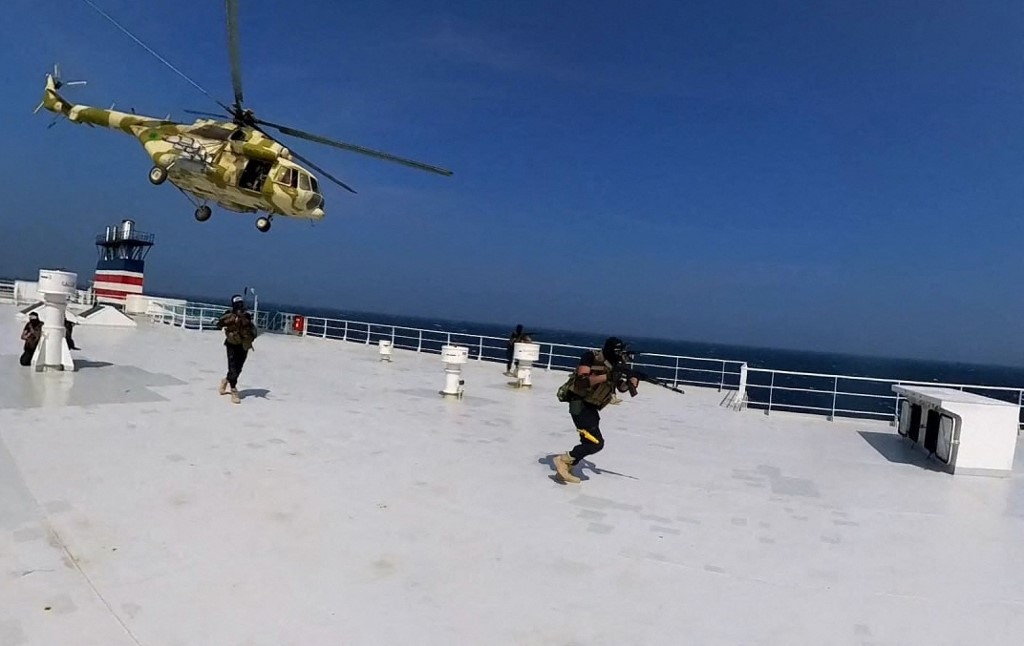
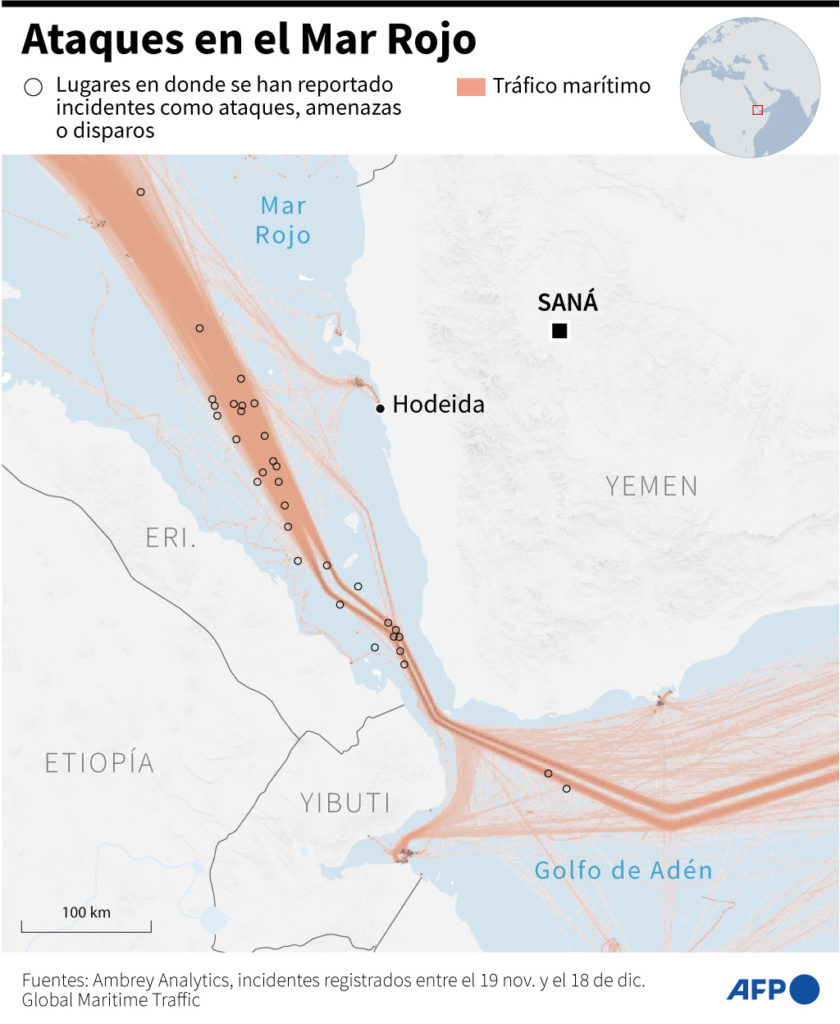
“The Gate of Lamentations” or Bab el-Mandeb. Perhaps the name of the strait separating the Red Sea from the Gulf of Aden has never been more aptly applied than in recent days, as enormous cargo ships are being attacked by Houthi rebels from Yemen in a show of solidarity with the radical Palestinian group Hamas.
While destroyers and frigates from the United States, United Kingdom, and France deployed in the area have managed to intercept a significant number of missiles and drones launched by the Iran-backed insurgents, dozens of ships have been hit and even boarded, prompting shipping companies Maersk, MSC, Hapag-Lloyd, CMA CGM, Evergreen, and BP to temporarily suspend the transit of their vessels through this passage, which connects trade between Europe and Asia.
Due to the prior existence of Somali pirates, there are already naval missions in the area, such as Atalanta from the European Union and Combined Task Force 151, based in Oman, as well as individual navy ships conducting patrols. However, as the new threat includes the use of much more powerful weapons than AK-47 rifles and RPG-7 grenade launchers, the Pentagon announced the launch of Operation “Guardian of Prosperity,” involving the participation of the United States, Bahrain, Canada, Spain, France, Italy, the Netherlands, Norway, the United Kingdom, and Seychelles, who will form Combined Task Force 153.
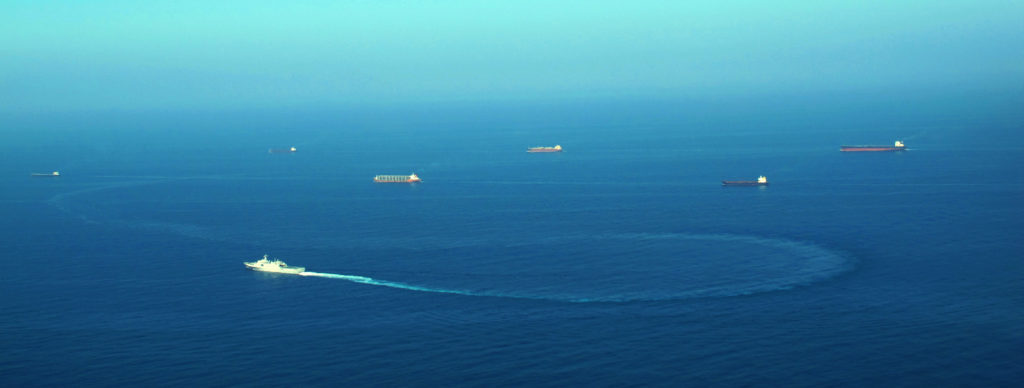
The route through Bab el-Mandeb accounts for 40% of global trade, including 11% of the world’s oil and 8% of liquefied natural gas. The goods traded through this route total $1 trillion. According to our on-the-ground observations, there is high maritime traffic, where one can see everything from enormous LNG tankers to traditional dhows or modern warships alongside tuna fishing vessels.
While Chile’s foreign trade is not affected by the new disruption of this route, comparable only to the boom of piracy in the early 2000s, 30% of Hapag-Lloyd belongs to CSAV, which holds 30% of the Luksic group. Thus, there are national capitals at stake. Moreover, since freedom of navigation is an absolute value, when it is affected in one area, it is affected everywhere. Given that Chile is a country that relates to the world primarily through the sea, it is essential to analyze what has occurred.
CONTEXT. In the Yemeni civil war, which began in 2014 following the coup against President Al-Hadi, his supporters, backed by a coalition of Arab and Western states, face off against the Houthi rebels, who allegedly receive weapons and training from Iran. Amid the instability generated by this conflict, which has left over 370,000 dead according to the United Nations, Al-Qaeda in the Arabian Peninsula and the Islamic State have also made their presence felt.
Given Yemen’s projection toward the Gulf of Aden, the confrontation has directly and indirectly impacted maritime traffic in the area. Following Israel’s retaliation against Hamas for its terrorist military incursion, the rebels have expressed their support for Gaza by initially attacking ships heading to Israeli ports and whose ownership is associated with citizens of that country.
The magnitude of these hostile actions has prompted naval forces from mostly Western countries to create a Combined Task Force, making an escalation likely if deterrence fails.
“Countries that seek to defend the fundamental principle of freedom of navigation must unite to address the challenge posed by this non-state actor,” stated U.S. Secretary of Defense Lloyd Austin in a statement.
MILITARY OPTIONS. The cards are on the table, and in this case, the options are multiple, as there is a permanent naval presence from Western and Asian navies in the area, as well as air bases and special forces.
At its narrowest point, the Bab el-Mandeb strait is 15 nautical miles wide, with Yemen on one side and Djibouti on the other, a small country with a population of just over one million, but which boasts one of the best-protected bays in East Africa, explaining the current presence of U.S., European, Chinese, and Japanese military forces.
What was once an old Foreign Legion outpost is now Camp Lemonnier, a base managed by U.S. Africa Command, where attack drones, helicopters, spy planes, fighter jets, and special forces, such as Navy Seals and Army Delta units, are deployed. Adjacent to it is Colonel Massart, where the French Air Force has permanent units.
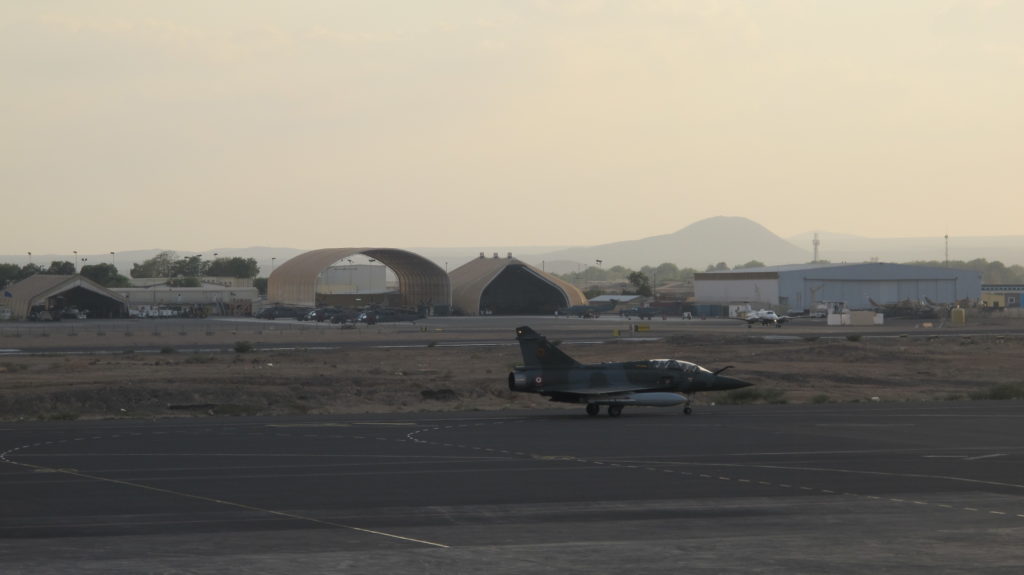
Given all of the above, a plausible option would be to launch airstrikes against Houthi rebel positions from which maritime trade is being targeted—especially missile and drone launchers and storage facilities—something the United States has already been doing in the Middle East in response to attacks on its forces as a result of the war in Gaza.
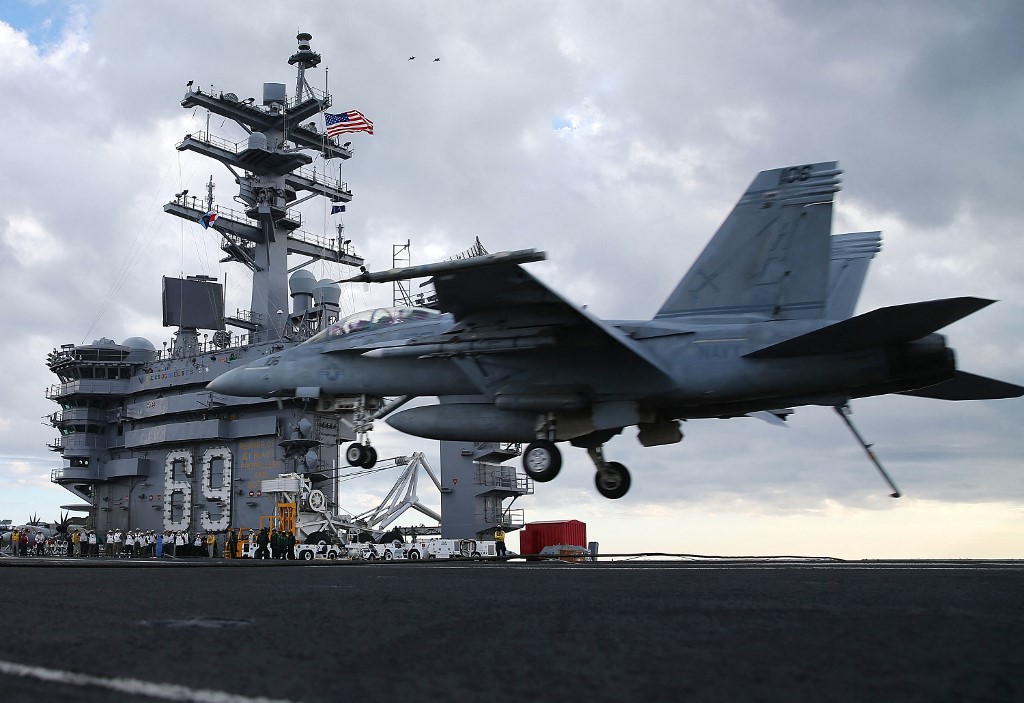
Another alternative is to launch land attacks from naval units with cruise missiles and embarked aircraft, as the aircraft carrier “USS Dwight Eisenhower” and the amphibious ship “USS Bataan” with their support units are in the area.
If less belligerent options are desired, there are at least two proven possibilities from the past: directly escorting cargo ships or creating safe transit corridors.
During the Iran-Iraq War (1980-1988), both countries attacked tankers leaving the Persian Gulf loaded with fuel for developed economies. At that time, Western ships led by the United States decided to escort and repel attacks against these vessels by the aggressors, who deployed mines and launched missiles. The United Nations reported six ships sunk in 1987, two in 1986, none in 1985, and three in 1984, while dozens suffered damage.
In the Gulf of Aden, there is already the Recommended International Transit Corridor (IRTC), a sort of imaginary highway drawn over the water, 12 nautical miles wide and 490 long, extending southwest-northeast between Somalia and Yemen. Cargo ships voluntarily entering this corridor notify their position, which is permanently monitored by European vessels that divide it into quadrants.
The option ultimately adopted will depend not only on the response of the Houthis, who have promised to turn the “Red Sea into a ‘graveyard’ for coalition ships, but also on how Iran may react to a direct attack against one of its pawns in the great game of the Middle East.
DISRUPTIONS. The COVID-19 pandemic made it clear that supply chains are more fragile than one might think in a globalized economy. The closure of factories, ports, and entire countries led to major disruptions in global trade for health reasons.
Then, in 2021, the container ship “Ever Given” ran aground in the Suez Canal, blocking a route through which $10 billion in trade passes daily. Weather conditions and poor maneuvers caused the accident.
In 2022, Russia’s invasion of Ukraine complicated the export of grains and cereals through the Black Sea, affecting food security in several countries that depend on access to those markets. After Turkey brokered an agreement between the parties, flows were restored.
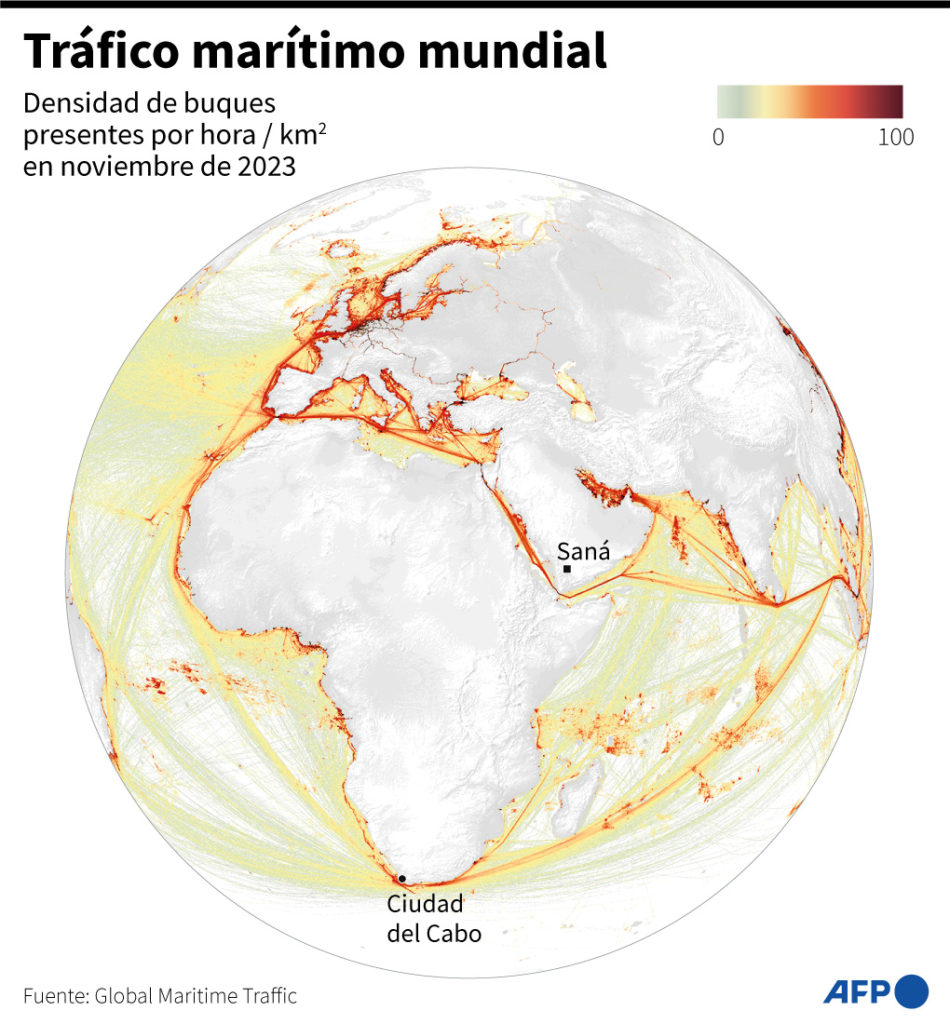
This year, there has been a series of attacks by a non-state actor against shipping companies transporting cargo worldwide, forcing the use of the alternative route around the Cape of Good Hope, adding 10 to 12 days of navigation between Asia and Europe, along with the associated costs.
One could also consider the impact of drought on the Panama Canal, which, while not caused by human action, is slowing traffic through the passage that connects the Atlantic and Pacific Oceans.
CONCLUSIONS. The increasing disruptions affecting maritime traffic, which drives the global economy, can stem from deliberate human actions, whether by states or non-state actors, accidents, or natural phenomena, necessitating vigilance from all involved.
Among them are navies, institutions whose primary mission is to ensure that maritime trade routes remain open, for which they need a good situational awareness and effective presence. This requires ongoing investment in naval forces and the promotion of interoperability to work in coalitions. The options to achieve this objective are varied and depend on the type of disruption that arises.
Despite having detractors, interoceanic passages and straits are of great importance, and it seems that significant incidents must occur for those who are unaware of their value to realize it, which stems from their “position,” meaning their location on nautical charts. Not for nothing are they referred to in English as “choke points.”
When we address the maritime aspect of the conflict between Hamas and Israel, while we note that it is a minor theater, we draw attention to the potential impact on commercial traffic, given its proximity to important trade routes. This is indeed happening, to the extent that it has awakened the “Guardian of Prosperity.”
Juan Pablo Toro, Executive Director of AthenaLab
December 20, 2023
Photos: France Presse and Juan Pablo Toro