ANALYSIS | The Judicial Aspect of the Israel-Palestine Conflict
This article was translated automatically and may contain differences from the original. For reference, read the original.
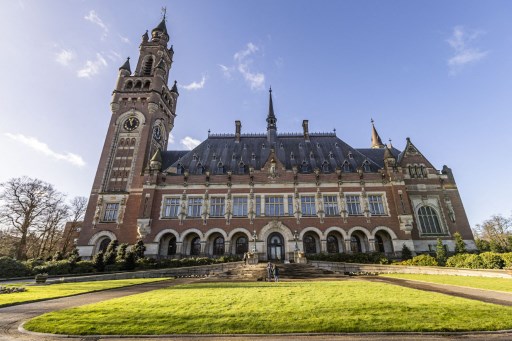
The case of South Africa versus Israel before the International Court of Justice (ICJ) in The Hague, which dominated international news in the first month of 2024, is just one of three ongoing international legal proceedings related to the Israel-Palestine conflict:
a) Before the International Criminal Court, which addresses individual responsibilities rather than those of states, the Prosecutor has been conducting an investigation since March 2021, covering the current escalation and actions from both sides (including crimes in Palestine and those committed in Israel by Hamas). Chile recently announced a “referral” of the situation in Gaza to the Court (which means requesting an investigation); a procedure of merely symbolic effect, given that the investigation already exists. The Prosecutor is also conducting 16 other investigations, including crimes occurring in Ukraine following the Russian invasion, and serious human rights violations happening in Venezuela.
b) Before the International Court of Justice in The Hague, which handles state versus state cases, there are two processes:
Consequences Legal of Political and Practices of Israel in occupied territory
Concerns an advisory opinion requested from the Court by the United Nations General Assembly in January 2023. This opinion, while not deciding a dispute between countries, has significant influence on the interpretation of norms and concepts, which is why states may choose to intervene in the proceedings. In this specific case, Chile requested to argue in the public hearing on February 19, the day on which the submissions of the interveners will be made public (Chile submitted them in July and October 2023). It is important to note that the presentations made by Chile before this forum commit the state, not a particular administration.
– South Africa vs Israel
In this dispute, South Africa alleges that Israel is committing genocide against the Palestinian population in the Gaza Strip, an accusation that Israel rejects. The lawsuit was filed on December 29, 2023, with South Africa urgently requesting certain provisional measures. Regarding this request (not the merits), there was a public hearing, followed by a decision from the Court. Our Foreign Ministry has stated that it is considering a possible intervention by Chile as a third party in the merits phase, which will last several years, like all contentious cases before the ICJ.
What is genocide?
Genocide is the “denial of the right to existence of entire human groups, just as homicide is the denial of the right to life of individual human beings” (resolution 96(1) of the UN General Assembly). It was recognized as an international crime after the Nuremberg trials and is now incorporated in the 1948 Convention on Genocide. It is a concept distinct from war crimes and crimes against humanity, each having its own legal regime.
- Genocide is a mass violation characterized by the specific intent to destroy a national, ethnic, racial, or religious group, through the death of its members or other means. War crimes
- are serious violations of the Geneva Conventions (the main sources of humanitarian law), as well as other serious violations specified in the Rome Statute, including, for example, murder, torture of prisoners of war or civilians, and deliberate attacks against buildings for charitable, educational, or religious purposes. Crimes against humanity are serious violations committed in the context of a deliberate and widespread or systematic attack against the entire civilian population. This includes murder, rape, enforced disappearance, imprisonment, torture, and
- apartheid. Genocide is very difficult to prove: international jurisprudence indicates that a very high number of victims or a terrible humanitarian situation is not sufficient. It must be demonstrated that there is a specific intent to destroy the group in question. Therefore, significant civilian casualties during a war generally constitute crimes against humanity or war crimes, but not genocide. On the other hand, if there was indeed this special intent, it would be possible to commit genocide even with few deaths, for example. Provisional measures in South Africa versus IsraelThe Court’s order of January 26, 2024, regarding provisional measures has sparked ongoing global debate, beyond the interpretations that the parties weave to assert their position. This judicial decision established that there is a real controversy between the two countries regarding the application of the Convention on Genocide, where South Africa can sue Israel since the obligations of State Parties under that treaty are
erga omnes
: they concern the international community as a whole. At this initial stage regarding
provisional measures the Court did not judgewhether
genocide has been committed in Gaza , nor did it decide whether it has jurisdiction over the case.It only needed to ascertain certain basic assumptions, such as its competence prima facie, the plausibility and urgent nature of the requested measures, the potential for irreparable harm if the request is not granted, and South Africa’s “standing” to present the case. In its decision, the court described how it considered these conditions to be met, recalling, on one hand, the attack on October 7, 2023, against Israel involving hostage-taking and loss of life, and on the other, the human and material suffering caused by Israel in Gaza. The ICJ also noted that all parties are bound by international humanitarian law (that is, the norms regulating war); and expressed its grave concern for the fate of the hostages, calling for their immediate and unconditional release. Regarding Gaza, the Court established that the catastrophic humanitarian situation is indeedat serious risk of further deterioration
before a final judgment can be issued in this case. For this reason, it agreed to some of the provisional measures requested by South Africa, although without adopting the South African language on the matter, and without including a ceasefire.
Under the framework of the Convention against Genocide, at this stage the ICJ ordered Israel to:
Take all measures within its power to prevent acts that violate the Convention (such as killings causing serious physical or mental harm, the deliberate imposition of living conditions calculated to bring about the total or partial physical destruction of the population, or measures aimed at preventing births); Ensure that its military forces do not commit the acts mentioned in point 1; Take all measures within its power to prevent and punish direct and public incitement to commit genocide; Take immediate and effective measures to allow the provision of humanitarian aid to Gaza; Take effective measures to prevent the destruction of evidence related to allegations of acts contrary to the Convention;
Submit a report to the Court within one month on the measures it has taken to comply with the Order.
- Legal analysis
- The Court affirmed that Palestinians have the right to be protected from acts of genocide. In this context, measures 1, 2, and 3 reaffirm existing obligations of Israel under the Convention on Genocide, which Israel claims to already be fulfilling. It must prevent such actions by taking “all measures within its power” and also allow the entry of humanitarian aid needed in Gaza (measure No. 5). It should be noted that it is not ordered to provide
- basic services and humanitarian assistance, but only to “allow the provision” by others, which Israel has also claimed to be doing. Regarding measures No. 5 and 6, the preservation of evidence and submission of reports in a timely manner are fairly common measures in provisional orders.
- Substantively, the order is not overly burdensome for Israel: among the ordered measures, there was no inclusion of a suspension of military operations, nor was there any mention of the forced mass displacement of Gazans, or of investigative missions already operating in the area.
- Furthermore, beyond the measures themselves ordered by the Court, it is important to look at the considerations, where Israel’s right to legitimate defense is not the issue at hand, but only whether it is consistent with the Convention on Genocide. In this regard, the Court expresses great concern over Israel’s military actions, as well as the statements of its leaders, and therefore believes that at least some of the acts and omissions allegedly committed by Israel in Gaza, according to South Africa, appear to meet the plausibility criterion. That is, without determining that genocide has actually occurred, the situation is now serious enough to warrant provisional measures.
- Situation of Hamas
Only states can appear before this Court, and Hamas is not one. However, given that the ICJ cannot address crimes committed by members of Hamas, it is possible that those crimes fall within the investigations of criminal courts, including the International Criminal Court. In any case, it is not feasible to present accusations of violations of the laws of war before the ICJ—applicable to Hamas as a belligerent—since there is no treaty that grants the Court jurisdiction as the Convention on Genocide does.
What comes next The Court will set a timeline for the next stages of the process. As Israel argues that the ICJ lacks jurisdiction, deciding on that issue could trigger another preliminary phase of the proceedings. This phase of “preliminary objections” will require additional written submissions and another oral hearing. If the court decides that it does have jurisdiction and does not dismiss the case, the parties will present memorials on the merits of the matter and arguments in another oral hearing. At that time, other countries that are parties to the Convention on Genocide may intervene to join the case in support of one side or the other.
Several years will pass before a final judgment exists regarding the South African allegations and Israel’s defense.
Paz Zárate, researcher at AthenaLab
February 2, 2024
Photo: France Presse.