COMMENTARY | Dependencies as a Weapon; the Warning from the EU Schuman Forum on Security and Defense
This article was translated automatically and may contain differences from the original. For reference, read the original.
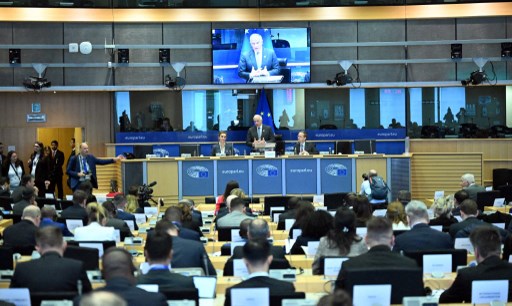
Among all the warnings issued by the High Representative of the European Union, Josep Borrell, at the second edition of the Schuman Forum on Security and Defense, held this week in Brussels, perhaps the most relevant for Latin America is the one related to the use of dependencies as a weapon in an era of competition and confrontation.
In an interconnected world—the greatest difference from the Cold War—the disruption of flows of goods, capital, data, energy, and labor is a way for both state and non-state actors to exert power in an attempt to impose their political objectives without resorting to total direct conflict, Borrell stated at the meeting to which the AthenaLab think tank was invited.
It is true that economic coercion is back with more force than ever; it is not just a hypothesis. And while Latin America is not directly involved in the conflicts in Europe, the Middle East, and East Asia, it must prepare itself, or at least take note, as it is a region primarily exporting raw materials (hydrocarbons, minerals, and agricultural products) and importing capital (investments) and manufactured goods (from mobile phones to industrial machinery).
Among the most commonly used tools today, the preferred ones of the West are economic and trade sanctions, which aim to punish governments, high officials, companies, and individuals. Freezing assets, preventing transactions, or penalizing misconduct are part of a wide range of possibilities; the United States and Europe have extensive experience and legislation in this regard.
In this way, the goal is to prevent domestic and foreign companies from transferring inputs and technology, for example, to the nuclear programs of North Korea and Iran, which does not always work, but at least dramatically increases the cost of access. Additionally, kleptocrats from Africa and Latin America, generally linked to dictatorial governments, find that they cannot enjoy their ill-gotten gains. In this regard, the lifting of banking secrecy and the pursuit of illicit finances are key.
Sabotages to critical infrastructure are also a useful lever for exercising economic coercion. The blowing up of gas pipelines, such as Nordstream 2, which was to transport gas from Russia to Central European countries, including Germany; the cutting of fiber optic cables in the Baltic Sea, North Sea, and Red Sea (Houthi rebels sponsored by Iran); or the constant cyberattacks on private banking and public services in Western or pro-Western countries (National Health Services, United Kingdom) are all recurring events.
Finally, there are blockades, especially feasible in the maritime domain, such as the one temporarily implemented by Russia in the Black Sea to prevent the export of grain from Ukraine to international markets. The severe damage caused to the Russian fleet by Ukrainian counterattacks, along with the determined efforts of Turkey, which controls the Bosporus and Dardanelles straits, have prevented this initiative from being repeated. There is no doubt that the exercises conducted by Chinese ships and fighters around Taiwan in recent days seem to be a practice of a potential blockade; a less radical alternative whose response requires more caution than an invasion, where all ambiguities disappear.
Thus, the question that arises is what to do to prevent dependencies—undoubtedly beneficial—from being manipulated in such a way that they become weapons in the hands of powers or non-state actors with negative intentions.
In the case of the European Union (EU), it is proposed to improve the autonomy and resilience of individual societies and allied countries. This involves generating policies to stimulate the development of domestic industries, which does not necessarily mean protectionism, but rather creating favorable conditions to make investments in this area attractive.
There is also the signing or updating of cooperation agreements with allied countries to ensure supply chains, both in normal conditions and in times of crisis, so that they do not suffer disruptions. The EU’s Global Gateway program, which includes incentives of 100 billion euros, aligns with this approach.
The resilience of societies implies having the means to protect their critical infrastructure and to respond/repair in case of an attack. This requires ongoing assessment and public-private collaboration to generate a strategy. Ukrainian authorities, for example, require banks to maintain fuel reserves so that their generators allow them to continue operating in the event of power outages, as digital transactions cannot be halted.
Regarding defense, there must also be capabilities to prevent blockades or attacks on the vital flows of economies. The EU launched Operation Aspides (“shields” in Greek) last February to address attacks by Houthi rebels from Yemen against cargo ships crossing the Red Sea. While its commander, Greek Admiral Vasileios Gryparis, stated that this is the “most kinetic mission” the EU has faced, it is, in fact, purely defensive. The deployed ships from Germany, Belgium, France, Greece, Italy, and the Netherlands intercept missiles and drones, but do not attack the aggressors on land (a matter where the initiative remains in the hands of the United States and the United Kingdom).
In an interconnected world, where countries compete to attract flows of goods, capital, talent, data, and energy towards themselves, in what geopolitical analyst Parag Khanna described as the old game of tugging the rope, but not with one, but with many at the same time, it is crucial for national economies to be aware of their global dependencies. Otherwise, they will only perceive their vulnerabilities when they begin to suffer them. As happened to the EU when it discovered it was dependent on Russian energy, Chinese trade, and U.S. security, which was not a problem in a world where most behaved. But that is history, and now it is trying to escape from it at full speed.
Juan Pablo Toro, Executive Director of AthenaLab.
Brussels, May 30, 2024
Photo: France Presse