INTERVIEW | The Future of Land Warfare Goes Beyond What Happens on the Battlefield
This article was translated automatically and may contain differences from the original. For reference, read the original.
- by Santiago Rivas
- Interviews
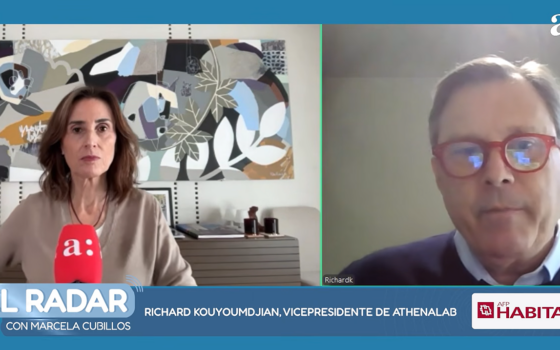
We spoke with Marcelo Masalleras, senior researcher at AthenaLab, analyzing the latest edition of the Land Warfare Conference organized by RUSI on the European vision of the future of land warfare based on lessons learned from the conflict in Ukraine.
By Santiago Rivas
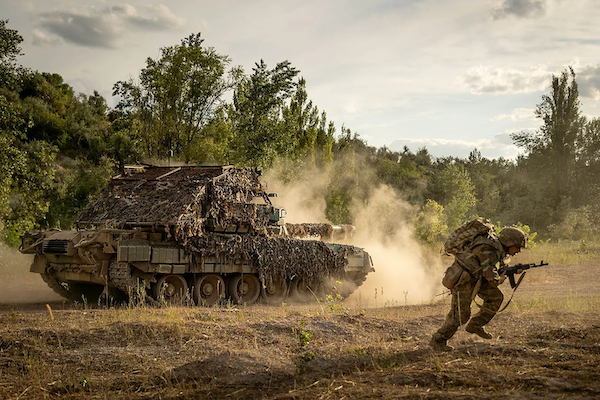
On July 22 and 23, a new edition of the “Land Warfare Conference” was held in London, organized by the Royal United Services Institute (RUSI), where discussions focused on the changes occurring in warfare as evidenced by the conflict following the Russian invasion of Ukraine, as well as how the West is responding to this new reality. Among the speakers were John Healey, the new Secretary of State for the Armed Forces of the United Kingdom; the former Commander-in-Chief of the Ukrainian Armed Forces and new Ambassador to the UK, General (Ret.) Valerii Zaluzhny; Admiral Tony Radakin, Chief of the Defence Staff; and General Roly Walker, Chief of the General Staff of the British Army. The conference also featured officials, members of the North Atlantic Treaty Organization (NATO), academics, and representatives from various think tanks and the defense industry.
To learn about the topics discussed at the conference, we spoke with one of its attendees, Marcelo Masalleras, senior researcher at AthenaLab, with whom we also analyzed how the issues raised are relevant to Latin America. According to Masalleras, an initial assessment that emerged from the conference was that the initial evaluation of the international context is concerning, as in addition to the war unleashed by Russia, tensions in the Taiwan Strait, the Korean Peninsula, and the Middle East were highlighted, not to mention the complex political and security situation in sub-Saharan Africa and Latin America. In this context, the formation of an “axis” of states that are openly challenging the current international system is identified, leading to consequent instability and increased conflict.
“For obvious reasons, the war in Ukraine is the central topic, and all discussions should start from what is happening in Ukraine and Europe in general. For those who participated in the conference, the future of Europe is closely tied to what will happen in Ukraine. I had the opportunity to visit Poland and Ukraine in the days leading up to the conference, and that perception is echoed for several reasons: one is Russia’s attitude and how Russia will ultimately fare; secondly, it has generated a sense of insecurity regarding a very assertive Russia, as it has detected regional powers that were in a sort of slumber, such as Germany, for example, which had heavily relied its security context on an alliance with Russia, believing that the European security context would depend on involving Russia in this equation. This was one of the strategies employed by Germany that ultimately did not work, as energy and economic dependence were not sufficient for Russia to launch its large-scale offensive in 2022.” Massalleras began explaining, adding that thus “one can perceive this sort of sense of risk and, at the same time, a very broad commitment to support Ukraine, which is evident in financial support and is apparently also going to evolve into increased military support, because if one considers the European Union as a whole, it is the main contributor to Ukraine’s war effort in financial terms, but in terms of weapon systems, the United States remains the largest supplier of weapons arriving in quantity to Ukraine. However, this commitment is perceived not only for this year but for the next 2 or 3 years, likely until 2027, very secured for Ukraine’s effort.”.

Pucará Defensa: Speaking of the lessons learned from the war, how will this change the way land warfare is conducted?
Marcelo Masalleras: Yes, I believe that lessons are being learned at all levels. First, at the strategic level, what is most repeated is that wars are not improvised. One must be prepared for this eventuality. Secondly, the state requires certain capabilities to sustain warfare. If you look at the current war front between Russia and Ukraine, there are changes, but they are minor in terms of kilometers; some meters are gained on one side and lost on the other, but the effort of war, that is, the capacity of states to sustain military operations in the long term, is what is currently determining the war. The ability to generate personnel replacements in terms of mobilization, but also of material, is determining what happens in the war.
When Ukraine had a sufficient amount of ammunition, it could neutralize the large mass of artillery that Russia was using, but today the ratio of artillery use has reached 5, 6, and even 10 to 1 on the battlefield. Therefore, a relevant aspect is this industrial capacity to sustain operations in the long term. And if we move to the more operational and tactical field, I believe one of the most relevant points during the conference was this idea of battlefield transparency, meaning the ability to concentrate or maneuver to create surprise has significantly diminished, as the number of sensors—land, air, space, or of different types—is so large that movements are detected from long distances, and if this transparency is combined with the increase in the lethality of weapon systems, it poses a tremendous challenge for the employment of combined arms units, which has been a problem for both Russia and Ukraine during the war. The ability to employ units of different characteristics in a coordinated manner in time, space, and purpose, and to concentrate them to generate an effect has been very difficult.
Russia’s case in the first year of war was dramatic and decisive, and Ukraine took advantage of it. Last year, during the expected summer offensive from Ukraine, Ukraine faced similar issues; it could operate on the tactical field, but at a very low level—platoon, company—with some level of success, but the inability to scale the success of a local platoon or company to larger units. There were penetrations in the Russian defensive line, but they were unable to integrate and coordinate the actions of larger units, which allowed Russia to reinforce that front and recover the line.
If we add more ingredients, such as new weapon systems and new modalities of weapon system employment, this need to scale the use of combined arms on the ground has been decisive in what has happened in operations.

PD: There is a matter regarding the new characteristics of the battlefield; these changes with the use of drones and electronic warfare systems have brought electronic warfare down to the level of small units.
MM: Certainly. That was part of Jack Watling’s presentation from RUSI; he spoke about both battlefield transparency and these new enablers necessary on the battlefield, and one of those enablers is electronic warfare. What he proposes is that there is such a demand for electronic warfare capability that it should be brought down to lower levels, that is, to very tactical levels, not concentrated in larger combined arms units, but at very tactical levels, and that these capabilities, in addition to avoiding interference, must be integrated not only vertically but also horizontally at the level of weapon systems. In other words, the electronic warfare capabilities that are currently spread at the tactical level should not interfere with the employment of other new weapon systems, such as autonomous, unmanned aerial or ground systems.
The battlefield today is largely determined by the extensive use of drones; this is no mystery and has been widely reported. In the interviews I had in Ukraine, they indicated that today Ukraine is producing, and this is closely related to industrial capacity, which is not necessarily the capacity of the state but also of private companies. Ukraine is producing almost 100% of the tactical drones, the First Person View (FPV) drones, used to attack vehicles.
Heavy industry, but also smaller industries, even individuals and small companies in garages are assembling drones that are subsequently delivered to the forces for use on the battlefield. The massification of these technologies should not be compromised by, for example, the use of electronic warfare means to counter the adversary’s means. Thus, this transparency mixes with new systems, with the need to bring them down to lower levels, but also with the need to coordinate different units and means, and there Jack Watling spoke about this necessary horizontal integration.

PD: In this regard, what did Zaluzhny highlight? It is interesting to see his perspective from Ukraine.
MM: Undoubtedly, Zaluzhny’s intervention was one of the most anticipated; he was the commander in charge of the forces for years, and a change of command took place at the beginning of the year by President Zelensky, in a new position. He insisted that he is now in a diplomatic role and takes it very seriously.
He said very interesting things, first that he is in favor of and will always defend that war must be avoided at all costs. However, when that does not happen, and I believe that the large-scale invasion by Russia is an example of that, when the international system fails to prevent war, we return to a very realistic view of the world: countries act based on interests, and the importance of those interests will determine the behavior of these states, and for Russia, this was important. And it ultimately decided to invade. When war cannot be avoided, one must be prepared, and this preparation obviously involves the Armed Forces, but what Zelensky expressed is that as important, if not more important than the Armed Forces, is preparing society. Preparing society to be able to endure the effort of war. Preparing society to be resilient in its will to continue operations and continue supporting both the government and the Armed Forces. But also to have a strong will to provide the means, not only military, to sustain operations. The preparation for war must be addressed by the state and the Armed Forces, but also by society as a whole. Another interesting point, perhaps with a more diplomatic perspective, is that he stated, as Clausewitz expressed, that war is nothing more than the continuation of politics by other means, and as it is a political activity, sooner or later this political activity will end up affecting other states politically. And what is happening? In Europe, there is that sense of insecurity that he expressed and a political commitment to sustain operations.
He spoke a lot about having the capabilities to respond, being flexible, using innovation and their own capabilities to carry out the war effort. And that war, perhaps with a much higher perspective, is determined by the capacity to sustain it. Obviously, the will to fight, the capabilities, the military units, but largely it is determined by the capacity of states to sustain operations; if ammunition runs out, defense becomes complicated.
PD: At this point, an interesting topic is when they talk at the conference about the importance of the Defense Industrial Base, to have it and develop it, which relates to this capacity to sustain war over time.
MM: Yes, what we see and analyze is that it is true that it is impossible for a state that is not the United States or China to manufacture everything and have everything in sufficient quantity. Recognizing this reality, each state must identify certain areas in which it does need to have some independence, and I am not only thinking in terms of armed conflict but also in terms of training or even in terms of shortages. Today, if you want to buy 155 mm artillery ammunition, it will be very difficult to find. On one hand, there is high consumption by Ukraine and Israel, which is draining arsenals, but at the same time, there is a loss of production capacity for ammunition of this caliber. Therefore, the United States and European countries, Korea, Japan, which were producers, over time, and this is closely related to the change in the nature of warfare we saw at the beginning of the 21st century, with an effort focused on counterinsurgency and counter-terrorism, which demanded special tactics, the industry’s effort focused on that and sacrificed this type of capacity, the ability to sustain large-scale operations of large units for extended periods.
It turned into a strategic environment of states versus non-state organizations, and this idea of fighting between peers, between states of relatively similar magnitude, which demand this type of weapon systems, was sacrificed. Therefore, today there is no available ammunition, which can even compromise the maintenance of the operational capacity of the armies in the region in terms of exercises, or even maintaining efficiency. Capabilities, for example, to maintain armored units or maintain warships, submarines, that kind of thing is the minimum that a medium or small state should have. They are necessary to face crises, whether military crises—I am not necessarily talking about armed conflict—but also to face crises elsewhere in the world that end up affecting one, such as spare parts for certain components that are necessary. We are not talking about an industrial capacity to manufacture tanks or things like that necessarily, but each state must take the time to analyze what the minimum requirements are to have a level of security that each state will define individually.

PD: Another related topic is personnel retention. The conference discussed the difficulties that forces have in retaining qualified personnel. This is evident in Latin America, but it also occurs in Europe and the United States.
MM: This is a huge issue; it is a key point, and while it is true that we in Latin America have considerable sensitivity because it is something we have been addressing over time, personally, I did not expect it to be addressed so directly at the conference. Indeed, for us in Latin America, this is not a new issue; the Armed Forces, and I can speak more authoritatively about the case of Chile, face what I believe has been an increasingly aggravated need over time to attract a good base. Secondly, to train it in the best way, and thirdly, to retain it over time, so that this investment pays off for the state in the areas it has defined as priorities.
Thus, the possibility of losing pilots, for example, regarding an aviation industry that has increasing demand, especially after the COVID crisis, where there were no pilot training courses and pilots who stopped being pilots had to reinvent themselves and did not return to the aviation industry, has led to an increase in demand that has drained the air forces, I believe, of all countries in the region. But it does not end there; the Armed Forces lose very talented and skilled individuals who, at the end of the day, are resources for the state. I will put it in a perhaps more dramatic way, but perhaps as serious as losing the best people is that the worst people remain.
This, which I did not expect to hear at the conference, was a relevant topic in a couple of presentations, one in particular that addressed this quite starkly. On one hand, it was mentioned, in the case of the British Army, that more than having problems in terms of capacity to call for recruitment, the problem they are facing is that those who are responding to the calls do not meet the profile. Therefore, the discussion should center on “What do we do? Do we change the profiles to have better recruitment, or do we insist on the profiles and accept the losses?” This is very much associated with demographic change, generational change, the interests of new generations, in their way of being, in what they are willing to sacrifice, in how they view the world of security and defense, which is part of the analysis that needs to be carried out. And, parallel to that, the topic of training and talent retention was addressed. The best way to retain talented individuals is to provide them with the means to do what they need to do. That the state and each of the institutions provide the conditions and tools for them to train in what has inspired them and led them to be part of this institution.

PD: Sometimes the salary aspect is overly emphasized, rather than considering what the career perspective is for that professional. At a certain age, the professional looks more at career prospects than whether the salary is good or bad.
MM: Yes, I believe that more important than salary are these other factors, that is, the ability to develop in an area in which you were inspired and to which you adhered, because the salary issue is assumed when one enters these institutions, but one enters with a series of illusions, aspirations to do things. Therefore, when that is broken, it is more serious than the specific salary issue. In the end, salary becomes a complement to all this, meaning “I am not doing what I like, and on top of that, I am not earning what I want.” It ultimately leads to a break, but more important than salary, and I believe even from personal experience, is having the opportunity to develop in a career that inspired you to serve your country. What we have experienced in Latin America, COVID, which required the Armed Forces in practically all countries to support the state’s function in facing the pandemic, which is obvious, is logical, and I believe everyone supported it. The Armed Forces are very committed in all nations, but that has also continued over time and has been combined with certain specific and particular characteristics in our region, where we are facing a very precarious situation of internal security in the states, with a weakening of the rule of law in many states in the region. With an internationalization of organized crime that has led the population to demand greater military force, even though the problem is understood not to be a military one, but a public security issue, the population is demanding greater military force. Therefore, if one starts to add things up, one realizes that there are a greater number of tasks for the Armed Forces. At the same time, these tasks are lasting longer, but continue with the same or even lesser budget, and with the same or fewer personnel in the Armed Forces. So, what will be the outcome? People stop doing what they are called to do, that is, the defense function, and I believe this is also generating a problem that will affect talent retention.

PD: The military says that he joined to fulfill a task, which is defense, and does not want to go out to patrol a street or pursue criminals, and loses that incentive for his career; he sees that he is not doing what he wanted to do when he joined the force.
MM: Yes, that is a topic we could discuss at length, but it is a political problem; here, those who make the decisions to employ military force are not the Armed Forces, but the political power. If the political body makes a poor diagnosis, then for a problem that is of an internal nature, it will employ military forces, which is not logical. I do not mean to say that they should not do so or that they should not support certain functions, but those who are better suited to confront organized crime are the police forces.
Therefore, if you need more police forces because you are short, the solution is not to send in the military, because the military are not police; they are military. So what you need to do is have more police forces, and there are various ways to achieve that. You can bring in more people to graduate more from police academies. You can call back retired police officers to fulfill perhaps administrative functions and free up younger police officers for operational roles. You can employ other state agencies to perform functions that police forces fulfill. And there, the Armed Forces can collaborate. For example, in Chile, if someone is lost in the mountains, the ones who normally rescue them are the Carabineros, and there are forces trained for that. The Army has forces as good or better for mountain operations; they can do that. There are many areas where police can be rescued, Carabineros in the case of Chile, and employ another state institution to cover, if the problem is the lack of Carabineros. The solution is to put more Carabineros on the streets and not employ the Armed Forces for police functions. If at some point it is necessary to do so, it is a political decision, and the state should not limit itself to employing all the powers it has to carry out such delicate functions.
But one must be careful because if the situation is not that delicate and you employ military forces, but in the same context in which you employed police forces, it is very difficult to achieve a different result. The problem is that if you employed military forces, what do you have left after that? There is nothing else.

PD: In this context of personnel retention, what was proposed at the conference regarding how forces can retain people so they do not leave?
MM: I believe the main foundation discussed from various perspectives is undoubtedly ensuring that the forces have the means to do their job, meaning they have ammunition for training, fuel for navigation, and training opportunities in all areas. The state must ensure the possibility for them to do their work, and I believe that was a consensus among all. Beyond the issue of salaries, it was not something that was addressed; rather, the various institutions should have the means and the opportunity to carry out their functions and not be distracted by other matters or be held back by a lack of opportunities to train and develop their skills. The intellectual training of the forces is very important; someone mentioned during the presentation, I believe it was the Chief of the General Staff of the British Army citing someone I do not recall, that an academically well-prepared commander will make better decisions than one who is not.
Training and education under the right conditions, I believe, was the best recipe discussed for maintaining and retaining talent.

PD: Moving on to another topic, they mention other threats that arise in the Far East and the Middle East, such as what is happening in Israel or between China and Taiwan.
MM: The center of gravity of the discussion was what was happening in Europe, for logical reasons, because it is a more immediate threat, but at the same time, it is recognized that there are other states challenging this rules-based international system, and there was some discussion about the formation of a sort of axis of like-minded states that are in this campaign. Obviously, China was directly mentioned; we must not forget that several European countries have a presence in the Indo-Pacific, the UK and France do. They see China as a real threat.
But also what is happening in the Middle East and the presence of Iran, the migratory pressure, which, according to Europeans, is being exploited by Russia to channel immigrants into the European Union, generating significant demographic pressure, and not only now. To put it in a certain way, someone said at one point that Russia is at war with Europe, but Europe is not at war with Russia, and this war manifests itself not from the perspective of an armed attack, but through other means—economically, socially, diplomatically, through cyberspace, through information campaigns, through influence in political campaigns, etc. The same is perceived towards China, Iran, North Korea, because in this sort of axis, Russia, which has been deteriorating in its military potential, has the possibility of recovering more quickly through the help it is receiving from North Korea with ammunition, from China in electronic components and economic assistance, and from Iran, also with weapon systems such as unmanned aerial vehicles and potentially missiles or rocket systems.
PD: Is there any other topic discussed at the conference that is worth adding?
MM: I believe this sense of urgency, of being behind, this feeling of being threatened by Russia, this idea that Russia will recover in 5 years in military capacity and then 5 more years to reorganize militarily to be in a position to threaten Europe again. Therefore, the future of Europe will depend on Russia, because the idea that Russia will stop in Ukraine is not validated by anyone. Russia will continue to pressure first the bordering countries; the most complicated ones are the Baltic states and Poland, Moldova as well; this sense of threat is much more palpable. And historically, it has been so. Therefore, this sense of threat is very easy to perceive and is general.
PD: It is interesting when applied to Latin America, that while there is no latent conflict, we are also among those who are least prepared in the world. The population sees conflict as something very distant.
MM: Certainly, and they may be right to some extent; what we are mistaken about is thinking that conflicts occurring in one part of the world will not affect us more directly.
Today we are clearly in a competition between great powers, and that competition is already shifting to a confrontation between great powers in some areas, such as the economic one between the United States and China, regarding semiconductors, the technological restrictions that are occurring. This competition is transforming into a confrontation, and if it occurs in the style of a Cold War 2.0, as Niall Ferguson suggests, it will take place in other scenarios, and we have experience of that, and a bitter experience. Therefore, there is no doubt that this new Cold War 2.0 will manifest in our scenario. We know that, from an economic perspective, South American nations are very dependent on China; for several countries in the region, China is the main trading partner. However, this economic dependence does not translate into strategic dependence; few countries in the region have Chinese or Russian weapon systems. Most countries predominantly have American, European, Israeli, or, in some cases, Korean weapon systems.
So, how will this unfold at some point if this progresses? The great powers will want to create blocs. Where will each state align? Where are the interests? Where are the limits? How far will we withstand the pressure? And that will have repercussions. Each of those decisions will have repercussions in societies, so perhaps we are correct in not seeing a direct conflict between us. But the conflict will affect us; it is already affecting us—the price of fuels, the price of maritime transport due to what is happening in the Red Sea, the price of grains due to the war in Ukraine; it is impossible to escape from that.

PD: This issue of blocs is seen in what is happening with Venezuela, where certain countries like Argentina and Chile, although their governments are ideologically different, have taken a very similar position. On the other hand, we see the case of Lula, AMLO, and Petro with a completely different stance. Blocs are not yet established, but there is a political differentiation regarding how they view the situation in Venezuela.
MM: The countries in our region are unfortunately victims of political fluctuations. The process of state consolidation in the region is not complete, and the level of consolidation is not similar; there are many differences. The alternatives for integration or coordination have always been, from my perspective, very much determined by ideology. Therefore, it is indeed curious and very welcome that Chile and Argentina, having presidents with very different ideological options, have had a position that is expected regarding a problem affecting the region, because one would expect that the foreign policy of states would be a state policy, a policy projected in the long term, that respects and accounts for national interests that are always viewed in the very long term. This does not necessarily work in Latin America, so we have political changes in one direction, and that direction changes, and what was good becomes bad, and what was bad becomes good.
Each political regime has its particularities, but those particularities should not affect those things that each nation has identified, for example, respect for human rights, respect for popular sovereignty; what the population of a state decides cannot be claimed by someone else to modify. Those things that are long-term, that are part of national interests, one would expect to have some stability, but unfortunately, that is not the trend one observes in the region.
August 12, 2024
Source: Pucará Defensa