COMMENTARY | Armed Forces, Readiness, and Budget
This article was translated automatically and may contain differences from the original. For reference, read the original.
- por Marcelo Masalleras
- Noticias
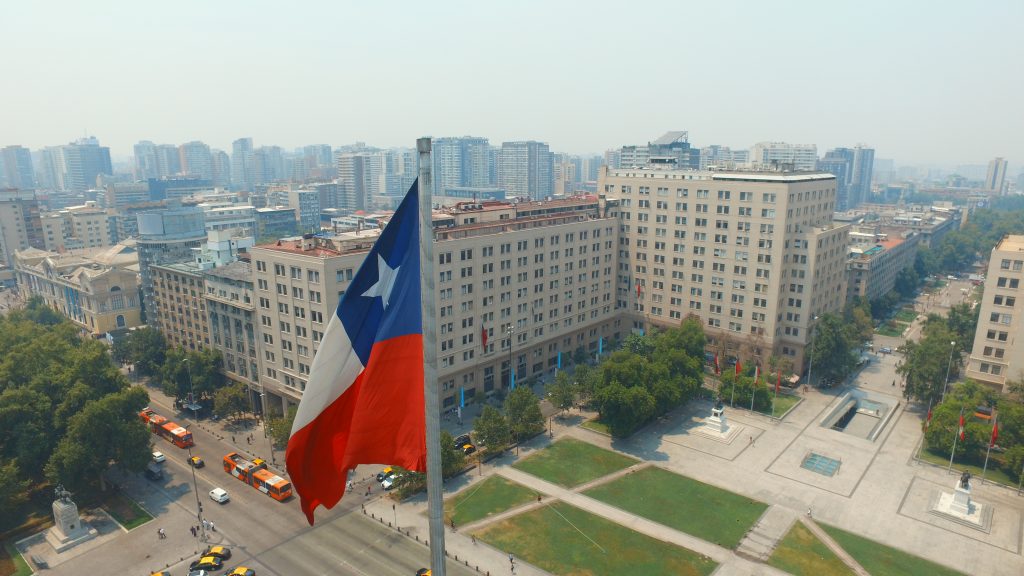
Ministerio de Defensa Nacional
For some time now, the financing of the armed forces has been discussed through various media outlets. Initially, it was due to the government’s decision not to allocate resources for the strategic contingency fund, and now it concerns the resources needed to maintain the professional soldier and conscript personnel in the Army. As is often the case in such discussions, some advocate for a larger budget allocation, while others justify the current amounts, and some groups even call for a reduction.
Regardless, this is a sensitive issue, as it involves a part of the State that bears the greatest responsibility for defending sovereignty and currently also participates in internal order tasks: the armed forces (FFAA).
In this regard, one must ask whether the resources allocated annually, whether through the budget law or other funding sources related to the development and maintenance of strategic capabilities, are sufficient. The following lines will attempt—very briefly—to provide a basic analytical exercise on this matter. It should be clarified in advance that this will not include information on the reasons the State has had for deciding on greater or lesser contributions to the armed forces.
To begin with, it must be stated that the type, size, characteristics, deployment, and other aspects of the armed forces are decisions that are exclusively political. It is not the military that determines what is needed; rather, it is the political establishment that does so. To this end, the tasks that will be required of these institutions must be identified, whether those defined in the constitution and laws or other missions demanded by the State.
There is no doubt that defense institutions provide their advice and technical evaluation, proposing solutions, but ultimately, the decision is political, which translates into public policies in this area. Based on this definition—in which the Ministry of Defense and its subsecretaries participate—the Joint Chiefs of Staff, and subsequently the Army, Navy, and Air Force, must develop the forces and units necessary to meet the political requirements. In other words, based on the identification of a need (political), military institutions establish the military technical response. This response becomes a set of requirements that allow for the development of strategic, operational, and tactical capabilities essential to fulfill what is established. These capabilities will ultimately require, among other things: personnel, weapon systems, vehicles, aircraft, war material, technical equipment, communications, ammunition, logistical support, infrastructure, etc., as well as appropriate doctrine, procedures, education, and training at various levels. All of this demands resources to acquire, develop, maintain, and even eliminate various components.
This raises the question of whether the resources that the State allocates annually to defense—particularly to the armed forces—are sufficient to meet what the State itself demands and for which it is ultimately responsible. The answer—while extremely complex and difficult to resolve—seems to be: No, at least in the most obvious and easily observable aspects.
Without the intention of prolonging this commentary more than necessary, it can be stated that the State of Chile maintains, in general terms, a defense budget of continuity, meaning without very significant changes from year to year (even with years in which it has been negative). In fact, according to information provided by the World Bank (based on data from the Stockholm International Peace Research Institute – SIPRI), the percentage of defense spending decreased from 2.7% in 2000 to 1.8% in 2022 (the last year with records).[1]. Second, it can also be stated that, within the annual budget allocated to the armed forces, from 2000 to 2024, the resources allocated to “Personnel” increased from representing 76.6% to almost 90% of the total budget.[2] This has an impact on the readiness of the forces because, as the burden of financing personnel expenses increases, the amount available for other initiatives is immediately reduced.
Third, perhaps the most concerning aspect is that while the budget remains one of continuity and spending on personnel has increased, all indications are that the spectrum of missions demanded of the armed forces, as well as the number, scope, and duration of tasks assigned by the State, have only increased over the years. In other words, with the same or a smaller budget, the defense institutions are being asked to do much more.
For example, it can be stated that, in terms of deployment for natural disasters, the armed forces, particularly the Army, have been required to fulfill support functions in (only mentioning those estimated to be of greatest relevance):
Summary table of disasters or EEC that have necessitated the deployment of military forces:
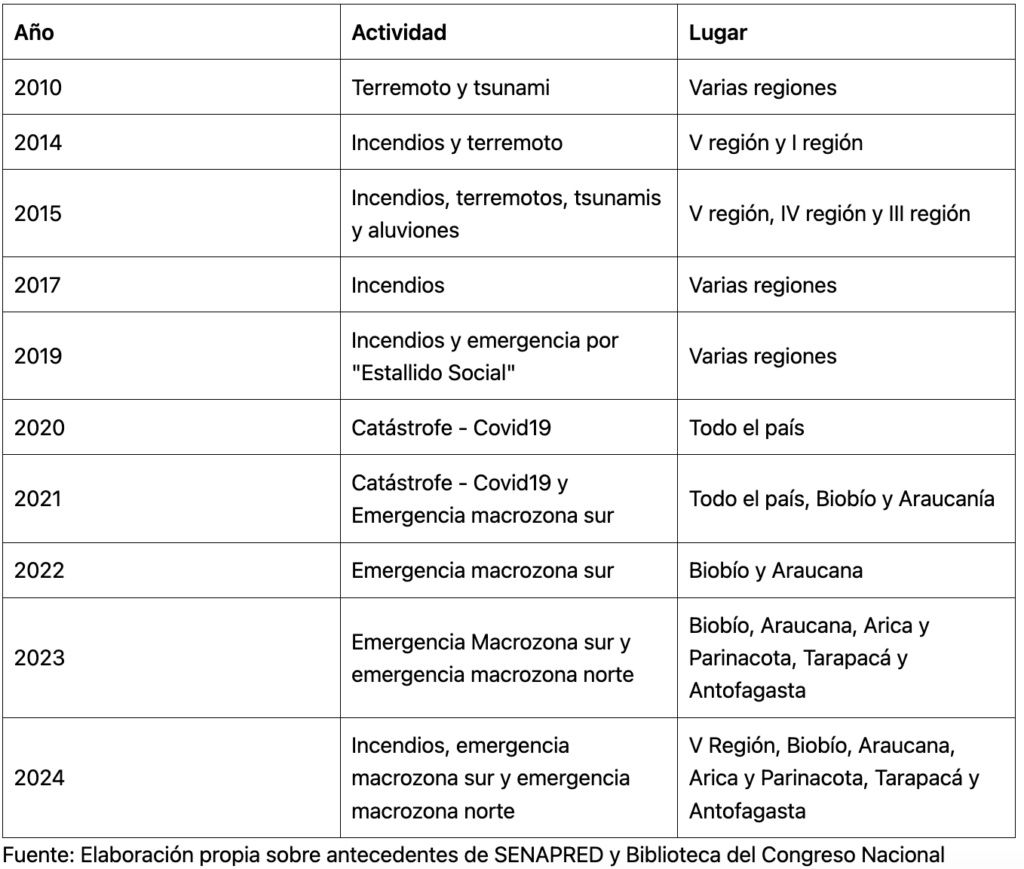
In addition to the above, we must add other catastrophic events such as volcanic eruptions, floods, or minor earthquakes. Thus, not only has the type of missions expanded (variety), but they have also become more frequent, in more physical locations (territorial extent), and for much longer periods. The emergency related to COVID alone lasted over 18 months. In the case of the forces deployed in the southern macro zone, this task began on October 12, 2021, and has continued to the present (except for a short period between March and May 2022), meaning it has lasted for over three years.
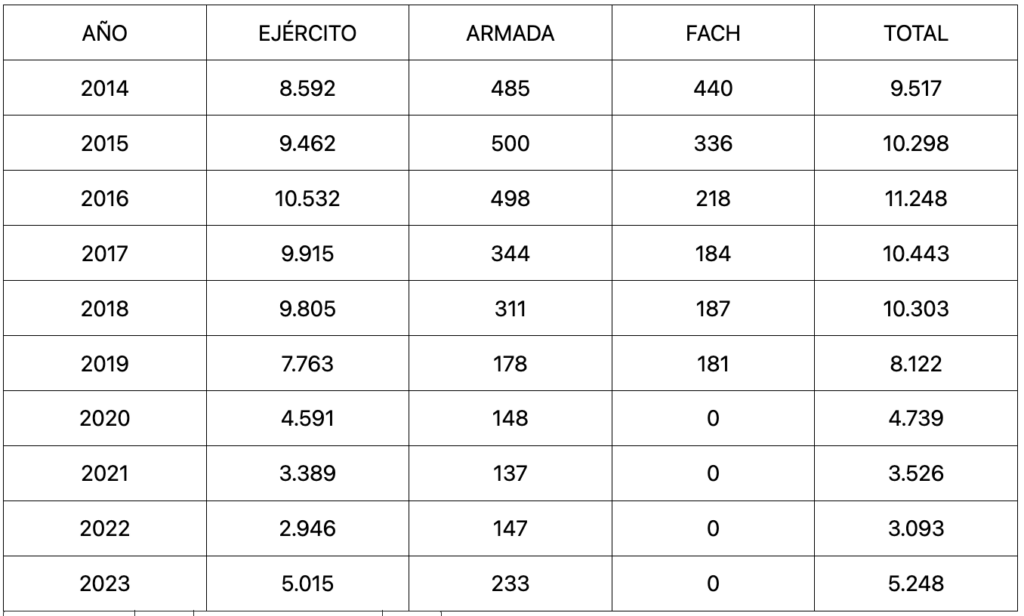
In a simple exercise to evaluate the impact on military strength regarding deployments during states of constitutional exception (based mostly on assumptions and figures only estimated without access to detailed information), we could consider that in the MZS, the Army’s resources could reach about 1,000 to 1,200 personnel, to which should be added another 700-800 who are permanently working in the MZN. The problem does not end there, as to have a total of 2,000 personnel on the ground simultaneously and permanently, that institution would need to have three times the personnel, meaning no less than 6,000. This is because there is 1/3 of soldiers deployed, 1/3 preparing for deployment, and another third in post-deployment. Just to complete the picture, it should be noted that according to information provided by the National Mobilization Directorate this year, the total number of conscripted soldiers in barracks has decreased in recent years, from over 11,000 citizens in 2016 to a minimum of 3,000 in 2022.[3]
On another note, the FFAA directly collaborate during electoral events, deploying almost all of their personnel to cover polling places and other necessary facilities. In summary, in addition to the progressively increasing number of polling places to protect, which translates into a greater number of personnel to deploy, it can be identified that when analyzing from 2000 to 2024 (in blocks of 5 years), the number of electoral events requiring the employment of the FFAA has significantly increased. While the political situation since 2020 has demanded additional efforts, the mere fact of having primary elections for various positions, as well as a second round for presidential and regional governor elections, has increased the number of times we had to go to the polls and, consequently, the deployment of the FFAA.[4]
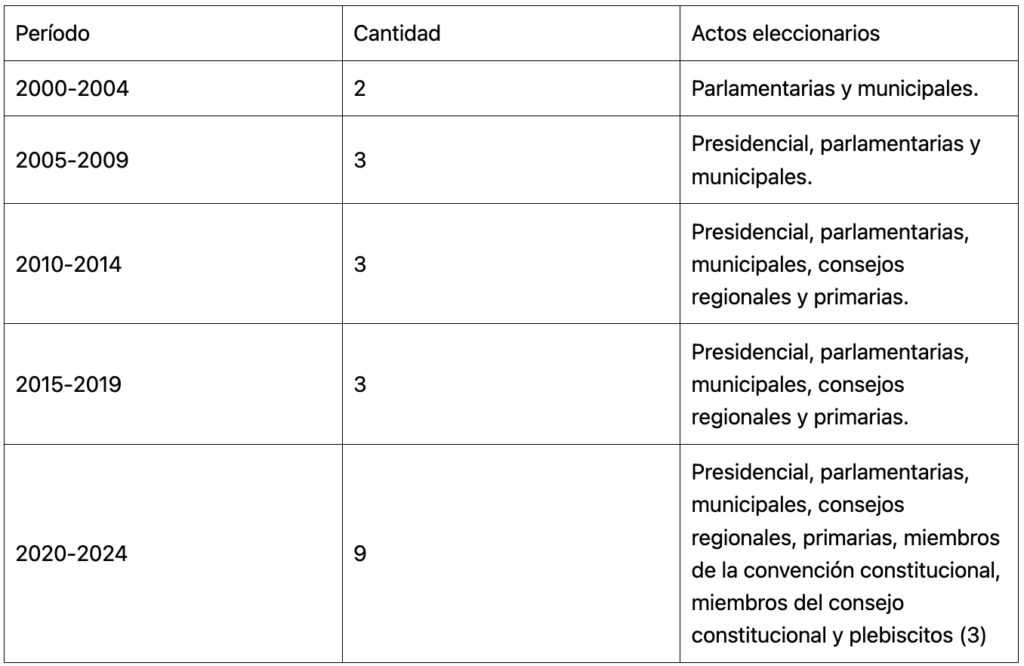
Once again, it is evident that the need to deploy forces has increased recently for various reasons, but ultimately, the FFAA have been forced to divert their efforts from the main tasks assigned to them by the Constitution of the Republic to execute different and secondary functions.
Therefore, it is not unreasonable nor does one need to be particularly astute to think that no organization can do more—or significantly more in this case—with the same resources. Efficiency has its limits. It is true that the State provides additional resources to finance some special activities such as electoral events, but it is also true that these do not consider the total expenditure, such as wear and tear on equipment, preparation and deployment time, among others.
All of the above is without delving into the impact these activities have on the fundamental tasks of the FFAA, namely, preparing to conduct high-intensity military operations. The increased use of systems such as vehicles, communications, and aircraft means greater wear and tear and, therefore, shortens their useful life, requiring their replacement sooner, which increases the demand for funds. Likewise, the maintenance of equipment, as well as the training of units and crews, requires time and permanence, which the FFAA have been deprived of in favor of tasks that are secondary to their essence. The variable of equipment obsolescence or the increased demand for training and education that comes with the incorporation of more sophisticated and complex equipment to operate and maintain is also not being considered.
Finally, another important aspect to consider, in this case not related to the allocation of resources, but rather to the quantity and extent of the current missions of the FFAA, is the impact on personnel. On average, it is estimated that each military member in the northern or southern zone of the country participates in 4 to 5 deployments per year, each lasting over 45 days, which means there is no time for other activities (including pre-deployment and post-deployment), much less for training or to assist in disasters such as fires or floods. As for rest, that is out of the question. At the end of the day, someone must fulfill the tasks, and that is the military personnel. Therefore, there is evident greater wear and tear, which could lead to a higher number of retirements, medical leaves, social and marital problems, demotivation due to lack of professional development, and ultimately, difficulties in retaining talent.[5]. This last point is of utmost seriousness, as the replenishment of critical specialties is not feasible or takes a long time and more resources.
In conclusion, it is possible to affirm that the FFAA currently perform functions across a broader spectrum than they were required to 20 years ago; these tasks are more recurrent, cover a larger geographical area, and last longer. This is generating significant stress on military strength. Similarly, when reviewing the national budget allocated to defense, its characteristic is clearly one of continuity, and spending on personnel has progressively increased, leaving less room for other activities of the institutions. By combining these factors, it can be established that the FFAA do not have the necessary resources to adequately fulfill the functions demanded by the State.
The State, especially the Executive and Legislative branches, must thoroughly review this situation while also studying the need for renewal or development of strategic capabilities. Is what we have sufficient for everything we want as a country? Do we have the necessary structure to face national security challenges in an increasingly conflictive world and a region endangered by transnational crime? Are we evaluating the repercussions of the progressive aging of the population on national security and defense? If the answer is not positive—and it seems to be so—there is much to be done.
In summary, it is the State that must define what FFAA it needs and provide the resources for it. This task is non-delegable and does not fall to the FFAA, but rather to the political level that has demanded control over the military for so long. There is no doubt about it; the responsibility is entirely political.
[1] World Bank, “Military Expenditure (% of GDP)”, available at: https://datos.bancomundial.org/indicador/MS.MIL.XPND.GD.ZS?locations=CL (accessed November 13, 2024)
[2] Budget Directorate. Information available at: https://www.dipres.gob.cl/598/w3-propertyvalue-15954.html
[3] National Mobilization Directorate. Response to information request No. AD013T0004163 of May 2024.
[4] Electoral Service. Information available at: https://www.servel.cl/centro-de-datos/procesos-electorales-vor/
[5] AthenaLab, “Retaining Talent, a Fundamental Task of Leadership”. Available at:https://www.athenalab.org/noticias/2023/07/11/retener-el-talento-una-tarea-fundamental-del-liderazgo/