FEATURED BOOKS 2024
This article was translated automatically and may contain differences from the original. For reference, read the original.
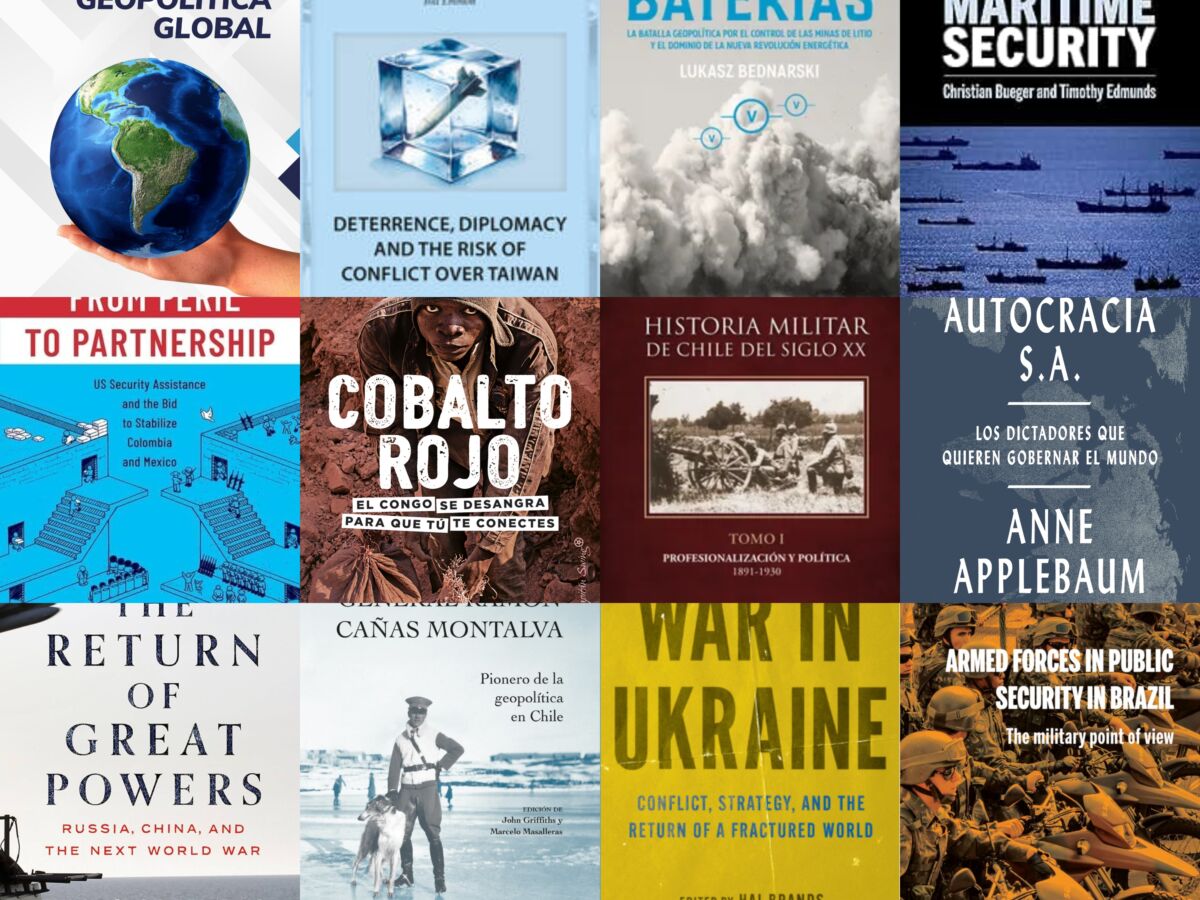
In this concluding year, we have selected the best books published in 2024, whether in Spanish or English. As with any list, there will be discrepancies and agreements regarding the chosen titles, but the criterion was to highlight those texts that we believe consistently address current issues in the fields of geopolitics, public security, and critical minerals. In alphabetical order by authors, with one for each month.
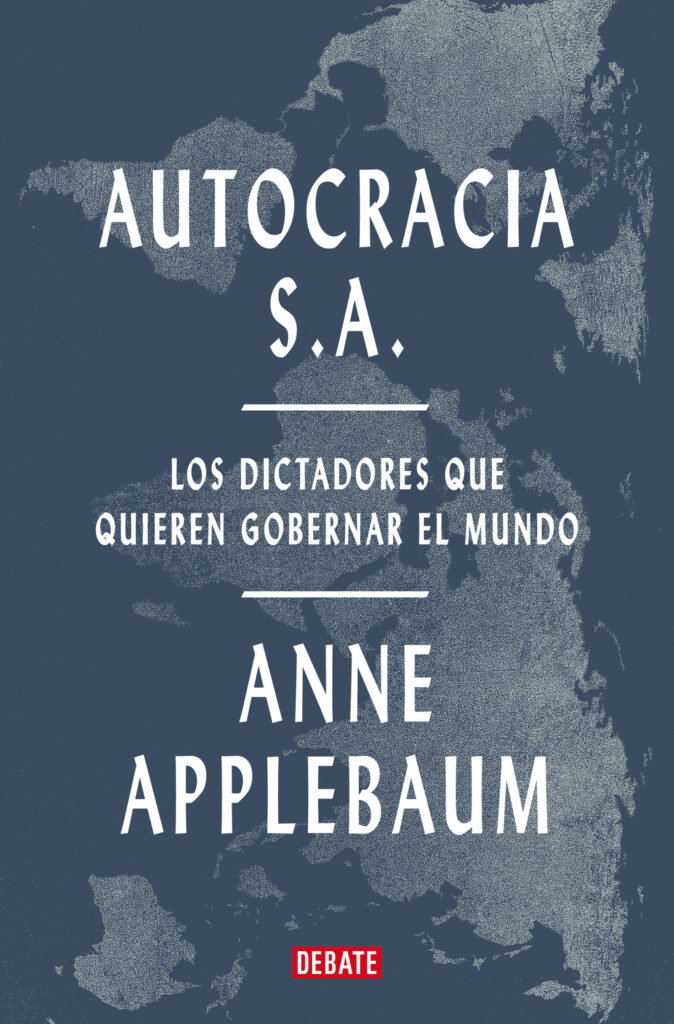
“Autocracy, Inc.”, Anne Applebaum
In an era of democratic recession, Applebaum warns that dictatorships are increasingly working in a coordinated manner due to the integration of their kleptocratic financial networks, global disinformation campaigns, and omnipresent security services.
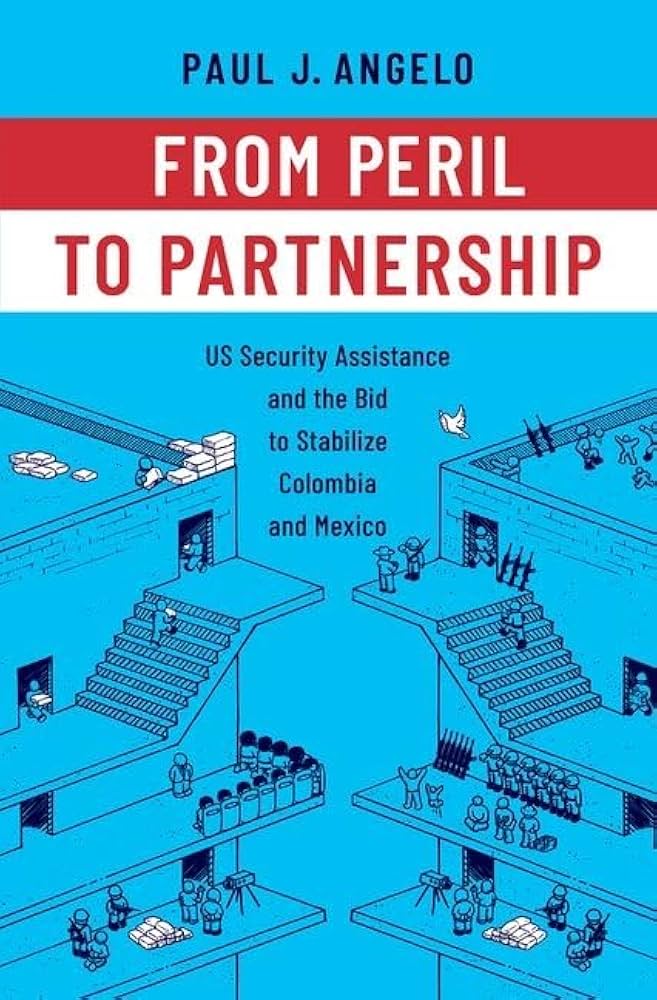
“From Peril to Partnership” is a compelling exploration of the factors that influence the success or failure of U.S. security assistance”, Paul J. Angelo
Angelo compares Plan Colombia and the Mérida Initiative (Mexico), two institutional stabilization initiatives promoted by the United States, whose results were disparate for various reasons, turning attention to security recovery strategies that are crucial to review these days.
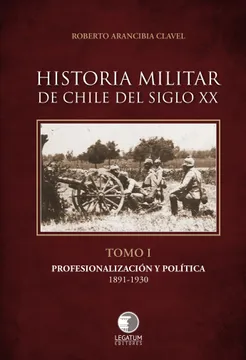
“Military History of Chile in the 20th Century”, Roberto Arancibia
The Legatum publishing house released the book “Military History of Chile in the 20th Century,” written by General (R) Roberto Arancibia Clavel, which covers the period from the post-revolution of 1891 to the transition to democracy in 1990.
“The Battery War”, Lukasz Bednarski
Due to Chile’s role in the global lithium industry, this fascinating book by the lead research analyst for Lithium and Battery Materials at S&P Global Commodity Insights should be almost required reading for those involved or interested in this mineral, whose impact ranges from the environment to geopolitics.
“Understanding Maritime Security”, C. Bleger and T. Edmunds
From a historical and analytical perspective, the authors review this concept and its application in relation to activities including terrorism, piracy, and illegal fishing, among others. The final part is interesting, where a tool for solutions is offered and future challenges are outlined.
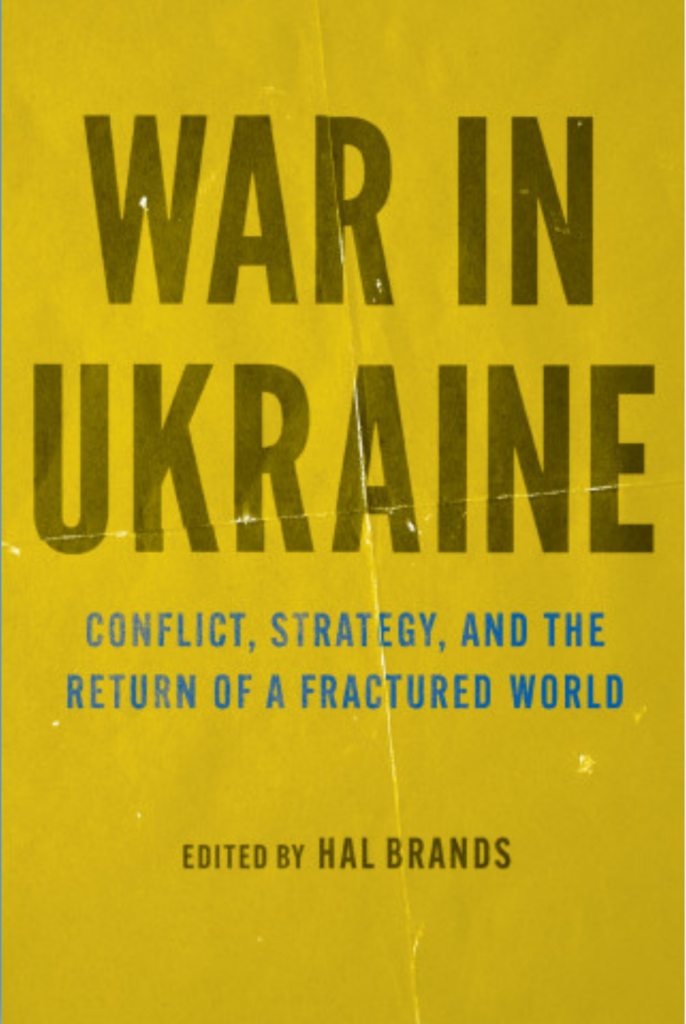
“War in Ukraine: Conflict, Strategy, and the Return of a Fractured World”, Hal Brands (Ed.)
Brands brings together top analysts to review the causes, the current course, and the implications of the conflict, which so far has the greatest geopolitical consequences of the early 21st century.
“Deterrence, Diplomacy and the Risk of Conflict Over Taiwan”, Bill Emmott
Part of the explanation for current wars relates to the fact that deterrence is not functioning globally. Emmott delves into this argument, using Taiwan as an example, which has decided to strengthen itself to disincentivize an attack from China.
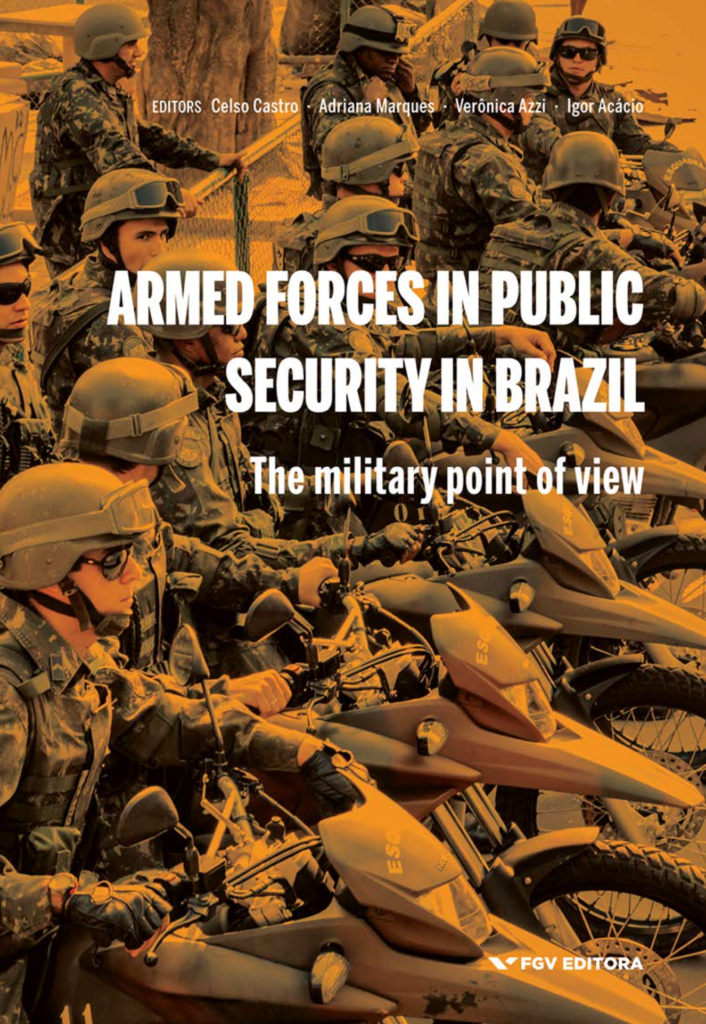
“Armed Forces in Public Security in Brazil: The Military Perspective”, FGV
The Getulio Vargas Foundation interviewed 16 generals and admirals who were in charge of public security operations in Brazil. While they conclude that it is an increasingly frequent task, they also agree in warning that the military does not resolve problems with political and social backgrounds. Free download.
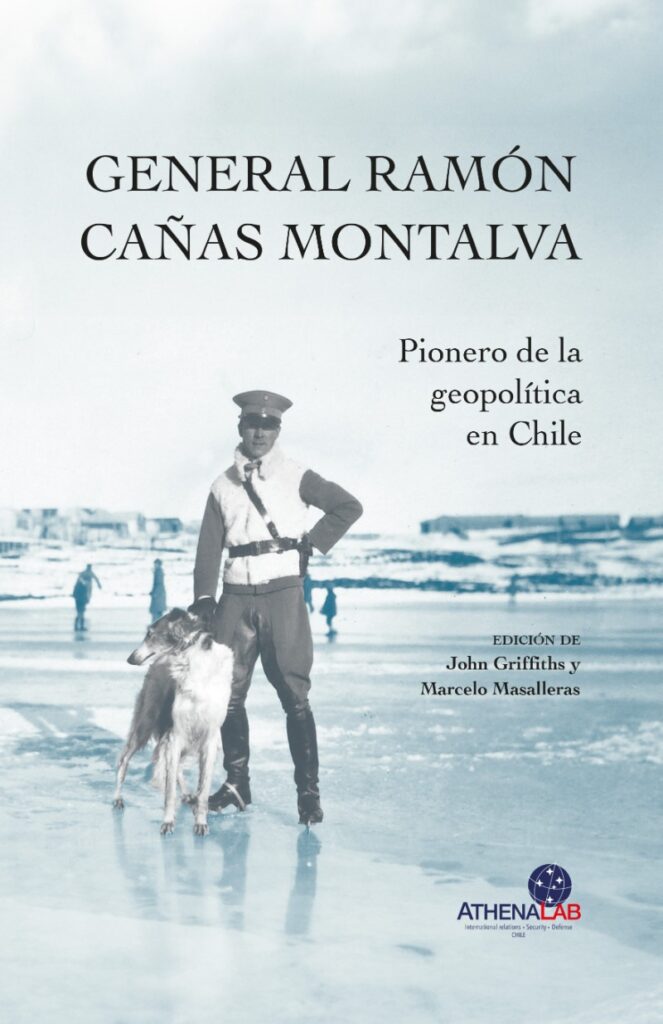
“General Ramón Cañas Montalva: Pioneer of Geopolitics in Chile” J. Griffiths and M. Masalleras (Eds.)
After conducting a thorough editorial review, AthenaLab compiled key texts from General Ramón Cañas Montalva in a book, a visionary military figure who, in the 1930s and 1940s, began to speak of Chile as a tricontinental country, the southernmost in the world, with a manifest destiny in the Pacific.
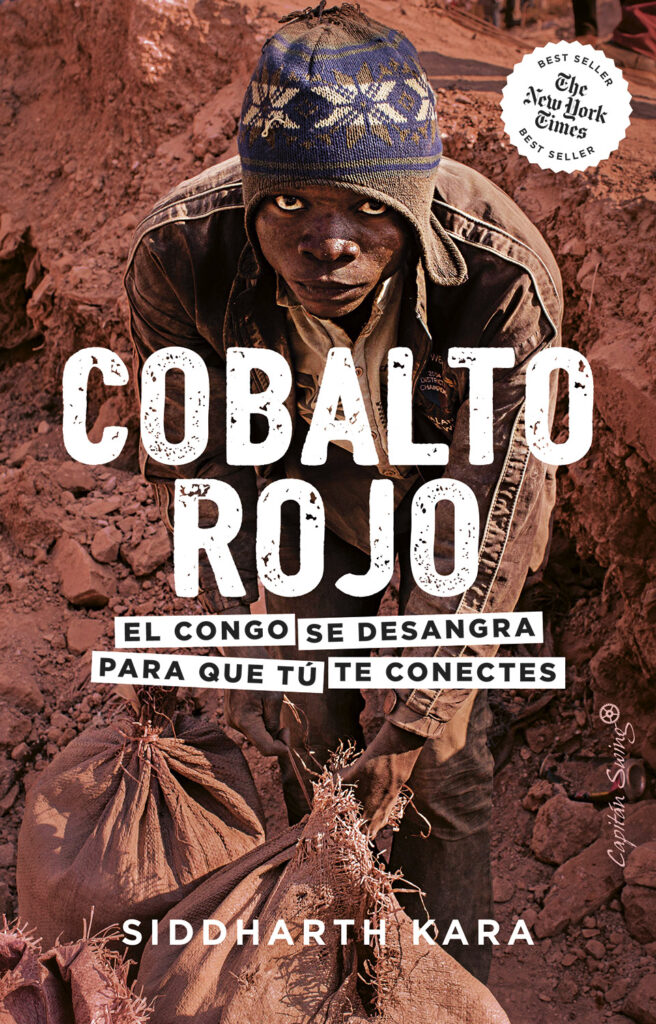
“Red Cobalt”, Siddharth Kara
Essential for lithium batteries as a stabilizer, cobalt is a critical mineral that is primarily extracted from the Congo, often under inhumane conditions. The good news is that Chile has this resource, generally found where copper exists.
“The Return of Great Powers: Russia, China, and the Next World War”, Jim Sciutto
CNN’s chief national security correspondent argues that the current world resembles that of 1939, prior to the outbreak of World War II, as we are once again facing an era of competition and conflict among great powers.
“Latin America in the New Global Geopolitics”, P. Vera and R. Ortiz (Coord.)
Authors from different countries present their views on how their nations fit into the context and also address the most complex issues facing the region. A work of the Center for Strategic Studies of the Peruvian Army, the William J. Perry Center for Hemispheric Defense Studies, and the Institute for Strategic Studies of the U.S. Army War College.