COLUMN | Corner Partners of the Pacific: Opportunity and Commitment
This article was translated automatically and may contain differences from the original. For reference, read the original.
- by Juan Pablo Toro
- Noticias
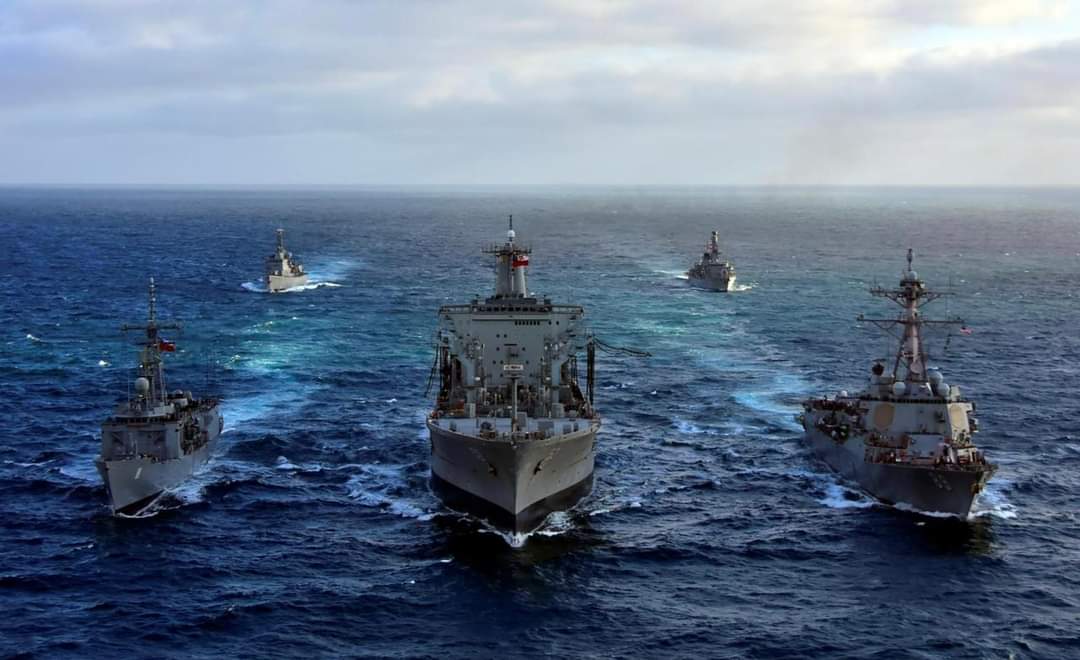
Participar de ejercicios navales combinados da a Chile la posibilidad de tener una voz a la hora de tomar decisiones en asuntos del Pacífico.
If we live in the same building called the Pacific Ocean, the least we can do is pay the "common expenses" to enjoy its advantages and benefits.
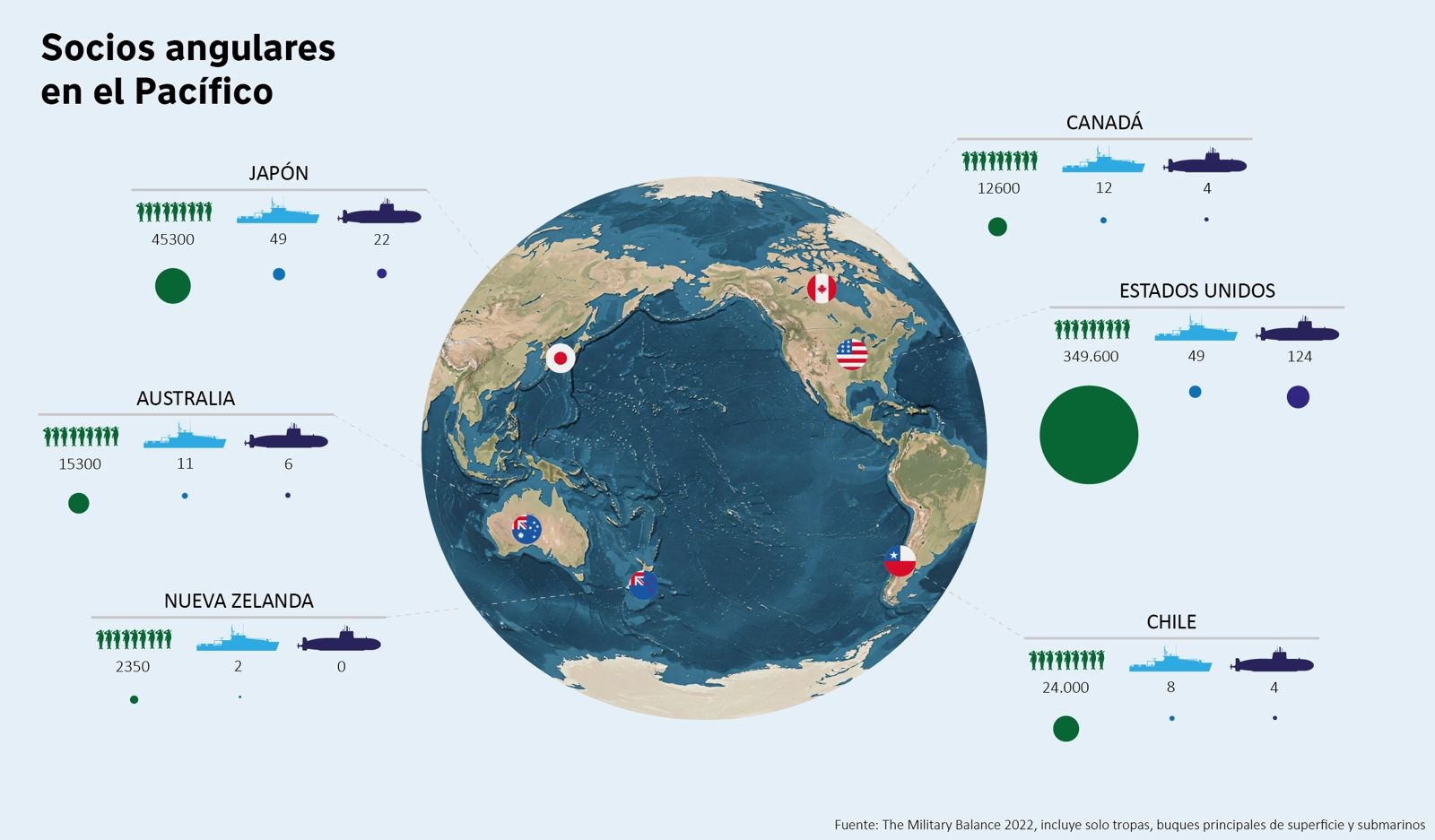
On this day when we celebrate Naval Glories, it is appropriate to highlight the concept of corner partners, which, as I heard from the commander of a Chilean ship recently returned from Australia a couple of years ago, indicates that the natural partners of the country for cooperation in the security and stability of this great ocean are distributed at the corners of the Pacific.
If Japan is located in the northwest corner of the board, Canada and the United States are positioned in the northeast, followed by Australia and New Zealand in the southwest, and of course, Chile in the southeast. More than just an appropriate strategic framework, we can find practical examples of the exchanges that take place with these partners.
Last March, a Canadian polar patrol vessel navigated through Chilean waters, and its stay also served to open a dialogue between navies and governments to share experiences regarding the Arctic and Antarctica. Then, in September, a Chilean frigate will be part of the traditional Unitas operation, which will take place in U.S. waters.
Meanwhile, in August, the training squadron of the Japan Maritime Self-Defense Forces will return to Valparaíso. Just two months prior, the training ship “Esmeralda” (currently in Pearl Harbor) will have docked in Osaka to further enhance Chile’s presence there and strengthen ties with its counterparts.
Despite excellent relations, the opportunity to participate with a frigate in the Talisman Saber exercise—this time including a British aircraft carrier—was lost with Australia due to a lack of financial resources and the geopolitical myopia of those who, when approving and allocating funds for Defense, do not understand the significant signal sent to both partners and potential rivals when a Chilean ship crosses the Pacific to interoperate with the best navies in the world.
With the corner partners, henceforth referred to as “angular partners,” we share a geography that projects us toward the Pacific, common interests regarding the need to secure the area through which trade flows, and fundamental values such as freedom of navigation and respect for the international regulations governing the seas. The navies also possess a British imprint of origin—the Royal Navy inspired the Japanese imperial navy—along with common procedures and equipment that allow for effective interoperability.
It is rare to find such closely aligned partners at sea, but that affinity requires commitment. If we live in the same building called the Pacific Ocean, the least we can do is pay the “common expenses” to enjoy its advantages and benefits. Participation in joint naval exercises and operations is one way to contribute to those expenses. If we do not do so, we will not have a voice when partners have to make routine or extraordinary decisions due to emergencies. Attending the “Rimpac” exercise next year, for example, will provide the opportunity to practice with all the countries at the corners of the Pacific at the same time and many more.
Chile has all the characteristics to be a comprehensive maritime country, something that seems to be recognized much more by foreign authorities who create the conditions for their navies to work with their counterparts in this corner. The situation is very different for local authorities, who participate enthusiastically in the ceremonies of Maritime Month in May, only to forget the issue in June, not to mention when it comes to providing sufficient resources.
In a world of high uncertainty and where wars between states have returned, being associated with the maritime democracies that are distributed at the corners of the Pacific only adds value. Withdrawing should not be an option.