COMMENTARY | Russia Today in Chile: Political and Democratic Consequences
This article was translated automatically and may contain differences from the original. For reference, read the original.
- por Sascha Hannig
- Noticias
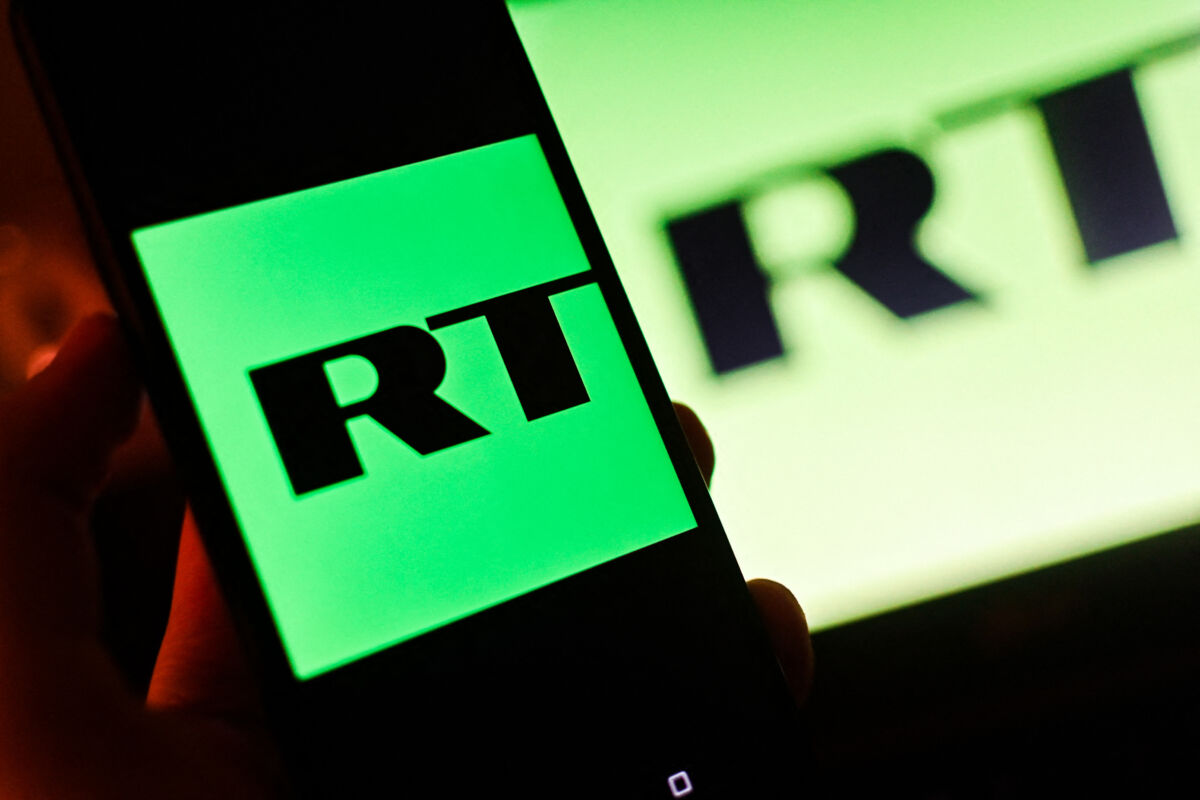
The arrival of the state media Russia Today to open television in Chile through a non-transparent agreement with Telecanal marks a concerning milestone in the reach and potential impact of information manipulation campaigns and foreign interference (FIMI) for both the country and the entire region.
The news disseminated by media from authoritarian countries, such as Telesur from Venezuela, CGTN from China, or HispanTV from Iran, is not always false information; rather, it presents a propagandistic view of reality, seeks to exacerbate conflicts, or stimulate emotional reactions that lead to irrational decisions. In some cases, the information promotes the image, values, and policies of the originating regime, from tourism to its leaders. In others, the more concerning cases, the content seeks to counter facts, open discussions, and introduce expert opinions. The problem is that to achieve this, authoritarian propaganda media rely on unverified sources, the “law of equivalence,” or whataboutism, in English, or simply poorly supported disinformation. For instance, Russia Today has given space to false news about neo-Nazi groups in Ukraine or the existence of biochemical laboratories in that country, and has propagated the Russian perspective on the invasion (rejected by 140 countries in the United Nations General Assembly), downplaying the economic and human impact of the war in favor of historical mandates and expansionist rhetoric.
In the case of Chile, the lack of control or scrutiny prior to the arrival of the Russian media reveals two fronts of vulnerability in the national media system. First, there is a lack of concern for the country’s security against channels of “hybrid warfare” or non-traditional influence. The State of Chile seems to view securitization, whether in technological or cognitive matters, as something distant and reserved for great powers, and any preventive action is understood as a renunciation of “neutrality,” a term that has become emblematic of the government’s international policy. Consequently, when controversies arise from these “new spaces” of power expansion, whether in cybersecurity, information, or even in public-private development (all relevant to this case), there are no real protection mechanisms that allow the country to safeguard its citizens a priori.
In contrast, the world has increasingly adopted the securitization of information. In February 2022, the European Union (EU) made the decision to prohibit the broadcasting of Russian state television and media signals, Sputnik and Russia Today. The primary reason for this was the Kremlin’s invasion of Ukraine, but also concerns about possible political and cultural influences from the agenda of the aggressor country. By the end of 2024, the EU expanded its measure to four other Russian media outlets: Voice of Europe, RIA Novosti, Izvestia, and Rossiyskaya Gazeta, and in response, Vladimir Putin’s regime censored 81 Western media outlets in its territories. Regardless of the interpretations and responses elsewhere in the world, the actions of both blocs demonstrate how crucial the information space is in current times.
The second front—perhaps more important—is the democratic and political discussion. Freedom of expression is always a delicate issue, even more so in Chile due to its recent history. Institutions are cautious in making decisions that could censor a priori content that may be integral, useful for debate, and of general interest. The question is how countries can confront actions by authoritarians with a clear agenda in terms of political impact and the distortion of information spaces, something that was recently discussed at the Internet Governance Forum in Oslo. As the National Television Council (CNTV) expressed a few days ago, the institution does not prohibit the broadcasting of foreign content; however, “the transmission of content from a government at war, as is the case with Russia, can open legitimate debates about the safeguarding of pluralism and democracy.” How could democracy be affected by the existence of a Russian channel in its media landscape? The first response relates to the possible distortion of democratic discourses, especially during an election year and in the context of a polarized society with clear frustrations regarding the political system. Secondly, due to the precedent this situation sets for future FIMI campaigns.
Finally, an argument in defense of the establishment of the channel in Chile is that Russia Today would be comparable to foreign state media, such as the BBC or Deutsche Welle (DW). However, this comparison is inadequate and could even be malicious. The reason is that not all state media operate under the same principles. Yes, media such as the BBC, DW, or NHK from Japan are state-owned, but they are governed by strict laws that protect the freedom of expression of their members and guarantee minimum democratic values. One of the objectives of these networks is to promote the culture of their countries, but they allow themselves the space to operate transparently and offer room for pluralism. In contrast, state media of authoritarian propaganda have clear objectives, established by the foreign policy of their originating regimes, and seek to expand their soft power through narrative influence, authoritarian cooperation, confusion, and, among various other mechanisms, explicit disinformation. For all the above reasons, and beyond the specific case of Russia Today, Chile must begin to engage in this international debate, as this fact once again makes it clear that the absence of discussion in pursuit of “neutrality” makes our democracy more vulnerable to these phenomena.
Sascha Hannig, PhD Candidate in International Law
Hitotsubashi University, Japan
July 1, 2025
The comments and opinions expressed in this document represent the views of the authors, not necessarily those of the institution.