Overview of the programs of the main presidential candidates: National Security, Foreign Relations, Defense, and Public Security
This article was translated automatically and may contain differences from the original. For reference, read the original.

The recent publication of the government programs of the main candidates for the Presidency of the Republic of Chile has completed the landscape of proposals ahead of the upcoming elections. With only a few months until the first round, it is evident that the central theme of the campaign is public security, in response to the growing concern over organized crime and common delinquency.
AthenaLab conducted a detailed analysis of the proposals regarding national security, national defense, and the Armed Forces, as well as public security, from the three candidates most likely to advance to a second round, according to the polls: Jeannette Jara, Evelyn Matthei, and José Antonio Kast.
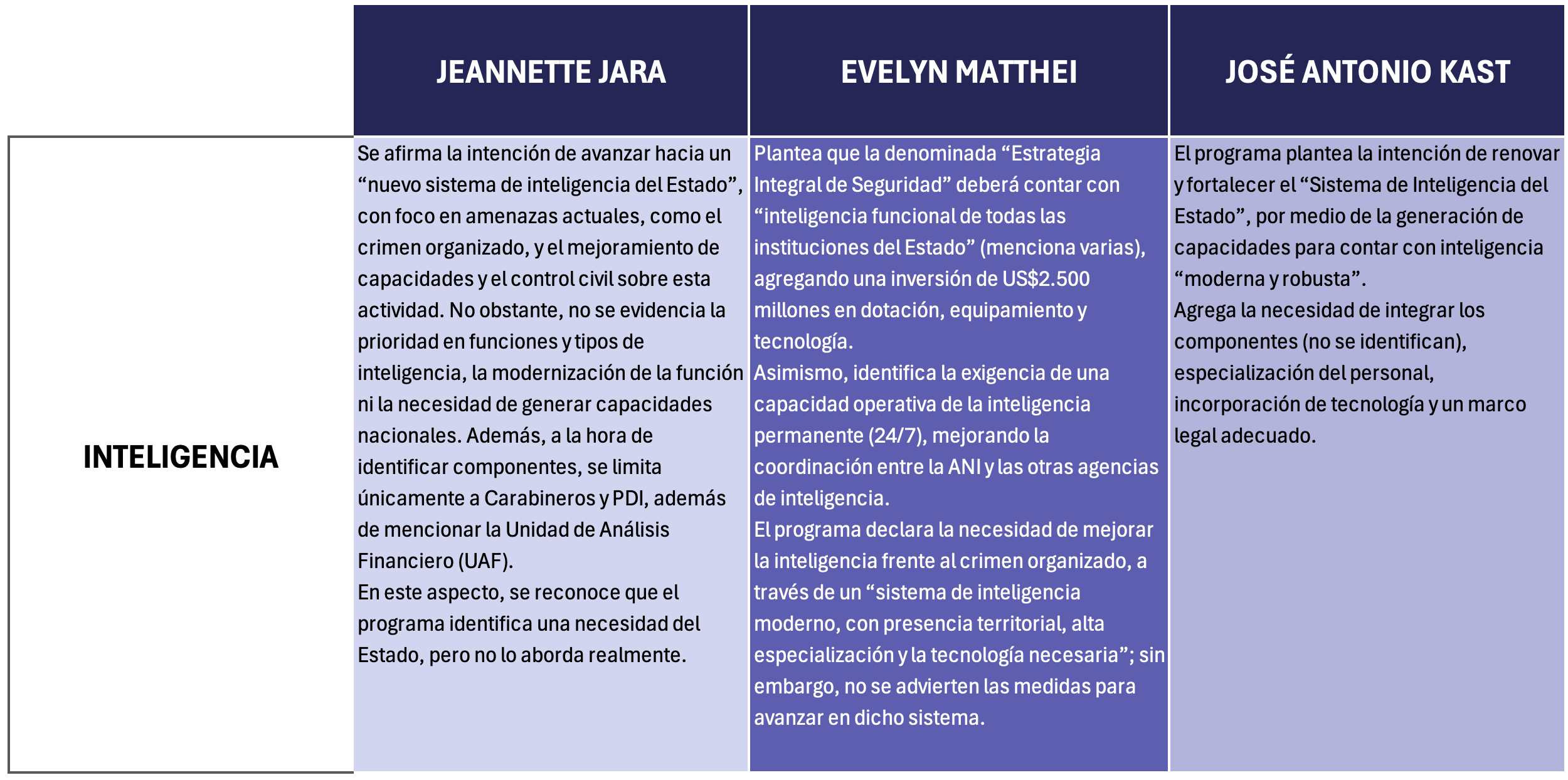
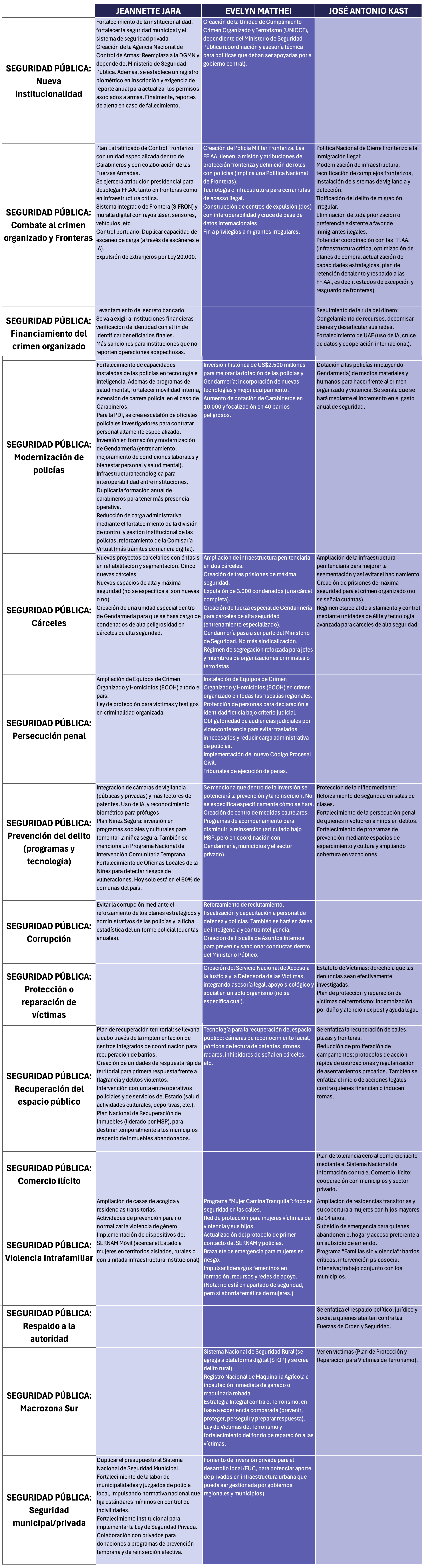
To facilitate comparison, a table is presented that outlines the most relevant ideas of each candidate (following a left-to-right alignment), highlighting their differences and similarities. Finally, this document presents a series of considerations regarding this matter.
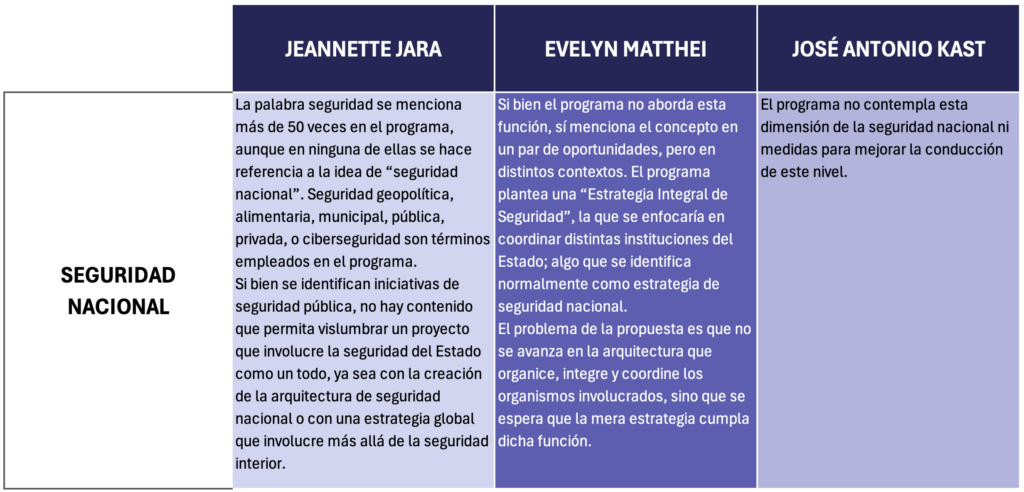
National Security
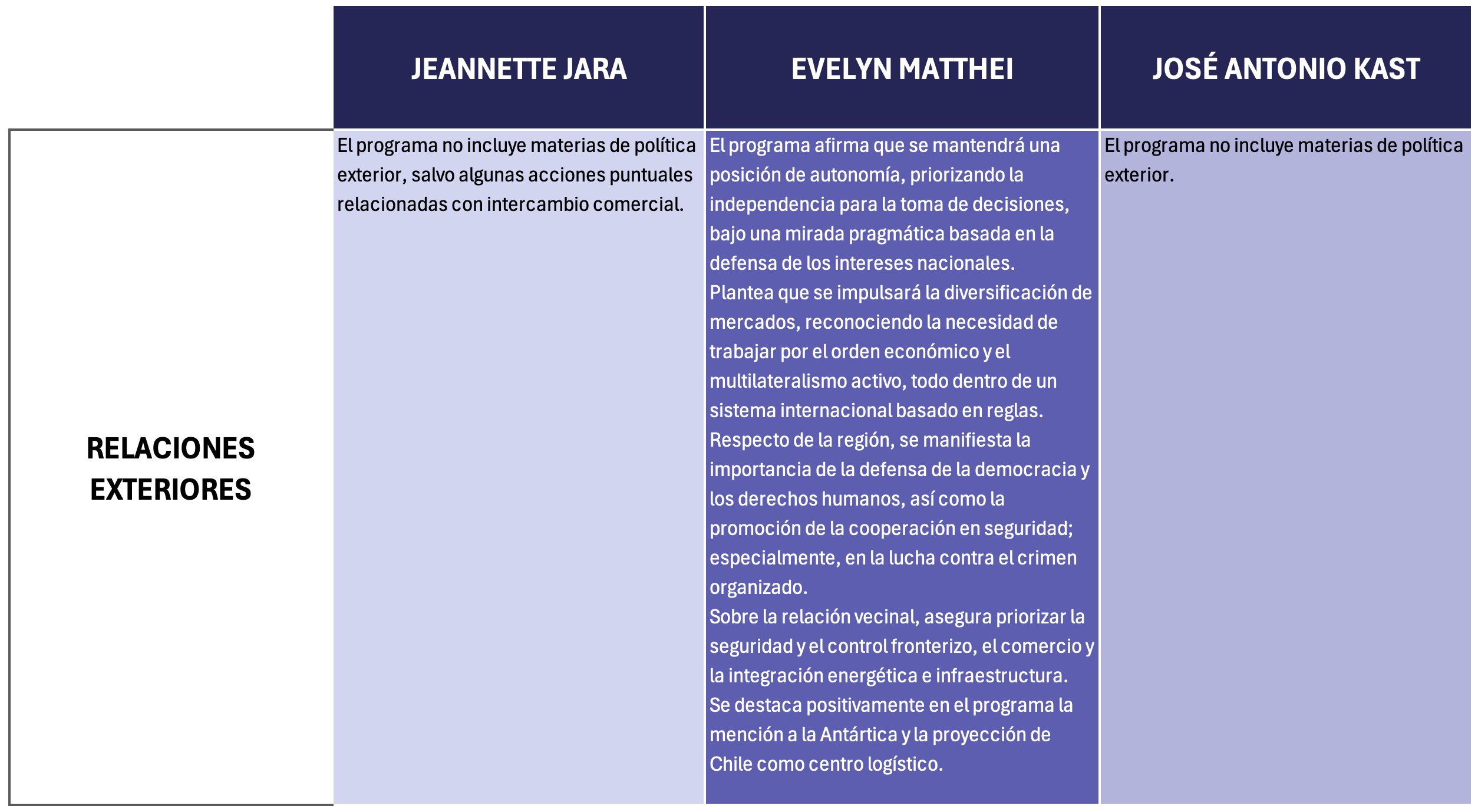
Foreign Relations
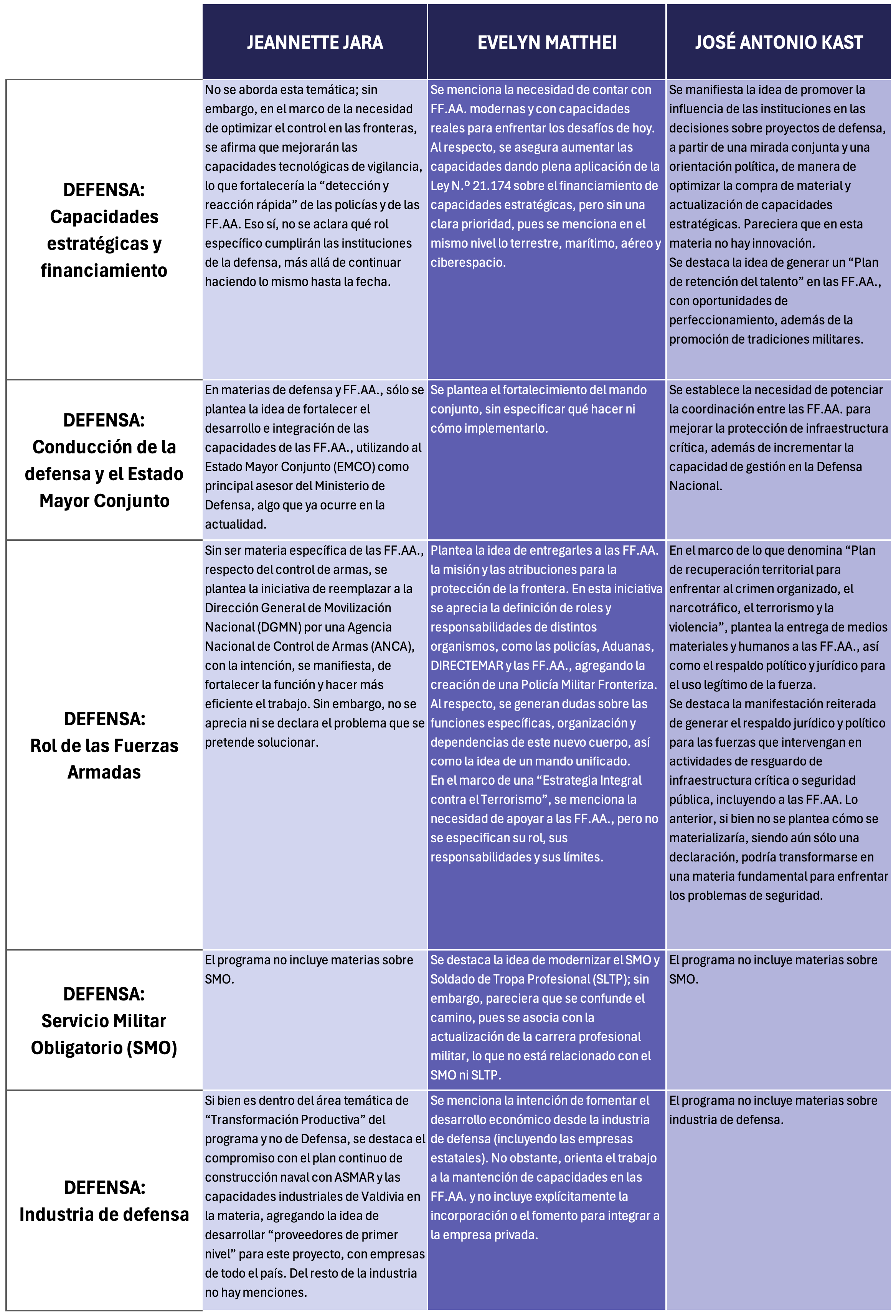
Defense
Intelligence
Public Security
FINAL CONSIDERATIONS
While there is a widespread consensus on the security crisis, there are points that are not developed in full depth due to the limitations of the format. Below, we highlight the main similarities and shortcomings identified in the analyzed government programs:
Similarities and Shared Diagnoses
- Recognition of the crisis: All three programs agree on the urgency of addressing organized crime and the need to create safer environments for citizens. Additionally, all recognize the close relationship between security and the country’s development.
- Strengthening Joint Command: There is a cross-cutting intention to strengthen the leadership of the Armed Forces.
- Role of the Armed Forces at the borders: There is a clear intention to reinforce the role of the Armed Forces in border control, although with different approaches.
- Need for an Intelligence System: There is recognition of the urgency to create a more integrated and effective intelligence system to combat organized crime.
Areas with Opportunities for Improvement
- National Strategic Vision: Despite the common diagnosis, the programs do not define a comprehensive national strategy that coordinates public security and defense efforts. This is crucial to address threats affecting national security, such as organized crime and drug trafficking. The architecture of national security that would implement the strategy is also not outlined.
- National Defense: The proposals on national defense lack depth. Key issues such as Mandatory Military Service (MMS), the defense industry, the maintenance of strategic capabilities, and the joint interoperability of the Armed Forces are addressed partially or are absent.
- Foreign Policy: This area, fundamental for security, is absent in two of the three programs. The only one that mentions it does so in a limited manner in an annex, promoting the pursuit of some independence.
- Threats beyond organized crime: The programs focus primarily on organized crime, overlooking other manifestations of violence (such as terrorism) that, if not addressed in time, could lead to greater problems when combined.
In summary, although the programs show a clear willingness to address security issues, there is a perceived lack of a deeper and more integrated strategic vision. It is hoped that, beyond campaign announcements, future government plans will demonstrate the leadership and political strength necessary to address these challenges comprehensively, as demanded by the current historical moment.