Political Configuration of Japan in the International Arena under the Presidency of Sanae Takaichi in the LDP
This article was translated automatically and may contain differences from the original. For reference, read the original.
- by Sascha Hannig
- Guest Contributions
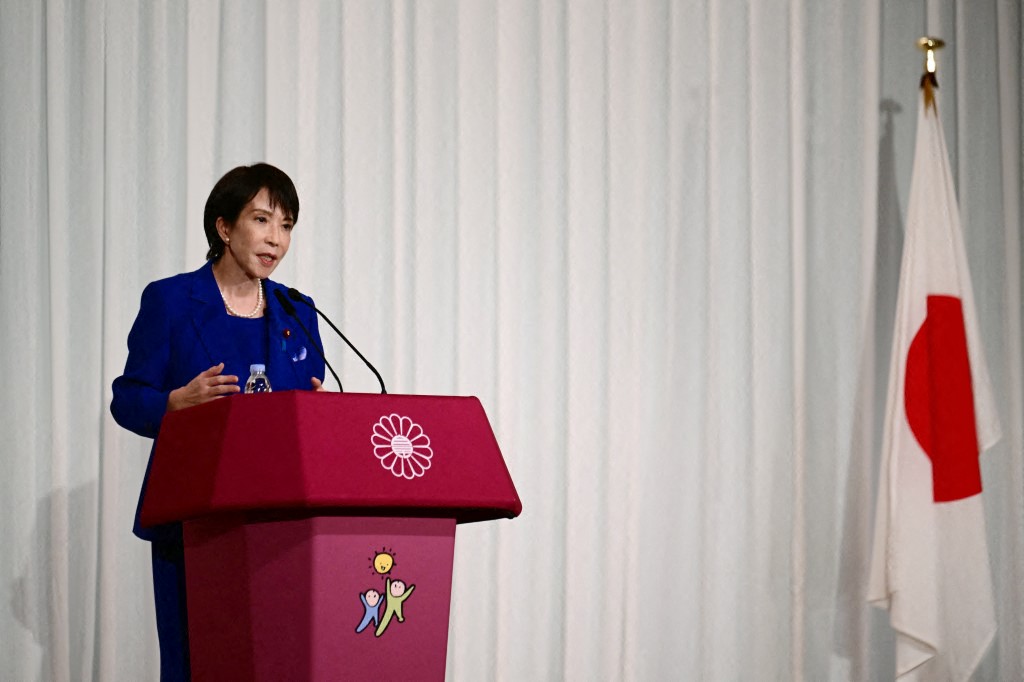
Configuration of alliances, leadership positions, and possible future scenarios arising from this crucial election in this Indo-Pacific country.
Introduction
Japan is undergoing a political transformation and constant rotation of leadership. With four prime ministers in five years and the emergence of a handful of parties (some of which are extreme or populist) since the COVID-19 pandemic, it is evident that both Japan’s domestic and international politics require leadership capable of uniting visions and generating a clear strategy to stabilize the country in the face of a volatile global scenario. This report analyzes the state of Japanese politics, the election of Sanae Takaichi as president of the Liberal Democratic Party (LDP), the conflict with its ally, Komeito, and the positions Japan might adopt in its foreign policy, beyond the domestic disputes that parties currently face.
Political Context of Japan
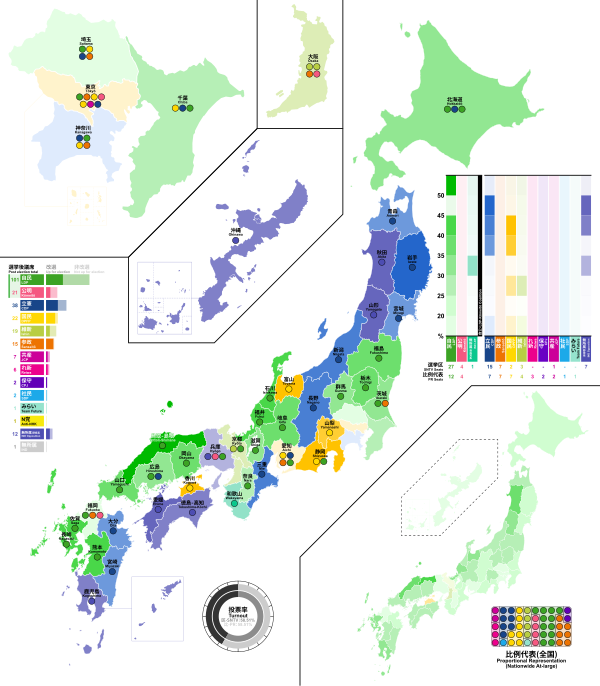
The general elections for representatives in July 2025 in Japan marked a series of key trends to understand not only the weight of different political positions of the various parties that currently shape both the ruling and opposition sides of the country. Firstly, a significant loss of 18 seats for the LDP—the dominant force in the country—which, while still leading the political spectrum, was symbolically struck by the result. Secondly, the consolidation of center and center-left positions with forces such as the Constitutional Democratic Party, which came in second and, despite also losing seats, maintained a proportional representation that grants it power in some decisions. Thirdly, the surprising rise of Sanseito, or the Participation Party, with a protectionist stance, founded in 2020 and capturing 15 seats. The third-largest national party, Komeito, or the Buddhist party, lost six seats, totaling 21. With all this, the two parties in the ruling coalition hold 122 seats, while the opposition and unaffiliated parties occupy 124. 1. (The annex includes a map of the configuration of these political blocks in Japan).
Understanding that 125 seats are needed to form a majority, the election was seen as a new milestone that would reinforce the instability the country has been facing since the departure of Prime Minister Shinzo Abe2, which led Shigeru Ishiba to resign less than a year after his rise to power3. It is important to clarify that until Abe, the rotation of prime ministers had been common, especially since the economic bubble crisis in the 1990s. In this context, the COVID-19 crisis, Abe’s assassination, the exposure of corruption cases, and the influence of the Unification Church in the government, along with the impact these cases had on Japanese society, can be analyzed as breaking events, both in social trust in the political sphere and in the stability of the country.
In practice, the election also marks a very clear configuration of political positions both domestically and internationally. Japanese society is sensitive to debates regarding significant social changes and also to the defense or reform of the Constitution. In recent years, amendments to the Constitution that allow for the expansion of the military capabilities of the Self-Defense Forces have been highly controversial. The factions closest to Abe in the LDP supported increasing the defense budget from 1% to 2% of GDP, updating the national security law, 4and generating measures to promote economic security and reduce critical risks associated with international trade. 5It is here that the attitudes of different political groups towards issues such as relations with China, the defense of Taiwan, or the relationship with the United States vary significantly.On the other hand, there are strong differences in positions within traditional parties on social and domestic issues, such as migration, same-sex marriage, or the role of women in society. In all political blocks, even within the LDP, figures can be found on both ends of the spectrum, which also explains why Takaichi’s election—pro-expansion of military capabilities but very conservative on social issues—has caused a stir in domestic politics. Figure 1 presents the four axes that divide Japanese society and their preferences on both social issues and constitutional commitment. Takaichi would belong to block one (1) along with her faction in the LDP, as she opposes social changes and has concerns about Japan’s defense capabilities vis-à-vis
China. However, figures like Shinjiro Koizumi, who placed second in the party elections, would belong to block three (3). In the Komeito party, members primarily belong to group two (2) due to their religious-Buddhist formation and their opposition to the policies proposed by Takaichi, especially regarding her stance on China. Parties like the Communist Party are open to social changes and seek to protect the constitution and maintain good relations with China, thus falling into group four (4). 1 )
| Constitutional Reform + Social Conservatism2 ) | Constitutional Protection + Social Conservatism3) Constitutional Reform + Openness to Social Changes 4 |
| ) | Constitutional Protection + Openness to Social ChangesFigure 1: Japanese Political Axes, original construction. From the above, it can be summarized that the changing landscape of Japanese politics responds to both external forces (security or changes in its alliance with the U.S.) and internal pressures (demands for social changes). The rotation of ministers is not an exceptional fact in the country’s history, as there was a similar period in the early 2000s, which ended once Abe came to power, considering the need for stability for reconstruction after the 2011 earthquake. Thus, Takaichi’s government could reflect Abe’s administration (given that she wants to bring back the so-called |
and follows his line of work) or become just another of the short administrations of the LDP. Japan also faces key social and economic challenges such as accelerated inflation, lack of access to critical resources, or child poverty, which has recently become controversial 6 , and which citizens expect to be addressed by a potential next government.Formation of AlliancesThe most critical aspect is to secure an alliance that gathers enough votes to form a government. Its tougher stance on migration and social issues has led the LDP’s allied party, Komeito, to separate from the
main
7 alliance. Part of the reasons for this is its opposition to Takaichi’s ideas regarding a stronger hand on China, and the propaganda press in Beijing has defended the decision, suggesting that they favor a potential fracture in the governmentno8.This raises doubts about Takaichi’s potential to become prime minister. To do so, she needs to gather enough seats to form a government (125), which could mean (with little probability) that opposition parties achieve this before the LDP does. The constitutional party, the second-largest, has already begun discussions to raise a popular candidate with other leftist forces. In this scenario, Takaichi could ally with another party, call for elections again, or step down from her position.International Politics
Sanae Takaichi has a clear stance of continuity with Shinzo Abe’s policies, symbolic closeness to Donald Trump, skepticism about migration, and the assessment of China as a rival and even a threat. A government under her leadership would likely adopt a policy of economic distancing from China, an increase in the country’s military capabilities, and closeness to the United States. The issue of Taiwan would be crucial in such an administration, but not so much in discourse as in possible actions and cooperation plans with the island. Japan also aims to promote the Free and Open Indo-Pacific (FOIP) policy.
The paths the country can take, beyond the figure of a future prime minister, can be summarized in three and also depend on how the United States and China configure regionally and around domestic alliances.
Deepening the Alliance (and Coordination) with the U.S.
The first possible path is for Japan to strengthen its relations with the United States, replicating its international policy and increasing its dependence on this power. In this scenario, it would cooperate in export control, operational military integration, and adopt a secondary position in its regional leadership role. This means having security guarantees against China, North Korea, and Russia, as the responsibility for decisions falls on the U.S. However, this same dependence produces increased hostility with neighbors, the volatility of responding to Trump’s policies, and a loss of reputation and leadership in the broader Asia region. This scenario is considered likely as it requires fewer risks and political investments from the government, which simply maintains the status quo while assuming the volatility of Trump and his policies.
Economic Shift Towards China (with Strategic Containment)
Japan could seek refuge from the volatility of U.S. policy and domestic economic pressures by deepening its relations with China. In this scenario, this process would be presented as a way to foster regional peace and de-escalate tensions. Generally, improving relations with China could lead to greater political stability in pro-Constitution sectors and macroeconomic stability, but at the cost of losing legitimacy on issues such as regional sovereignty or the Taiwan issue, as well as worsening relations with the United States. This scenario is unlikely given the current tone towards China in Japan, but it would be supported by several opposition parties, and something like this could be expected if they were to form a government.
Leading the Region with Strategic Autonomy
A third path is to leverage U.S. volatility and the growing tensions with China in the region to emerge as a relative leader in the Asia-Pacific arena. This is something Japan has attempted before, but its delicate relations with South Korea, its history, and economic limitations have restricted it. Japan benefits from regional stability as it means less migration to its country, greater economic returns from its operations in areas like Southeast Asia, and the ability to enhance its capabilities and legitimacy. Additionally, it provides the narrative capacity to lead processes like the FOIP. However, it also exposes Japan more as a threat to countries like China or Russia. In this sense, political figures have called for increasing Japan’s leadership and autonomy on key issues such as Taiwan or economic security, and expanding alliances like the QUAD (Australia, the United States, India, and Japan) to position Tokyo as an authority in the Asia-Pacific, but without isolating itself from the international scene or the idea of defending liberal democracy. This is the policy that has been attempted to be promoted from sectors of the LDP, although movements like Sanseito focus solely on militarization and autonomy and not on international cooperation or Japan’s internationalization.
Conclusions
Japan is experiencing a moment of political volatility stemming from a cycle of rotating prime ministers. Ishiba continues to govern in a weakened state, but without presiding over the LDP, which is now in Takaichi’s hands, awaiting the reconstitution of a new alliance with Komeito.
The country is currently configured along two axes: more or less reform to the Constitution (which grants more or less military expansion power to Japan) and more or less domestic social reforms.
- Sanae Takaichi is socially conservative, with a tough stance on China and Japan’s role in defense, which creates friction with her traditional ally Komeito, which is closer to Beijing.
- There are three probable scenarios for Japan’s international posture: closer ties to the U.S., closer ties to China, or greater autonomy.
- Sascha Hannig, PhD Candidate in International Law – Hitotsubashi University, Japan
- Tokyo, October 14, 2025
The comments and opinions expressed in this document represent the views of the authors, not necessarily those of the institution.
Annexes:
1. Post-electoral configuration of political blocks in Japan, by number of seats and majority party.
自民党 = Liberal Democratic Party (LDP)
立憲民主党 = Constitutional Democratic Party
参政党 = Sanseito
公明党 = Komeito
Methodology:
Content analysis of official documents, original construction of political models. Original construction of possible scenarios for Japan’s international politics.
References:
1
NHK. (2025). Upper House election 2025 | NHK WORLD-JAPAN News. NHK WORLD. https:// www3.nhk.or.jp/nhkworld/en/news/tags/166/
2 Szechenyi, N., Nakano, Y., & Govella, K. (2025).
Japan’s Upper House Election: Prolonged Instability . https://www.csis.org/analysis/japans-upper-house-election-prolonged-instability3 The Prime Minister of Japan, Shigeru Ishiba, resigns after a series of harsh electoral defeats | CNN
. (n.d.). Retrieved October 12, 2025, from https://cnnespanol.cnn.com/2025/09/07/mundo/primer- ministro-japon-shigeru-ishiba-renuncia-reux 4CAS Japan. (2022). National Security Strategy provisional translation.
https://www.cas.go.jp/jp/siryou/ 221216anzenhoshou/nss-e.pdf?utm_source=chatgpt.com 5 IISS. (2022). Japan’s Economic Security Promotion Act and the implications for businesses. IISS. https://
www.iiss.org/publications/strategic-comments/2022/japans-economic-security-promotion-act-and-the -implications-for-businesses/ 6Kageyama, Y. (2024, January 23). Japan is rich, but many of its children are poor; a film documents the plight of single mothers. AP News. https://apnews.com/article/poverty-japan-children-mothers-filmmaking- unmarried-2391ebf0bd955795195fbad25dd13348
7 Reuters. (2025).
Japan’s ruling coalition splits, throwing Takaichi’s PM bid into doubt | Reuters . https:// www.reuters.com/world/asia-pacific/japans-komeito-leave-ruling-coalition-with-ldp-under-takaichi-nhk-reports-2025-10-10/ 8 Global Times. (2025). Komeito head rejects rumors claiming party ‘takes directions from China’ to prevent Takaichi from becoming PM, saying them ‘groundless’; expert says hypes stem from entrenched inter-party conflicts in Japan—Global Times. Retrieved October 13, 2025, from
https://www.globaltimes.cn/ page/202510/1345498.shtml Others: Szechenyi, N., Nakano, Y., & Govella, K. (2025). Japan’s Upper House Election: Prolonged Instability.
https://www.csis.org/analysis/japans-upper-house-election-
prolonged-instability 公明党和自民党“拆伙” 高市早苗任相恐有变数. (n.d.). Retrieved October 13, 2025, from https://www.zaobao.com.sg/news/world/story20251010-7648166
高市早苗首相之路恐生变数 – DW – 2025年10月10日. (n.d.). dw.com. Retrieved October 13, 2025, from