2025-2026: Continuities, Realignments, and Internal Challenges
This article was translated automatically and may contain differences from the original. For reference, read the original.
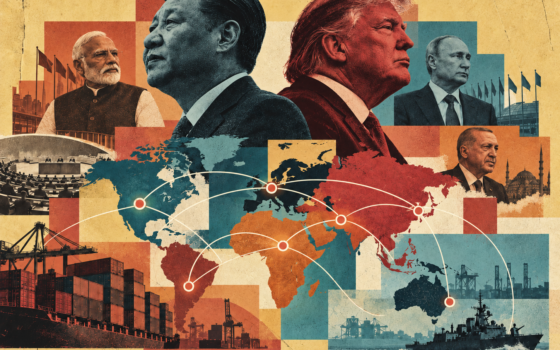
In reflecting on the past year, from our perspective, the most decisive event of 2025 in the international context was the return of President Donald Trump to the White House for a second term. His influence on the development of ongoing conflicts has been interpreted in various ways, although there is no doubt that it has had an impact. On one hand, he played a significant role in the ceasefire and the return of hostages in the Gaza Strip, although the fragility of the agreement is evident. However, in parallel, his efforts to halt the war between Russia and Ukraine have not been effective thus far. It is undeniable that they are now closer to a diplomatic solution, but this is not the first time progress has been made in this direction without achieving the desired peace.
Another significant event was the Israeli attack (Operation “Rising Lion”) and the American operation (Operation “Midnight Hammer”) on Iran’s nuclear and strategic facilities, whether due to the U.S. commitment to Israel or the material success of the operation—which demonstrates Jerusalem’s military and intelligence capabilities, although the long-term impact remains uncertain—as well as the political and strategic impact on the Tehran regime and its allies.
Thus, global instability, characteristic of a transitioning international order, has been reflected, in addition to the described conflicts, by confrontations and escalations in the Taiwan Strait, India-Pakistan, and Cambodia-Thailand, to name the most impactful.
Regionally, President Trump’s figure has also had a significant influence. The deployment and formation of a considerable military force in the Caribbean, off the coast of Venezuela, began as a tool to combat drug trafficking to the north, but has evolved into increasingly harsh actions against the Caracas regime, including the seizure of oil tankers and attacks on port facilities. Undoubtedly, the underlying objective is the change of a regime detrimental to the region, with impacts far beyond its borders. On the other hand, the development of elections in South America has been marked by a shift in the predominant political color, in a scenario of increasing violence, migration, and the presence of transnational criminal organizations.
In Chile, the presidential and parliamentary election was the most significant milestone, not so much for the change it represents, but for the strength of the vote received by the newly elected José Antonio Kast and his promise to implement an emergency government prioritizing security and the economy. Similarly, the establishment of the new Ministry of Public Security has been a novelty of 2025; its effectiveness and justification remain to be seen, and time must be given.
If this year was intense, 2026 is not expected to be any different. Internationally, we must pay attention to what happens between the U.S. and China, including a meeting between the leaders of both states. It is unlikely that China will relent in its effort to reunify Taiwan, just as it is unlikely that the U.S. will yield in its effort to distance Asian influences in the hemisphere. The war in Europe will continue to be a source of instability, where Washington’s role will need to articulate a peace that seems difficult to achieve, at least in the first half of the year.
South America will face elections in Brazil, Colombia, and Peru, which could further change the regional political landscape and consolidate a shift in direction. However, as has already occurred, such a change will not be significant if states focus on highlighting their transient political coincidences rather than generating initiatives based on common interests such as combating organized crime, controlling migration, or energy and infrastructure integration.
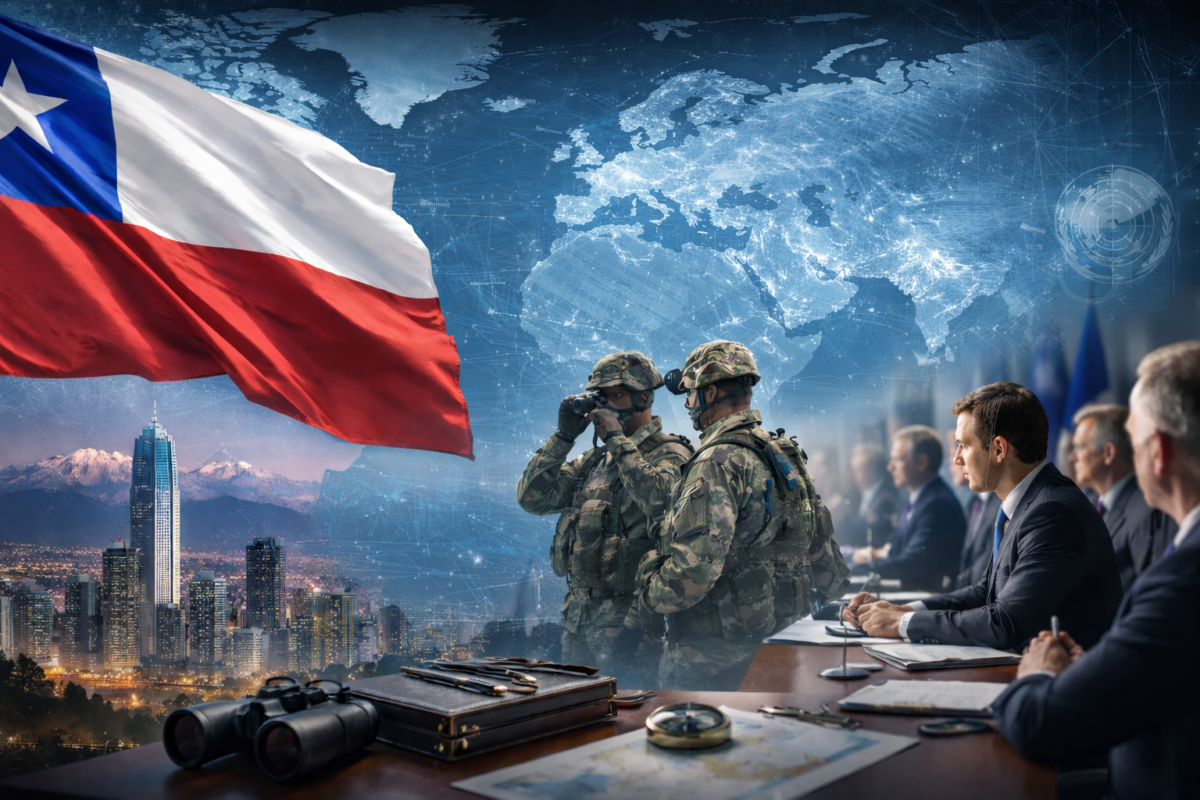
For Chile, expectations regarding what the new administration will do, especially in the economic and security realms, are high, and the teams leading various initiatives will need to push for immediate measures. Time must be given for decisions to take effect, although it is anticipated that the opposition—or at least part of it—will not wait and will begin to harass the new government. The implementation of a national security architecture, the development of a more modern intelligence system, and the establishment of a public security strategy to combat organized crime are aspects that should not be absent from the solution.
In conclusion, all indications suggest that next year will be, more than a break, a continuation. The structural tensions of the international system, open conflicts, and competition among great powers show no clear signs of easing. In Latin America, the scenario will be marked by a political realignment to the right, but the key question is whether these governments will be able to advance in common and sustained agendas on critical issues such as security, organized crime, migration, infrastructure, energy, and more.
In the case of Chile, 2026 should also open a space for deeper reflection on its foreign policy and diplomatic institutional framework. The controversy generated in recent weeks by the statements of Chile’s ambassador to New Zealand, Manahi Pakarati—beyond the specific episode—brings to the forefront a fundamental discussion: how we select, train, supervise, and evaluate our diplomats, and how the functioning of the Foreign Ministry is articulated in an increasingly demanding and sensitive international context. In a scenario where foreign policy has direct impacts on security, the economy, and the country’s international standing, strengthening the mechanisms for professionalization, control, and training of the foreign service is not a peripheral issue, but a necessary condition for Chile to act with coherence, predictability, and strategic responsibility in the coming world.