Key Aspects of the Munich Security Conference 2026 (MSC)
This article was translated automatically and may contain differences from the original. For reference, read the original.
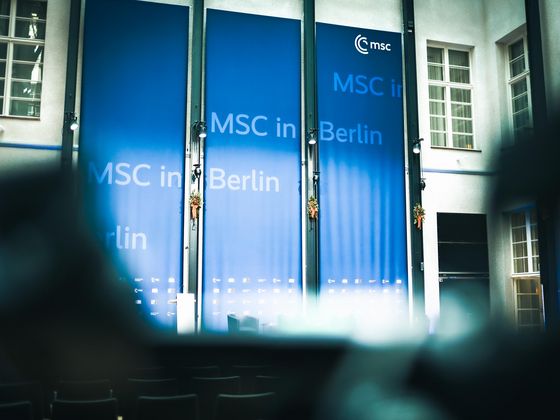
This week, from February 13 to 15, the 62nd Conference took place at the Bayerischer Hof and Rosewood hotels in Munich, bringing together numerous heads of state, hundreds of politicians, and opinion leaders from various regions of the world to address the most relevant security policy challenges and deepen strategic debates aimed at strengthening cooperation. Additionally, they analyzed the most pressing global security challenges in a global context characterized by profound ongoing changes, compelling different countries to observe what occurs in this global forum. The summit was led by MSC President, German Ambassador Wolfgang Ischinger, and the German delegation was headed by Chancellor Friedrich Merz. The famous Munich rule, applied each year, is “interact and engage with one another: Do not preach or ignore each other”, which implies that the spirit of each summit invites dialogue and ongoing interaction to learn from one another in the search for solutions to common problems, which does not always align with the expectations of the main actors.
What are the main key points discussed this year:
A. We are facing an era of destruction of the post-World War II architecture, based on multilateralism and the relevance of major international organizations
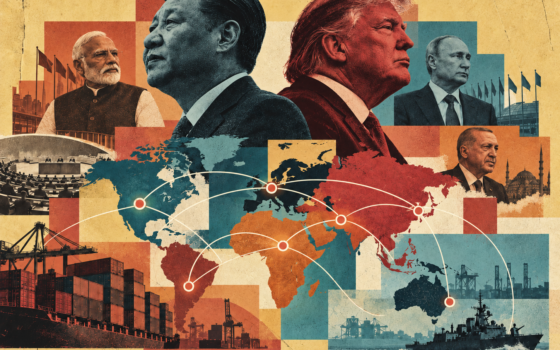
At the opening, a video was presented to highlight and reflect on the “era of wrecking ball politics,” and the deterioration of current transatlantic relations between the United States and Europe. For example, Chancellor Merz noted that “in the era of great power rivalry, even the United States will not be powerful enough to act alone.” This context highlighted the radical change in the global landscape, primarily expressed in Europe by the ongoing Russian-Ukrainian conflict, which has lasted longer than the former Soviet Union’s involvement in World War II. In most opening speeches and roundtables on the first day of the conference, it was stated that the European continent has not received the traditional support from Washington. Nevertheless, it is assumed that the main norms and international institutions are being seriously questioned, as well as various disruptive phenomena related to exponential technological development, greater geopolitical and socioeconomic tensions, which are eroding the global order.
B. A unified European army and alternatives to the U.S. nuclear umbrella.
The idea of a unified European army was raised again. This was mentioned—among others—by the President of the European People’s Party and Member of the European Parliament Manfred Weber. He detailed that Europe “is spending a lot of money on defense, 6.5 trillion euros over the next ten years, but does not have the same capabilities as the United States.” He additionally mentioned that the two pillars of the fight against populism are: “fulfilling commitments, but also showing brave leadership in historic moments.”
Regarding the American nuclear umbrella over Europe, some European countries are seeking alternatives amid fears of a more aggressive Moscow and potential nuclear proliferation in Europe. In this regard, French politician Natalia Pouzyreff stated that “it is important that we have credible deterrence for Europe,” anticipating greater clarity in March when Macron delivers a speech and presents the European dimension of French nuclear deterrence.
C. Defense, technological capabilities, and future conflicts.
The discussions and roundtables addressed the challenge of having the strategic capabilities to face both conventional threats and hybrid and technological ones, with a renewed emphasis on resilience development, increased defense spending, and achieving greater cohesion among alliances. In summary, preparing to identify the nature of future conflicts and consequently preparing the development of the respective necessary strategic capabilities. The identified context is one in which factors such as artificial intelligence, cybersecurity, and emerging technologies will be key in this redefinition, as well as in understanding warfare, to adequately prepare the defense of European states.
D. Expanding the concept of security to include energy and economic factors.
This time, the impact of energy security and economic resilience was particularly discussed as pillars that benefit global stability, in a context of competition for strategic resources, sanctions, and clashes of interests over these disputes.
E. Main political messages from the Conference organized by regions:
1. Europe:
For Europe, the goal is identified as achieving greater strategic autonomy and a stronger commitment to defending the liberal order on a global scale. This implies greater European responsibility in strengthening its own security by investing more in defense and reinforcing the European military industry, thereby reducing external dependencies. Nevertheless, there is awareness at the European level of the need to prepare for a more complex, difficult, and competitive environment.
It is recognized that Europe must be an active guarantor of the international order, not just a recipient of its benefits, as this order is under immense pressure from the rise of revisionist powers and the weakening of multilateralism on a global scale.
Regarding the ongoing war in Ukraine, the issue was presented by President Volodymyr Zelensky, who requested lasting security guarantees and sustained support against Russia. It is estimated that the outcome of this conflict will determine Europe’s credibility.
2. United States:
The stance of this power was represented by Secretary of State and National Security Advisor Marcos Rubio, who confirmed the transatlantic alliance, but with certain conditions. He identified the alliance as the central axis of global stability and the clearest expression of the West. However, the conditions are closely related to necessary reforms to the current multilateralism, fundamentally in international institutions, to better respond to current conflicts. The U.S. approach combines cooperation with a more realistic vision oriented toward strategic interests. Likewise, he reiterated the demand for Europe to assume a greater commitment to spending and leadership in defense, particularly on NATO’s eastern flank.
3. Asia Pacific:
This is the region where systemic competition is anticipated, identifying China as the main structural challenge. This is considering the increased relevance of the debate on Ukraine due to the immediacy of its outcome, but with a clear understanding that competition with China represents a long-term strategic challenge, not only in the military dimension but also in trade, technology, and security.
It is estimated that this region is key in the development and control of critical technologies, described as decisive in future global power, fundamentally in the potential of artificial intelligence and cybersecurity.
There is a clear awareness that this region plays a key role in the fragmentation of the world order and the move toward unstable multipolarity, where more flexible alliances will be defined in a context of greater competition and confrontation.
4. Latin America
Although the region is not the protagonist of the forum, there is no doubt that the decisions and agreements discussed will have direct and indirect impacts on the region. Latin America will operate in a more competitive scenario where it will be forced to take positions among the main global actors, in a context of weakened multilateral institutions with more pragmatic alliances. This means more freedom of action to diversify relationships, but alongside this, greater pressure to align on sensitive issues with certain actors.
It can be anticipated that there will be pressures for greater scrutiny of Chinese investments, particularly in the areas of natural resources, critical minerals, infrastructure, and communications. If Europe seeks strategic autonomy and an adequate degree of energy security, this represents an opportunity for Latin America.
The growing global military spending and the increased demand for strategic capabilities will clearly and significantly affect the modernization processes in the region. It is an opportunity to rethink defense in light of future challenges and the new nature of conflicts. However, the region will need to face the main security challenges with all state power instruments to combat drug trafficking, organized crime, and the challenges posed by the disruptive technologies of non-state actors.
The order based on international norms clearly constitutes the cornerstone for the states in the region. Its weakening could translate into a loss of the traditional space where it has had diplomatic influence, affecting national interests as well as the capacity for multilateral negotiation.
F. General Conclusions of the Conference.
If we could summarize the overarching message resulting from the conference, we should highlight the consensus on an international order under pressure, in which the relationship between the United States and Europe will be key to sharing global responsibilities, maintaining the necessary cohesion to confront the main revisionist powers.
This translates to the fact that for Latin America, what occurs globally is no longer a matter that affects each country in the medium or long term, but rather defines what happens in the short term, significantly affecting their own interests. This implies the urgent need—for countries like Chile—to think strategically, analyzing the global, regional, and local environment with appropriate governmental structures and specialists. Improvisation not only has no place but represents a serious threat to our national interests, with grave consequences for security, development, and well-being.
Director ejecutivo AthenaLab