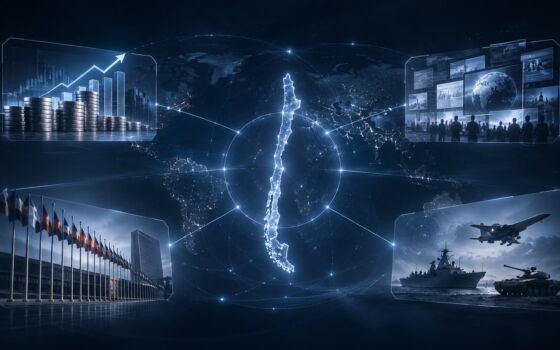
From Absence to Influence: Chile and Its Participation in International Forums
This article was translated automatically and may contain differences from the original. For reference, read the original.
- by Carlos Solar
- Guest Contributions
In a context where Latin America is beginning to gain visibility, Chile's future participation in spaces such as the Munich Security Conference will represent a concrete opportunity to regain international presence, build high-level networks, and position itself as a reliable partner in discussions shaping the global order.
The recently held Munich Security Conference (MSC) this past weekend brought together more than 1,500 people from 150 countries, including government officials and legislators from the U.S., Europe, and around the world. This was complemented by hundreds of executives from multinational companies and representatives from the most important global NGOs, including think tanks, media outlets, and lobbying groups. In Munich, not only were diagnoses exchanged: alignments were tested, strategic changes anticipated, and, above all, relationships were built that later translate into concrete decisions.
The participation of Latin American countries in the MSC has been gradual. Four years ago, there were barely speakers from the region; however, this year the Colombian Minister of Defense participated in two panels, and Argentina was represented at the level of its Foreign Minister and Minister of Defense. In this context, Chile’s systematic absence from the MSC must be addressed. There has been no effort to participate either with government officials or even with technical delegations at the ambassadorial or defense attaché level. This inaction does not stem from structural barriers (the conference is free and operates by invitation) but rather from a lack of strategic prioritization of decisive international spaces for global governance.
The MSC is not just a forum for debate, but a platform for concrete results: bilateral meetings, defense agreements, political positioning, and international visibility. Participation would open up the possibility for Chile to convert presence into influence, and contacts into tangible cooperation, rather than watching others occupy that space.
U.S. Leadership: Rubio and Colby
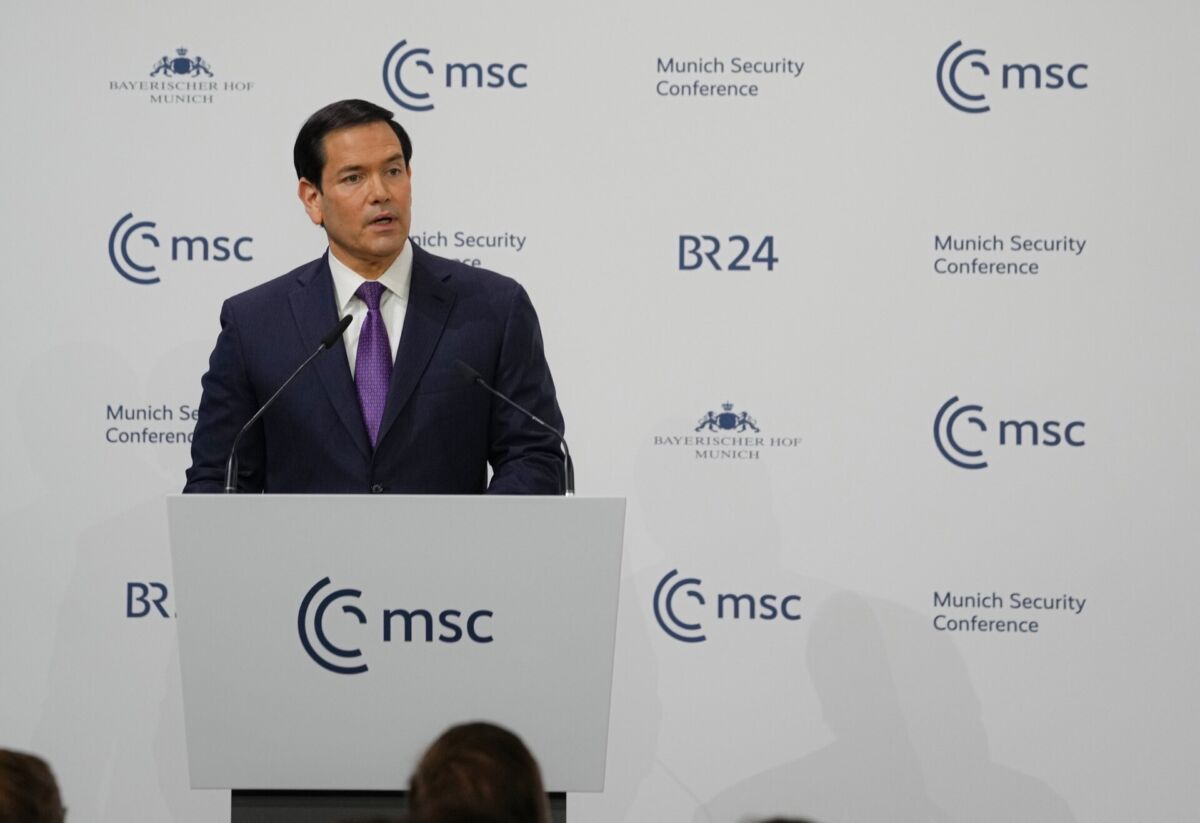
The signals emitted from the United States at this latest MSC reinforce the importance of these spaces. One of the most anticipated presentations was from U.S. officials, whose ministerial delegation also included more than 30 legislators. Secretary of State Marco Rubio stated in a key phrase during his speech (Saturday, February 14): “The United States and Europe belong together” (“We want Europe to be strong… Europe and the U.S. belong together”). He made this statement to reaffirm the transatlantic alliance, highlighting that both share cultural and historical roots and must collaborate in the face of global challenges. Rubio’s stance is radically opposed to the previous version of the MSC in 2025 when JD Vance launched harsh criticisms against Europe and its political order.
Why is this important for Latin America? If the U.S. seeks to strengthen its relationship with Europe, it could also translate into greater strategic cooperation that includes Latin America in the face of powers like China and Russia. Reinforcing Western alliances amplifies the idea that Latin American issues, such as security, trade, and migration, will gain greater weight on multilateral agendas during 2026. By emphasizing that the West “belongs united,” a message is sent that the Latin American region can play an active role within a global order that values democracies and open markets.
The second most anticipated presentation was from the Pentagon’s chief strategist, Elbridge Colby, who conveyed a clear line: “NATO must be based on partnership and not dependence,” emphasizing that European allies must take primary responsibility for their own defense in terms of military capabilities, while Washington focuses on more specific roles such as nuclear deterrence and broader global challenges.
Why does this influence Latin America? This stance indicates that the U.S. could reduce its traditional military presence in Europe and redirect resources to other theaters (including the Middle East and the Western Hemisphere). If Europe takes on more defense burden, the U.S. could have more political leeway and resources to collaborate with partners in Latin America on security, trade, or infrastructure. The emphasis on more balanced partnerships could serve as a model for redefining bilateral relations in the region, promoting shared responsibility and deeper cooperation among Latin American governments and external powers.
Presence of Colombia and Argentina
According to open sources, Argentine Minister of Defense, General Carlos Presti, met with his counterparts from Belgium and Italy, with Colby himself, and with the International Executive Vice President of Airbus. Belgium indicated its capacity for maintaining the Argentine F-16 fleet in Europe and the possibility of deploying technical teams where needed. The reopening of the Argentine Military Attaché in Brussels in 2026 was also confirmed. Discussions with Airbus focused on the company’s interest in expanding its presence in Argentina and its willingness to explore cooperation options in the defense sector, both in aerospace products and in maintenance and inspection services.
Argentine Foreign Minister, Pablo Quirno, was a speaker on a panel titled Raw Power: The Geopolitics of Resources. Quirno met with his counterparts from Germany, China, the Czech Republic, Georgia, Ukraine, the United Arab Emirates, and the High Representative for Foreign Affairs and Security Policy of the European Union, among others.
Rafael Mariano Grossi, the Argentine candidate for the UN Secretary-General, was also present at the MSC. Another candidate, Costa Rican Rebeca Grynspan, was also a panelist, and potential Ecuadorian candidate María Fernanda Espinoza was also at the conference.
Colombian Minister of Defense, General Pedro Sánchez, met with his French counterpart, and they agreed to strengthen international cooperation under the Orion Strategy, aimed at countering drug trafficking. Minister Sánchez was undoubtedly the most prominent figure from Latin America at the conference panels, highlighting the importance given to Colombian representatives in international forums. Sánchez shared the stage with the U.S. Ambassador to the UN, Michael Waltz, in a panel titled Breaking Point: The International Order Between Reform and Destruction (Friday, February 13). He also participated in the panel Illicit Affairs: Confronting Criminal Networks Across Borders (Saturday, February 14).
Regaining Visibility and Influence
What does Chile lose by not participating in the MSC, and why does it find itself at a disadvantage compared to countries like Colombia and Argentina? Chile loses strategic visibility and direct access to conversations where global security, defense, and geopolitical priorities are being defined. By not being at the MSC, it is excluded from the “room where decisions are made” and from informal contacts that often hold more value than official statements.
Colombia and Argentina mingled with ministers, security advisors, and political leaders, along with other key actors. This allows them to position their own narratives, present themselves as reliable partners, and open doors to cooperation in defense, financing, technology, or political support. Chile, on the other hand, does not build political capital or personal networks in that space, leaving it at a competitive disadvantage when attention, influence, and opportunities are distributed.
The signals from the U.S. at the MSC indicate a return to the logic of Western alliances, but with greater demands for shared responsibility. By not being present, Chile loses the opportunity to directly interpret the U.S. strategic shift and to present itself as a stable, democratic, and predictable partner in the Western Hemisphere. Participation would allow Chile to align its discourse and proposals with Washington’s new priorities, rather than being relegated to late or indirect interpretations. For Chile, the conclusion is clear: absence is not neutral. It implies ceding space, visibility, and influence at a time of reconfiguration of the international order. At the same time, the opportunity remains open. The region is still not overrepresented at the MSC, and Chile’s institutional prestige could quickly translate into access, credibility, and influence if there were a political decision to participate systematically.
by Carlos Solar
Senior Research Fellow en el think tank Royal United Services Institute (RUSI) en Londres