Lessons from the China Express Submarine Cable
This article was translated automatically and may contain differences from the original. For reference, read the original.

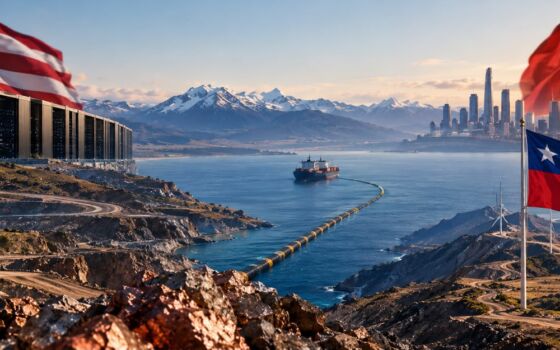
In recent days, much has been said regarding the United States’ reaction to the possibility of Chile negotiating with China for the construction of a direct submarine fiber optic cable between Valparaíso and Hong Kong. However, little analysis has been conducted on the nature of the conflict of interests that arose, which ultimately led to the revocation of the entry permit to the U.S. for the minister, the undersecretary, and the chief of staff involved in that negotiation.
Ninety-seven percent of the data circulating worldwide is transmitted through fiber optic cables installed on the ocean floor. Cyberspace is not in outer space; it literally rests on the seabed. While in the past, control over the valves of oil and gas pipelines that supplied energy to the world was an unmistakable sign of power, today few recognize the strategic magnitude of controlling the “valves” of data that sustain the functioning of the 21st century.
During President Sebastián Piñera’s second administration, the first bidding process was opened to lay a submarine cable that would directly connect Chile with the Asia-Pacific region, as an alternative to the current South American route to Asia, which passes through the United States and Hawaii. When Chinese companies—particularly Huawei—participated in the process, then U.S. Secretary of State Mike Pompeo traveled to Chile and met with the president and Foreign Minister Roberto Ampuero to express Washington’s concerns regarding the potential Chinese involvement in controlling data flows between the American continent and China. The message was unequivocal and even generated outraged responses from the Chinese embassy in the local press at the time.
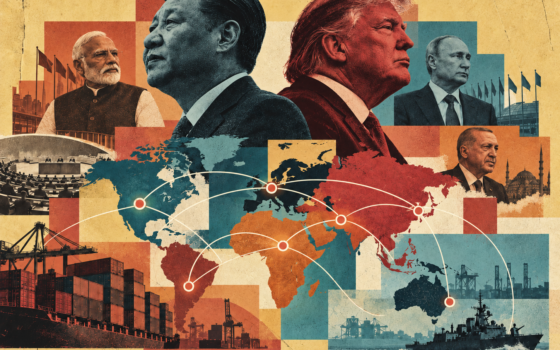
President Donald J. Trump presented voters with a program centered on reclaiming all of the United States’ instruments of power with the explicit goal of reaffirming its status as a great power. He was democratically elected to execute that agenda. It is a case study to observe how Washington has coordinated the set of tools at its disposal to advance its objectives.
Hard power and soft power have operated complementarily and with a clear strategic logic. Immigration policies—visas, residency permits, and deportations according to the law—are complemented by the use of the U.S. university system as a central source of soft power: the world’s leading universities remain a magnet even for citizens of competing countries. Simultaneously, economic instruments such as tariffs and fees, preferential access to strategic raw materials—such as rare earths—soft loans or debt forgiveness, as well as political designations like the status of extra-NATO ally have been utilized. All of this ultimately articulates under the explicit or implicit backing of U.S. military capability, whose mere existence reinforces the negotiating position of its diplomats and special envoys in any international scenario.
In November 2025, before completing a year in office, President Donald J. Trump enacted his National Security Strategy (NSS). For countries like ours—unaccustomed to understanding the depth of the concept of national security and the relevance of a document that explicitly articulates all the instruments of national power of a great power—it went almost unnoticed, as just another foreign policy text.
In January 2026, Secretary of Defense Pete Hegseth and Secretary of State Marco Rubio published their respective defense (war) and foreign relations strategies, in subsidiary coherence with the NSS. Except for a few specialized actors, as a country we were unable to connect the dots and recognize the web of power and interests that was being publicly, explicitly, and openly configured. The designation of the Americas as Western Hemisphere has significant implications, as reflected in episodes such as the aspiration to purchase Greenland, the pressure to cancel concessions to Chinese capital in ports linked to the Panama Canal, control over Venezuelan oil that supplies China, or Washington’s concerns regarding Chinese control of the port of Chancay in Peru.
In this context, the case China Express demonstrates that Chile approached a project of evident strategic and geopolitical relevance as if it were merely a technical-economic initiative. This approach—whether due to naivety, lack of professionalism, or outright incompetence—unnecessarily exposed us to becoming a battleground between the two main global powers, with unforeseen consequences for our position and interest in maintaining neutrality between them.
There is no room for surprises. The analysis of this failure must open a serious discussion about our political management options to navigate the waters of this stage of the 21st century.
First, a medium or small power like Chile cannot afford to have separate strings to address its problems and challenges of global integration. Once and for all, we must design a coherent and guiding state administration architecture that allows for what is known as the whole of government/state approach or the state approach as a whole. We cannot subtract any type of power tools from the country’s positioning efforts in a global Realpolitik. To contribute to this effort of developing comprehensive strategies, it is essential to reclaim the concept of National Security. It is not a military or police term; it is a distinctly political term, but one that integrates efforts and converges resources. We need to plan for Chile’s national security. We must get our house in order. Symbolic policies and strategies published in the last week of an administration are not effective; those published at the beginning of an administration, with a long-term vision, are the ones that help guide and direct the efforts of the entire state towards the national objectives and interests set by the President of the Republic.
China Express is a lesson in political management that we must learn quickly and thoroughly.