What Ormuz Teaches Us About the Strategic Value of Magellan
This article was translated automatically and may contain differences from the original. For reference, read the original.
- por Fernando Silva
- Colaboraciones externas
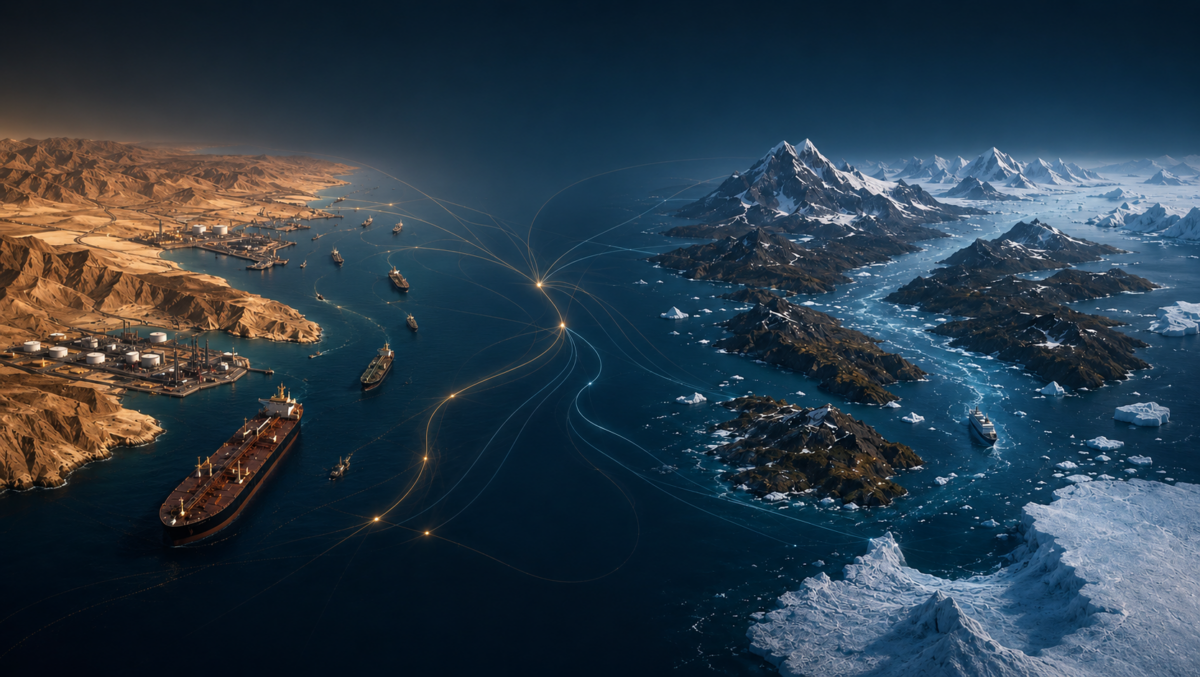
As a result of the war in the Middle East, straits—especially the Strait of Ormuz—have re-entered global discussions. Whenever a crisis threatens a critical maritime passage, a truth that globalization often conceals under the guise of fluidity emerges: a significant portion of the world’s trade, energy, and financial stability depends on narrow, legally sensitive, and politically contested places. Why is the Strait of Ormuz of interest to us? Because it reveals how a few kilometers of sea can influence the decisions of governments, companies, markets, and armed forces across different continents.
The first lesson from Ormuz is that a strait is not just a geographical formation, but also a strategic factor. Unlike an artificial canal, such as Suez or Panama, built to shorten routes through human engineering, a strait is a narrow and natural waterway between two land masses, connecting two large bodies of water, such as seas or oceans. Certainly, this difference has legal consequences. While canals are usually governed by specific treaties, administrative rules (payments to the country that manages it), and commitments to neutrality, straits used for international navigation are linked to maritime law and the principle of transit passage, which seeks to ensure continuous and expeditious circulation. Here, a permanent tension arises: the sovereignty of coastal states coexists with the interest of the international community in keeping maritime routes open.
From a classical geopolitical perspective, straits are points where geography transforms into power. Alfred T. Mahan[1] would have observed them as essential nodes of maritime power; Julian S. Corbett[2], as spaces whose value depends on ensuring or denying the use of the sea, and Nicholas Spykman[3], from the logic of the Rimland, as hinges between continents, oceans, trade routes, and power balances. For Spykman, the coastal areas of Eurasia are not peripheries, but decisive spaces where land power, naval power, and competition among great powers intersect. In this logic, Ormuz is not a regional geographical accident, but a piece on the global chessboard.
The Strait of Ormuz embodies this condition with particular intensity. Located between Iran and Oman, it connects the Persian Gulf with the Gulf of Oman and the Arabian Sea. Its importance lies not only in its narrowness but also in the strategic significance of what converges there: oil, liquefied natural gas, trade routes, Asian interests, Western military presence, regional rivalry, international law, and opposing political narratives. In 2024, an average of nearly 20 million barrels of oil per day transited this route, approximately one-fifth of global consumption[4], in addition to a significant portion of global liquefied natural gas trade. In an interdependent economy, this concentration makes any threat to Ormuz a global issue.
Therefore, the closure of Ormuz is not just an energy crisis. Its effects ripple through multiple levels: rising oil and gas prices, increased maritime insurance costs, pressure on freight rates, inflation, stock market uncertainty, diplomatic tension, disruption of logistics chains, and, clearly, an outright military conflict. Even a credible threat can produce effects before any actual blockade, because markets do not react solely to established facts, but also to the expectation of disruption. Iran’s actions regarding Ormuz teach us that, in the global economy, the perception of risk is also a form of power.
The second lesson comes from military and political strategy: it is not necessary to completely control a strait to make it insecure. Ormuz has geographical conditions that facilitate surveillance, pressure, and area denial[5]. Iran has coastline, islands, bases, and territorial depth to the north; Oman controls the southern shore, and traffic must be organized in relatively narrow routes in the sections where there is sufficient depth for the passage of large vessels, creating a highly congested space. In that environment, mines, anti-ship missiles, drones, fast boats, electronic interference, or cyberattacks threatening vessels or port infrastructure can raise the cost of navigation without the need for an open conventional war. The threat is not only to close the passage but to make it sufficiently risky for shipping companies, insurers, states, and markets to alter their behavior.
History and recent events confirm this condition. Before oil, Ormuz was a commercial node between Persia, Arabia, India, and the Indian Ocean. Later, it attracted the interest of the Portuguese, Persians, British, and Omanis. With the rise of hydrocarbons, it ceased to be a regional route and transformed into a global energy artery. Since the Iranian Revolution of 1979, and especially since the Iran-Iraq war, the strait has been associated with a permanent tension between freedom of navigation, energy security, regional sovereignty, and military deterrence. Ormuz did not become strategic with the current crisis; this crisis merely makes visible a historical and geopolitical reality that has always been there.
The third lesson pertains to national strategic capabilities: defending a strait does not only mean deploying ships or aircraft. It requires ongoing intelligence, aerial and satellite surveillance, control of maritime traffic, mine-clearing capabilities, air defense, port protection, multinational coordination, cyber resilience, active diplomacy, clear rules of engagement, logistical support, among many others. Protecting a maritime passage is much more than safeguarding a physical route; it is also about controlling a perception of security. When that perception deteriorates, the strategic effect is realized.
And what does all this teach us about Magellan? Of course, the comparison must be cautious. The Strait of Magellan is not Ormuz. It does not have the same energy significance, is not surrounded by the same regional rivalry, and does not concentrate the same volume of hydrocarbons. However, it shares an essential condition: it is a natural passage that connects oceans and projects strategic value beyond its immediate geography. Its importance should not be measured solely by current traffic, but by its bioceanic, logistical, scientific, naval, environmental, and Antarctic potential.
Magellan connects the Atlantic and Pacific Oceans at the southern tip of America, is under Chilean sovereignty, and projects the country into Antarctic space. This value may grow in a century marked by climate change, polar routes, underwater connectivity, scientific research, environmental protection, and competition for presence in southern spaces. Ormuz teaches that straits become decisive when the world needs to pass through them, when alternatives are costly, and when states understand that geography only becomes influence if there is the capacity to manage, protect, and project it.
From this perspective, the question for Chile is not whether Magellan will be ‘another Ormuz,’ as it is neither and does not need to be. The question is whether Chile is building the necessary capabilities for its southern position to transform into effective presence, infrastructure, knowledge, Antarctic diplomacy, connectivity, maritime control, and responsible leadership. A strait does not acquire strategic value simply because it appears on a map; it does so when a state develops a long-term, sustainable strategic vision with anticipatory capacity.
Undoubtedly, the reflection becomes more demanding when looking at Antarctica. The Antarctic Treaty does not end in 2048. What may open from that date is the possibility of requesting a review of the Madrid Protocol[6] by any of its parties. However, even if the legal framework does not disappear, interest in Antarctica may increase for obvious reasons: fresh water, minerals, science, climate change, polar routes, biodiversity, connectivity, strategic presence, etc. In that scenario, Magellan would not only be a southern route but also a natural platform for projection toward the white continent.
Now, Ormuz demonstrates the power of a strait under pressure. Magellan reminds us that Chile possesses a southern key whose relevance may grow if the world turns its gaze southward. Between the two, there is a difference in scale, context, and risk, but also a common lesson: straits are places where geography becomes politics, where law requires capabilities to be effective, and where sovereignty is demonstrated through presence, knowledge, and infrastructure.
The final lesson is simple but decisive. Straits are not only maritime passages; they are also strategic systems. There converge trade, energy, law, force, technology, and perception of risk. Ormuz allows us to understand the fragility of global interdependence; Magellan compels us to ask whether Chile will know how to convert its southern geography into influence, responsibility, and future.
Bibliography
- Corbett, Julian S. Some Principles of Maritime Strategy. London: Longmans, Green and Co., 1911.
- Mahan, Alfred Thayer. The Influence of Sea Power upon History, 1660–1783. Boston: Little, Brown and Company, 1890.
- Spykman, Nicholas J. The Geography of the Peace. Edited by Helen R. Nicholl. New York: Harcourt, Brace and Company, 1944.
- U.S. Energy Information Administration. “Amid Regional Conflict, the Strait of Hormuz Remains Critical Oil Chokepoint”, Today in Energy. June 16, 2025. https://www.eia.gov/todayinenergy/detail.php?id=65504.
- Protocol on Environmental Protection to the Antarctic Treaty. Signed in Madrid on October 4, 1991. Antarctic Treaty Secretariat. https://documents.ats.aq/recatt/att006_s.pdf.
[1] Alfred Thayer Mahan, The Influence of Sea Power upon History, 1660–1783 (Boston: Little, Brown and Company).
[2] Julian S. Corbett, Some Principles of Maritime Strategy (London: Longmans, Green and Co.).
[3] Nicholas J. Spykman, The Geography of the Peace, ed. Helen R. Nicholl (New York: Harcourt, Brace and Company).
[4] U.S. Energy Information Administration, “Amid Regional Conflict, the Strait of Hormuz Remains Critical Oil Chokepoint”, Today in Energy, June 16, 2025, https://www.eia.gov/todayinenergy/detail.php?id=65504.
[5] Strategy aimed at preventing, complicating, or increasing the cost of an adversary’s access and operation in a given space, without the need to fully control it.
[6] Protocol on Environmental Protection to the Antarctic Treaty, signed in Madrid on October 4, 1991, art. 7, Antarctic Treaty Secretariat, https://documents.ats.aq/recatt/att006_s.pdf
por Fernando Silva
Oficial de Ejército (r)
¿Quieres publicar con nosotros? Revisa nuestras normas para colaboradores externos.
Ver normas de publicación