JOURNAL | The Space Race Reaches Latin America
This article was translated automatically and may contain differences from the original. For reference, read the original.
- por Juan Pablo Toro
- Voces AthenaLab
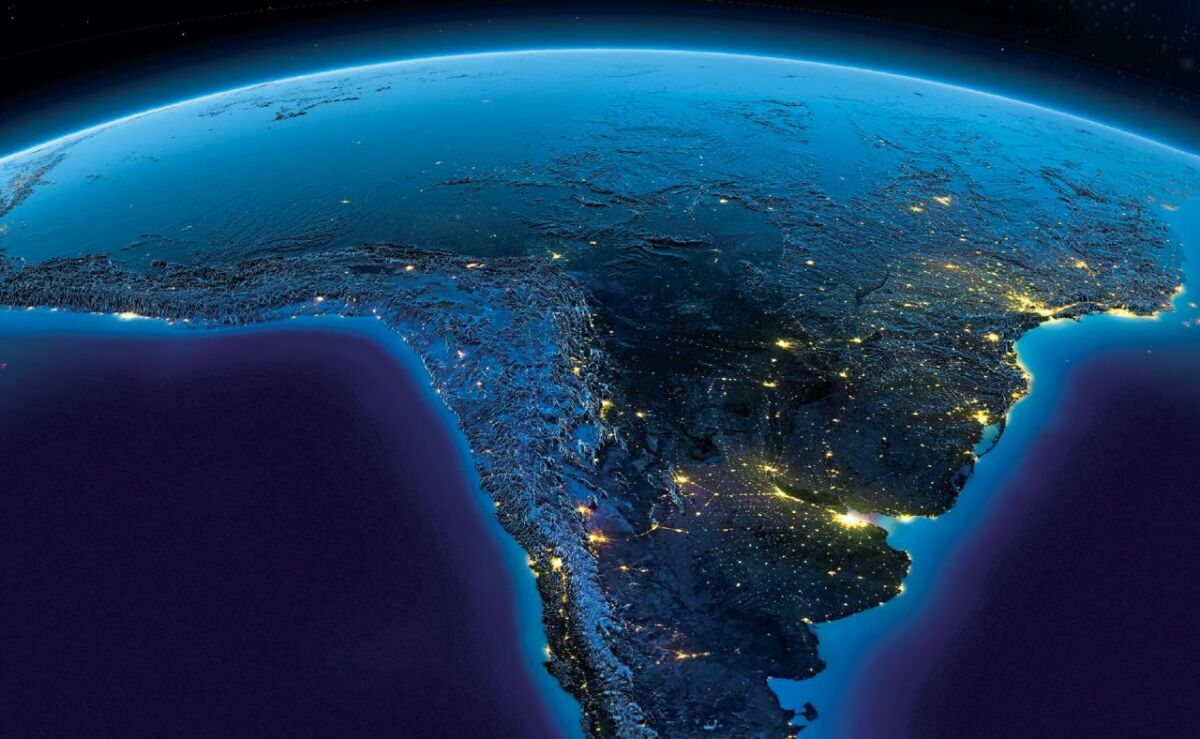
Latin America Looks to the Stars
The region has a tremendous opportunity in the burgeoning global space industry. What is needed to fully capitalize on it?
When Elon Musk’s SpaceX went public in June with a record stock offering of $75 billion, it confirmed what investors had been anticipating for years: the space industry is on the brink of a major boom. The global space economy could reach $1.8 trillion by 2035, nearly tripling its value from 2023. Musk, among others, has indicated that much of the upcoming expansion will take place outside the United States.
Increasingly, the search is pointing south. As Juan Pablo Toro reports in the cover article of this edition, several Latin American countries are emerging as key players in the new space economy. Ecuador, for example, has an advantage inscribed in its very name: located just two degrees south of the equator, where the planet rotates at greater speed and rockets receive an additional natural boost to reach orbit, the country seeks to attract investors with the promise of more affordable launches. Currently, there are plans to develop spaceports in Brazil, the Dominican Republic, Peru, and Uruguay, while Argentina and Brazil are already building satellites that help farmers assess their crops and governments respond to disasters.
Space has also become a stage for rivalry between the United States and China, with Washington pressuring local governments not to host Chinese facilities. The region, for its part, is determined to be more than a battleground. However, fragile institutions, limited budgets, and technical demands that leave no room for error stand between ambition and results.
Laura Delgado López, a leading figure in Latin American space affairs and a researcher at Florida International University, delves deeper into this landscape. In her article, she notes that no country or company can operate in space alone. The central goal is not independence, but resilience: the ability to manage risks and diversify partners. This shift in focus also carries a direct message for Washington.
U.S. companies are increasingly offering precisely what the region seeks: not a dependence based on “black box” technologies, but “sovereign solutions” that enable the development of local capabilities. This opens up opportunities for collaboration, provided that all parties can find the right balance.
Ultimately, it remains to be seen whether this moment for Latin America among the stars will translate into real growth or simply into frustrated potential, a pattern the region knows well. For now, after centuries of looking to the sky to chart maps of gods and calendars, Latin Americans once again turn their gaze upward.