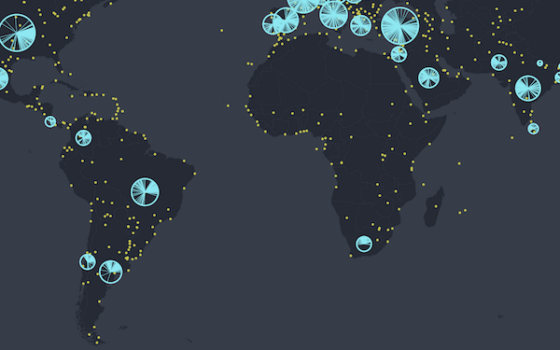
BID REPORT | Migration Flows in Latin America and the Caribbean: Statistics on Permits for Migrants
This article was translated automatically and may contain differences from the original. For reference, read the original.

Latin America and the Caribbean are experiencing significant changes in their migration patterns. The crisis in Venezuela has generated the second largest displacement after Syria and is receiving much less international attention and resources. At the same time, there is a large and growing population of Haitians migrating to South America, and large numbers are moving from the Northern Triangle of Central America to Mexico and the United States, and from Nicaragua to Costa Rica. The new database presented and described in this report compiles data on the number of permits granted in fifteen countries in the region by type of permit and nationality of the migrant over a five-year period from 2015 to 2019. This period clearly demonstrates the transformation occurring in the region from primarily emigration to a more complex scenario of increasing intraregional movements, with all the challenges faced by countries that send migrants, receive them, and support them while they are in transit. This evolution presents challenges for all countries, and this new database is a tool to better understand these phenomena and help guide policy and investments in the region.