More Ice, Please: The Growing Interest in Polar Vessels
This article was translated automatically and may contain differences from the original. For reference, read the original.
- por Juan Pablo Toro
- Análisis
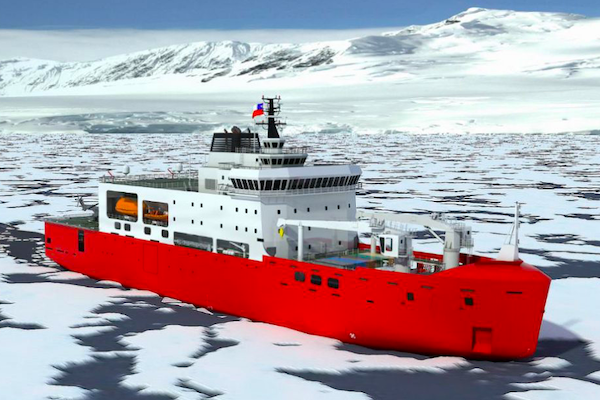
Interest in polar regions will only increase due to geopolitical and commercial reasons, which will require having the necessary means to access them independently.
One of the clearest expressions of the growing interest in Antarctica and the Arctic is the launching and construction projects of icebreakers and polar vessels. Among the most common features of these vessels are reinforced hulls, which are typically wider at the bow and thinner at the stern, and a high propulsion capacity to open and clear routes in frozen seas, either for themselves or for other ships.
What primarily differentiates polar vessels is the level of reinforcement of their hulls, where class seven (PC7) is the lowest and class one is the highest. This refers to the ability to navigate in Arctic waters year-round (1 to 5) or only in the boreal summer (6 and 7).
Sea ice, or pack ice, is characteristic of polar regions, to the extent that throughout the year it can cover between 15 and 25 million km2, which is about 7% of the global ocean surface. Seasonal variations can be enormous[1]. In Antarctica, for example, the ice cover can range from two million km2 in summer to 20 million km2 in winter; this phenomenon is particularly noticeable in the Weddell Sea and Ross Sea.
According to James R. Holmes, a professor at the U.S. Naval War College and a senior fellow at AthenaLab, there is currently a growing interest in the poles that translates into a demand for icebreakers, although this is more pronounced in the Northern Hemisphere. If the Arctic becomes navigable more regularly due to melting ice, it will serve as a shortcut between the Pacific and Atlantic, allowing for a reduction of up to 40% in travel time between, for example, Shanghai and Rotterdam. “That is a real cost-saving. The economics alone are compelling,” Holmes explains. Of course, there is also geopolitics. The United States is an Arctic nation, as are other countries in the North Atlantic Treaty Organization. Therefore, if China and Russia want to relieve pressure in the Western Pacific or the North Atlantic, they can do so by increasing their military presence in the Arctic.
Antarctica, on the other hand, is more of a barrier to navigation than a pathway. “Certainly, the nations that claim parts of the continent will pursue them zealously, but it is difficult to foresee the kind of frenzy we see in the north,” he adds.
News
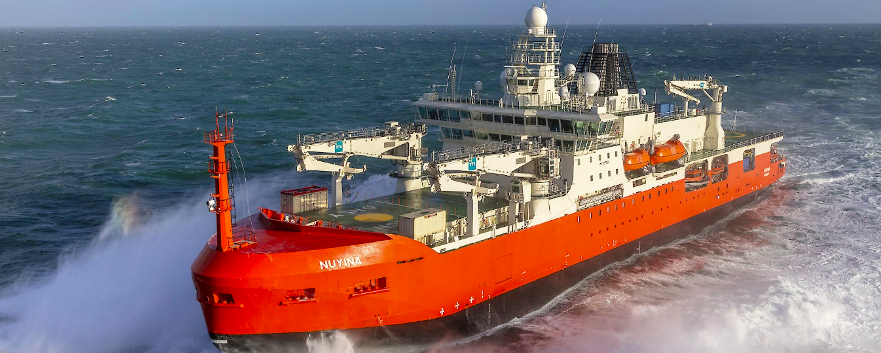
Australia, a signatory of the Antarctic Treaty and claiming 40% of that continent, recently commissioned the “RSV Nuyina,” a 25,000-ton icebreaker measuring 160 meters in length, which cost US$ 500 million and was built by the Dutch shipbuilder Damen. The vessel will be key to supplying the Davis base.
Image: Australian Antarctic Program.
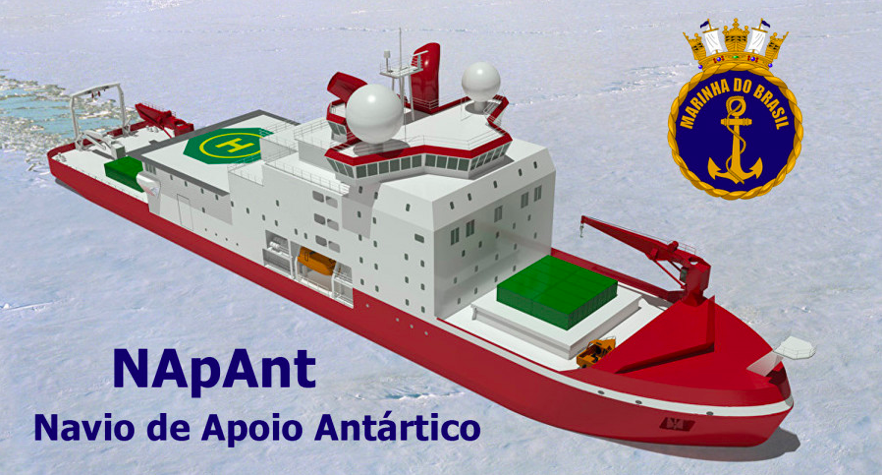
The Brazilian Navy announced in October that it has selected the project from Singaporean company Sembcorp Marine to build its new Antarctic Support Vessel (NApAnt) at the Jurong Aracruz shipyard in Espírito Santo state. The vessel will replace the oceanographic ship “Ary Rongel” and will strengthen Brazil’s presence on the continent following the reconstruction of the Comandante Ferraz base. No further details of the project are known.
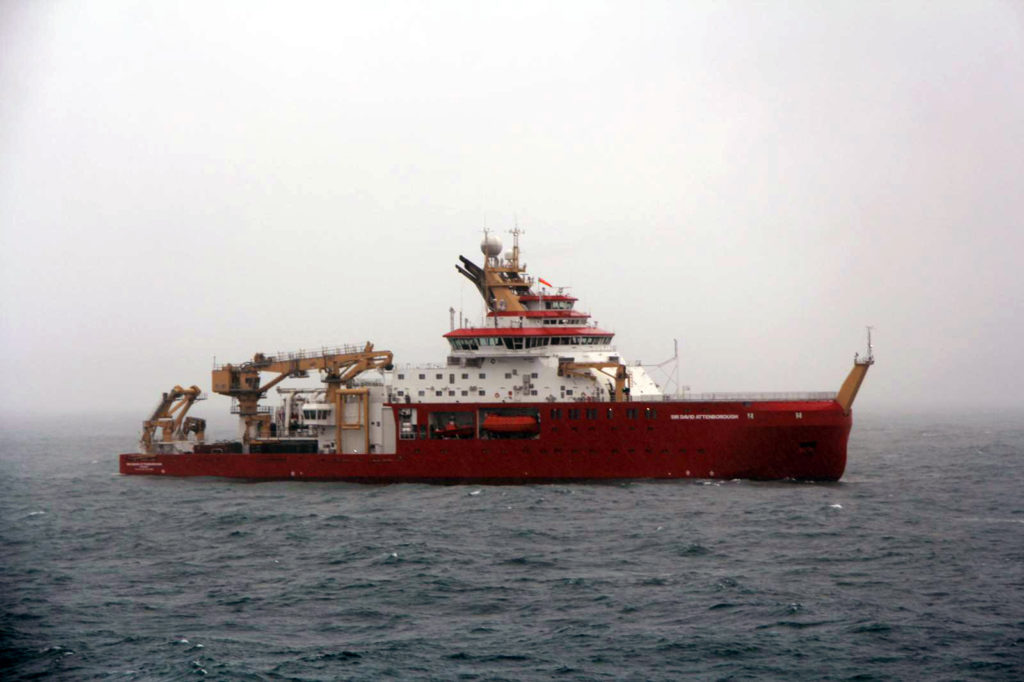
Currently, the new British polar exploration vessel “RRS Sir David Attenborough,” with a displacement of 15,000 tons and a length of 129 meters, is making its first visit to Antarctica as part of its inaugural journey. Built by
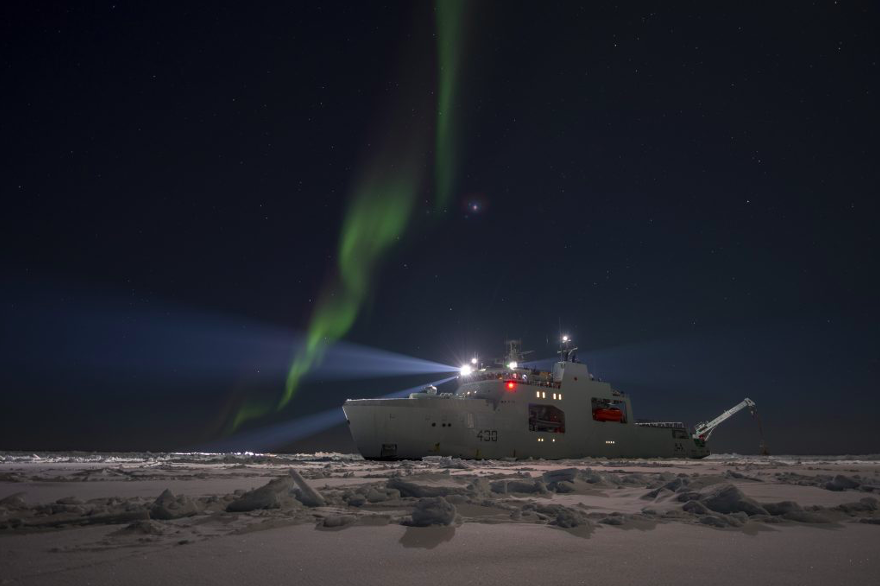
and operated by the British Antarctic Survey, the vessel is part of a broader investment project to strengthen presence in both poles. Image: Royal Navy Last June, the Royal Canadian Navy commissioned the Arctic offshore patrol vessel “Harry DeWolf,” the first of six of its class and part of the massive shipbuilding program that the force is undertaking. Built by the Halifax shipyard of Irving Shipbuilding, measuring 103 meters in length and displacing 6,615 tons, it is the largest ship built for the Canadian Navy in 50 years. Its primary task will be to patrol the increasingly trafficked Northwest Passage due to climate change-induced melting.
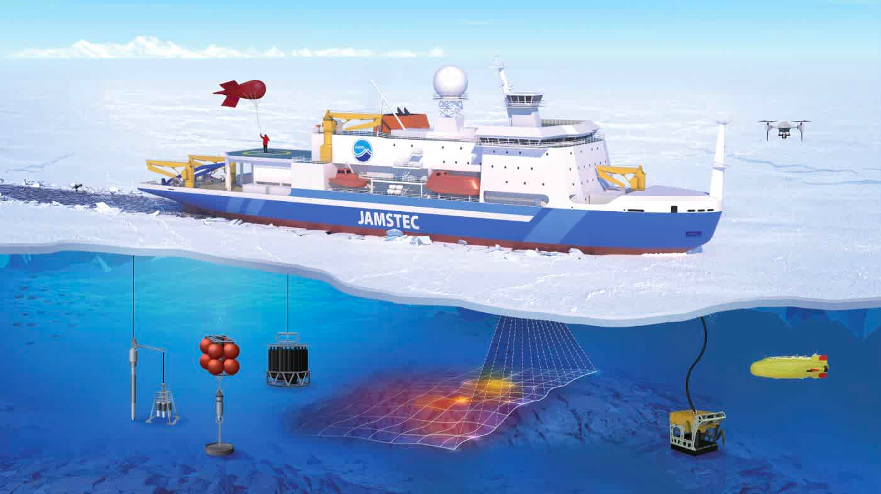
Japan is another country looking to strengthen its presence in the Arctic. According to Asia Nikkei, this will be achieved through the construction of its first vessel capable of operating year-round in the region. An icebreaker of 13,000 tons and 128 meters is being built by Japan Marine United following a design from the Japan Agency for Marine-Earth Science and Technology. The vessel, which cost US$ 295 million, is expected to begin operations in 2026
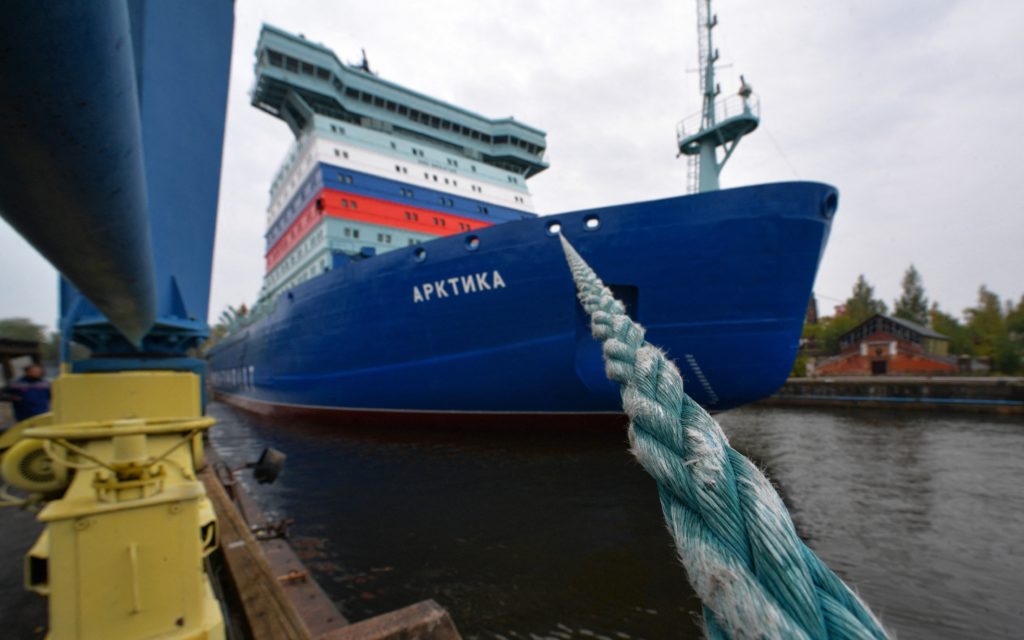
.Image: Japan Agency for Marine-Earth Science and TechnologyHowever, there is currently one country making a notable difference, and that is Russia, with the construction of the nuclear-powered icebreaker of the Arktika class, also known as Project 22220. The first of these three steel giants, measuring 173 meters long and displacing 33,500 tons, has been navigating the waters of the North Pole since 2020. Its nuclear reactor generates up to 350 MW of electricity.
Chile: Viel x Viel
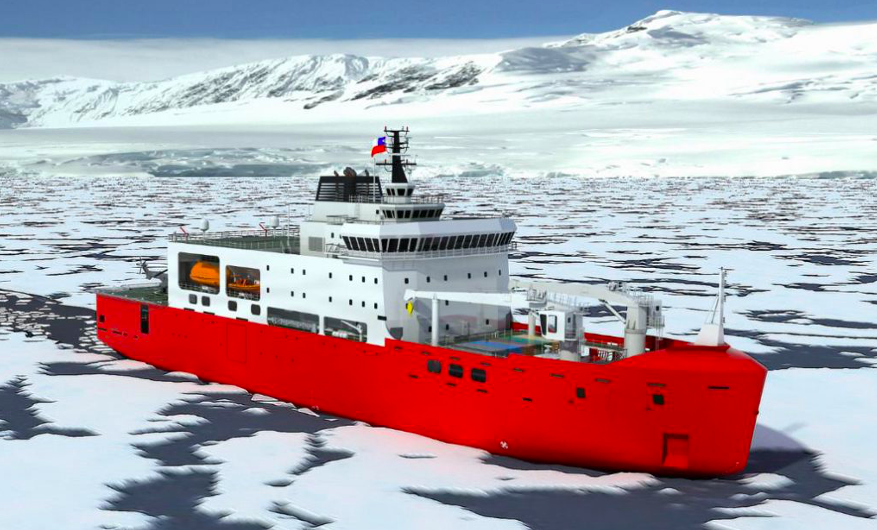
Sources linked to the project consulted by AthenaLab confirmed that the progress status is at 50%, with the most significant advancements made in the structure. If the pace is maintained, the launch could occur in December of next year, with commissioning for service expected by mid-2024. Following this, ice trials will take place.
In addition to being the largest vessel built by Asmar, the company becomes the first South American shipyard to manufacture a vessel with these polar characteristics.
Image: Armada de Chile
All of the above demonstrates that interest in polar regions will only increase due to geopolitical and commercial reasons, which will require having the necessary means to access them independently, where vessels play a fundamental role.
“Polar Icebreakers in a Changing World: An Assessment of U.S. Needs,” National Research Council, Transportation Research Board, Marine Board, Division on Earth and Life Studies, Polar Research Board, Committee on the Assessment of U.S. Coast Guard Polar Icebreaker Roles and Future Needs.
[2] https://asia.nikkei.com/Business/Science/Japan-joins-Arctic-race-with-1st-research-icebreaker-for-region