STUDY | 5th Survey of Perceptions on Foreign Policy and Security (AthenaLab-IPSOS)
This article was translated automatically and may contain differences from the original. For reference, read the original.
- por Athenalab
- Investigación y datos

In this edition, we wanted to take a closer look at Argentina, due to the establishment of President Javier Milei's government and the celebration of the 40th anniversary of the Treaty of Peace and Friendship with that country.
When we began implementing the first Survey of Perceptions on Foreign Policy and National Security in collaboration with IPSOS five years ago, this unique instrument revealed that the main concern of Chileans was drug trafficking and organized crime, followed by border porosity and the increase in irregular immigration. Today, this seems obvious; there is no survey that does not highlight it. Even national universities are conducting research on the topic and creating related centers.
More importantly, those who for years denied the relevance and validity of the concept of national security now raise it in light of the problems that the Chilean institutions are facing in enforcing the rule of law throughout the territory.
For AthenaLab, the survey is a source of great pride, as at the beginning of the decade it helped guide our own research precisely towards the challenges that require urgent solutions, starting with the need to create a state security architecture, reform the intelligence system, improve border control, address illicit economies, protect maritime interests, and update the geopolitical status of Chile’s extreme territories to exercise effective sovereignty. On all these issues, we now have documents that not only diagnose the situation but also propose solutions.
Therefore, after five years, we can affirm that the survey consolidates trends indicating that Chileans also want a proactive country in international matters, clearly identifying that their main partners are outside of Latin America, as well as the development models they aspire to. The United States and New Zealand are already recurring names in the responses.
This time, in particular, we wanted to take a closer look at Argentina, due to the establishment of President Javier Milei’s government and the fact that the 40th anniversary of the Treaty of Peace and Friendship with that country will be celebrated, which has not prevented the emergence of new territorial disputes.
We hope that the 2024 survey, a highly anticipated product by local authorities, embassies, academics, and journalists, will be useful for those interested in Chile, its foreign policy, and, above all, in the pursuit of its security.
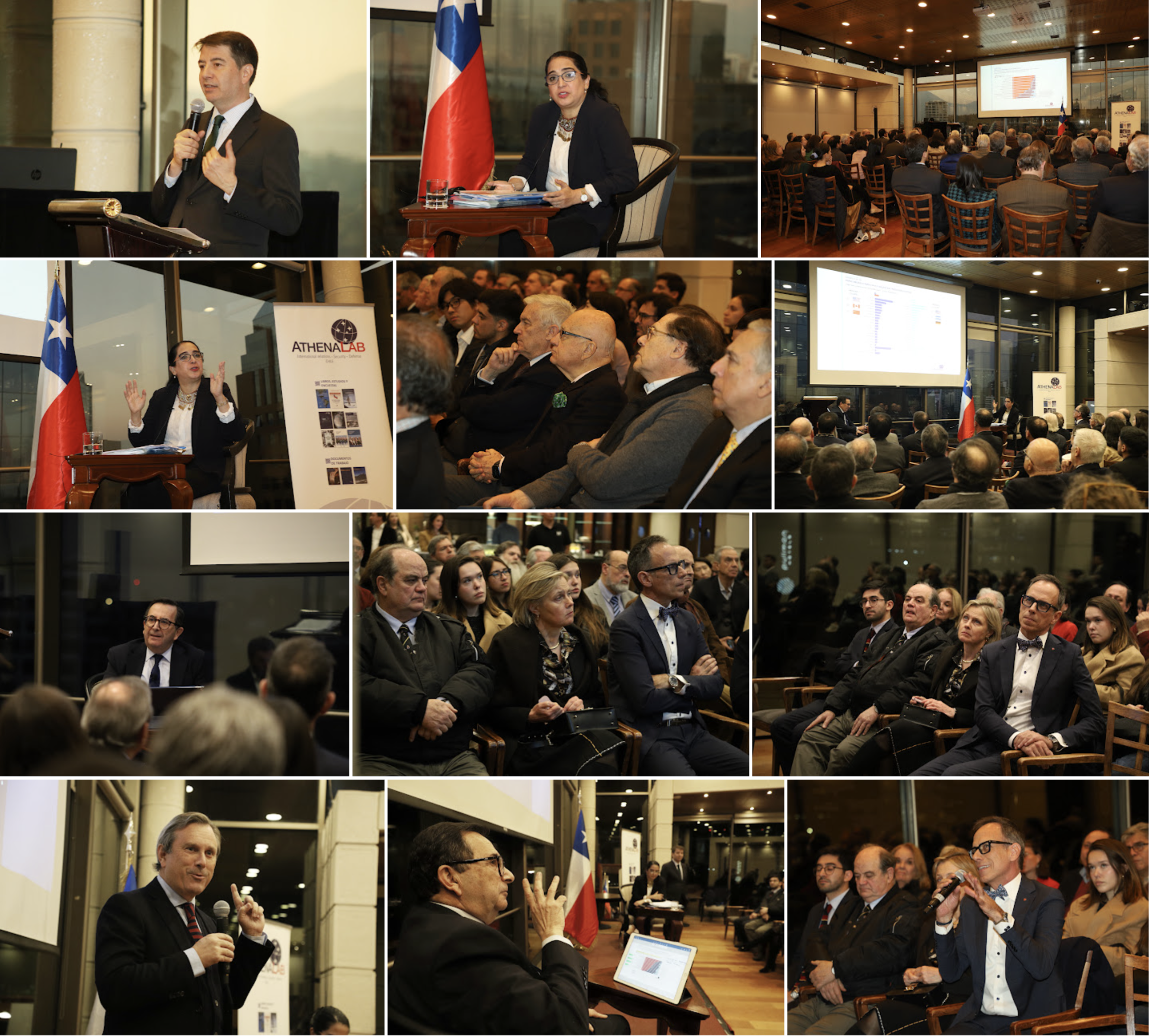
Launch Gallery