José Miguel Carrera y Verdugo
This article was translated automatically and may contain differences from the original. For reference, read the original.
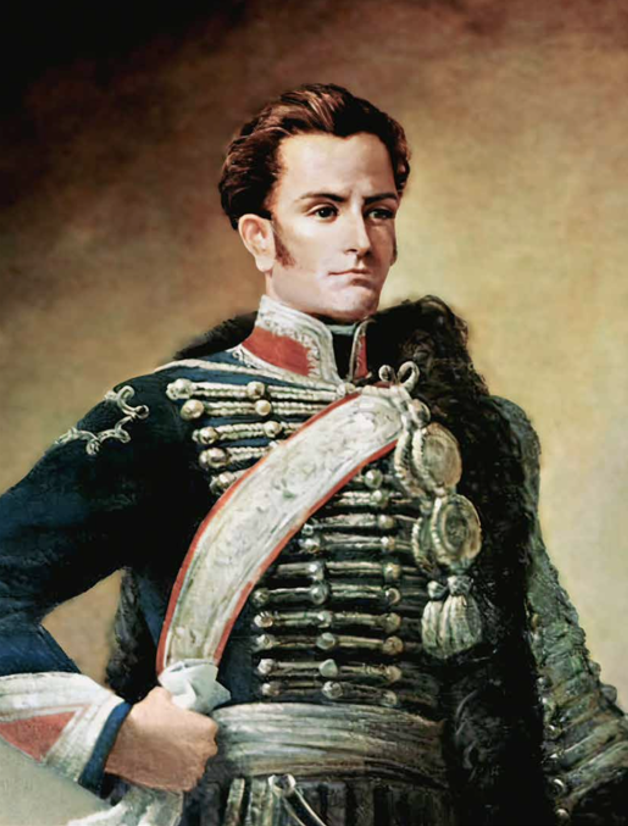
First Commander in Chief of the Army
1785 – 1821
Grandson of a judge of the Royal Audience – Juan Verdugo Castillo – son of a member of the first National Government Junta – Ignacio de la Carrera Cuevas – and connected with the most aristocratic families of Santiago, his life combines power and wealth with a prestige constantly threatened by his audacious political acts. It was precisely his individualistic and transgressive character that often led him to operate outside political norms and confront other patriotic leaders, especially O’Higgins.
Determined to free Chile from Spanish domination, he traveled to the United States seeking support and securing financial contributions for the execution of his strategic plan. His progressive spirit led him to be one of the few criollos openly advocating for independence at a time when most of the inhabitants of Chile still remained loyal to the King of Spain, and to decree – once in power – the emancipation of black slaves. His initiative also led to the proclamation of the first Chilean Constitutional Regulation in 1812.
His life was full of adventures, and perhaps for this reason, he wrote his will early. Accused by his contemporaries of being a tyrant and irreligious, he was deposed from command of the army both due to successive defeats against the royalists and his obstinate desire for power.
Subsequent historiography has generally judged José Miguel Carrera harshly, just as his contemporaries did. The military diary, which presents his perspective on the battles fought, also reveals his efforts and motivations, allowing for a better understanding of his human and historical figure. Likewise, other documents such as the proclamations with which he rallied citizens, the manifestos through which he defended himself against accusations from rivals like O’Higgins, and the notebook he carried with him during his final days, are valuable sources for understanding the charismatic and personalist leader. Hidden and abandoned after the disaster of Rancagua, betrayed and executed in Mendoza, his life and work have been exalted in literature and poetry. Similarly, many historians attribute a preeminent role to him in the national independence process, considering him “the first leader of the free Homeland” and a figure whose legacy is strongly tied to the national collective consciousness as one of its most cherished heroes.
Source: Memoria chilena