States of Exception are exceptional: it is time for the Armed Forces to return to their barracks.
This article was translated automatically and may contain differences from the original. For reference, read the original.

When States of Exception are prolonged, the Executive itself begins to bypass the rules that supposedly regulate the powers of the heads of Defense, and ministers, regional governors, and various others start to reappear, confirming that the State of Exception is and is not, or it is only when it suits some and others, making it difficult to know who is in charge and who is responsible. Perhaps it is time to organize matters and for the Armed Forces to return to the barracks, and if their support is needed for logistical issues, so be it, but not with executive and administrative responsibilities beyond what is appropriate for the armed institutions, which are more properly the responsibility of the regional governors and the rest of the State’s administrative apparatus.
The lawyers for the Minister of the Interior are correct in stating that he is not responsible for public order during a Constitutional State of Exception due to Disaster. The responsible parties are the Heads of National Defense, appointed by the President of the Republic for that purpose. The heads of Defense report directly to the President, having no reporting obligations to their respective commanders-in-chief or to the Minister of Defense, so Mario Desbordes, and before him, Alberto Espina, bear no responsibilities in this regard.
If it were that simple, this column would end here, but it is not. The problem we face today is that we have been under a State of Exception for almost seven and a half months, which, as indicated, is exceptional and not permanent, and therein lies the crux of the problem that leads us to the question of who is legally in charge of the administration of the State during a State of Exception in Chile: the ministers, the regional governors, the Ministry of Health and its team, or the heads of Defense?
Constitutional States of Exception are designed to be short exceptions in which a head of Defense assumes responsibility for the administration of State functions in one of the regions of Chile. In that role, they obviously have responsibility for public order, in addition to addressing the specific issue that triggered the constitutional exception.
The design of the role of the heads of Defense and the human teams and resources assigned to them is intended to address contingencies if it is a State of Disaster, or public order if it is a State of Emergency or Siege, but they are not intended to also be responsible for the operation of commerce, or to resolve the underlying problems of a region, such as the effects of drought, issues and strikes by transporters, road insecurity, the insurgency in La Araucanía, and the various problems we have in our country.
For fundamental problems, there is the President of the Republic, his ministerial government team, and the entire State administration, but the generals and admirals designated as heads of Defense should not be involved in this, as they should only perform such functions for exceptional and short periods, not for exceptionally long and permanent periods.
The problems complicating Minister Víctor Pérez and that are being assigned to the heads of Defense are issues that go beyond the health disaster caused by COVID-19, but based on the technicality of being in a State of Disaster and, therefore, the responsibility of certain generals and admirals, it is a disgrace, since the purpose of the State of Exception is the pandemic and its control, not the truckers’ strikes and the activities of insurgents that are complicating matters in the Eighth and Ninth regions.
When States of Exception are prolonged, the Executive itself begins to bypass the rules that supposedly regulate the powers of the heads of Defense, and ministers, regional governors, and various others start to reappear, confirming that the State of Exception is and is not, or it is only when it suits some and others, making it difficult to know who is in charge and who is responsible.
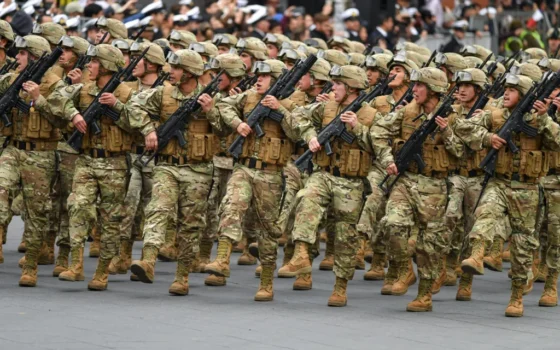
Perhaps it is time to organize matters and for the Armed Forces to return to their barracks, and if their support is needed for logistical issues, so be it, but not with executive and administrative responsibilities beyond what is appropriate for the armed institutions, which are more properly the responsibility of the regional governors and the rest of the State’s administrative apparatus.
Perhaps it is also time to review constitutional States of Exception and to be more modern. If we look at what happens in other countries, generals and admirals are not needed to manage a medical contingency, which should be directed with resources from the Ministry of Health, and if necessary, the Armed Forces can provide support in areas where their versatility allows, but it should not be in public order, as that is the responsibility of the police, who are trained, equipped, and prepared to perform that role.
At the end of the day, the message is that if we do not respect the purpose and design of States of Exception, we may create more complex problems or end up assigning blame to those who should not be held accountable. It is time for ministers to be secretaries of State; regional governors to be the administrators of the regions; the police to be responsible for public order; and the armed institutions to be responsible for the defense and protection of sovereignty and national interests.