COLUMN | Unprotected Witnesses
This article was translated automatically and may contain differences from the original. For reference, read the original.
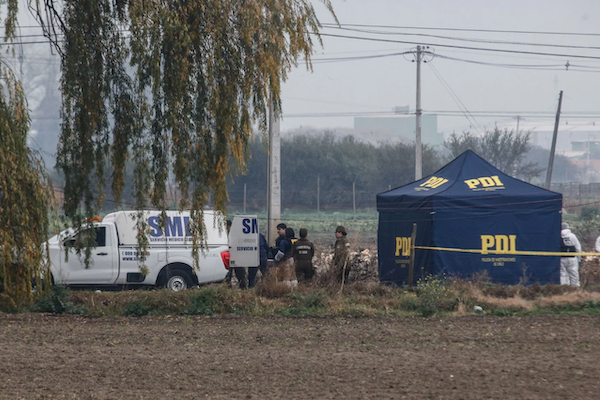
Trusting that the system works and will provide protection to victims and witnesses is the foundation for advancing solutions to the security problem.
El Libero, July 5, 2024
The mere fact that we must discuss the protection of witnesses this week is a sign of serious weakness, indicating that the more we talk about organized crime, the less we seem to understand it.
We finally learned that of the three people murdered, only one had cooperated in a hitman case and required protection, which they had declined. One cannot force someone to do something, but on the other hand, the reason for providing information should be the protection received.
It was also mentioned that there are approximately 13,000 protected witnesses. A rather high number that requires detailed analysis. The first question that arises concerns the classification of the protected witness. Do we have a classification that corresponds to the threat? Is there a protocol for cases of organized crime?
There are reasonable doubts, especially in a context where last year the judge in Arica acknowledged having disclosed information about protected witnesses and undercover agents who collaborated in the Los Gallegos case, putting not only the collaborators at risk but also the investigation process.
The importance of the undercover agent and the protected witness is extremely high, as relevant information is obtained to identify the cells of the groups operating in the country. However, beyond the practical aspect, it relates to a fundamental issue: trust. Trusting that the system works and will provide protection to victims and witnesses is the foundation for advancing solutions to the security problem.
Behind that protection exists a system that will provide the necessary support, and because that exists and functions, collaboration with investigations occurs. This is the basis for reporting, the trust that the information provided contributes to an effective state operation.
It is precisely in this area where there is a failure. While some institutions and officials fully understand the challenges posed by organized crime, others seem not to grasp it yet. Such is the case of the judge who placed members of the Tren de Aragua under house arrest in Los Vilos. The judge stated that there was insufficient evidence to justify the danger posed by the defendants; however, individuals detained for aggravated kidnapping, robbery with intimidation, and organized crime in an area where marijuana cultivation and drug trafficking have proliferated should have at least raised a red flag for the magistrate.
The same argument arises again: trust that the state works effectively and with full knowledge. Therefore, the case of murdered protected witnesses is extremely serious, but beyond the fact itself, we should be asking why these things are happening, and only then can we identify the structural vulnerabilities associated with corruption, management, preparation, coordination, and understanding of the phenomenon. We must address the underlying issue, that is, the trust in the state’s work, which is based on its effective and efficient response.
Pilar Lizana
Senior Researcher, AthenaLab