COLUMN | University and Politics
This article was translated automatically and may contain differences from the original. For reference, read the original.
- por Pilar Lizana
- Columnas
The participation of its members in politics and their identification with one party or another has never been a problem for academic debate and the training of future professionals, as long as the institution maintains its spirit, which, in fact, is affected by situations like those experienced this week.
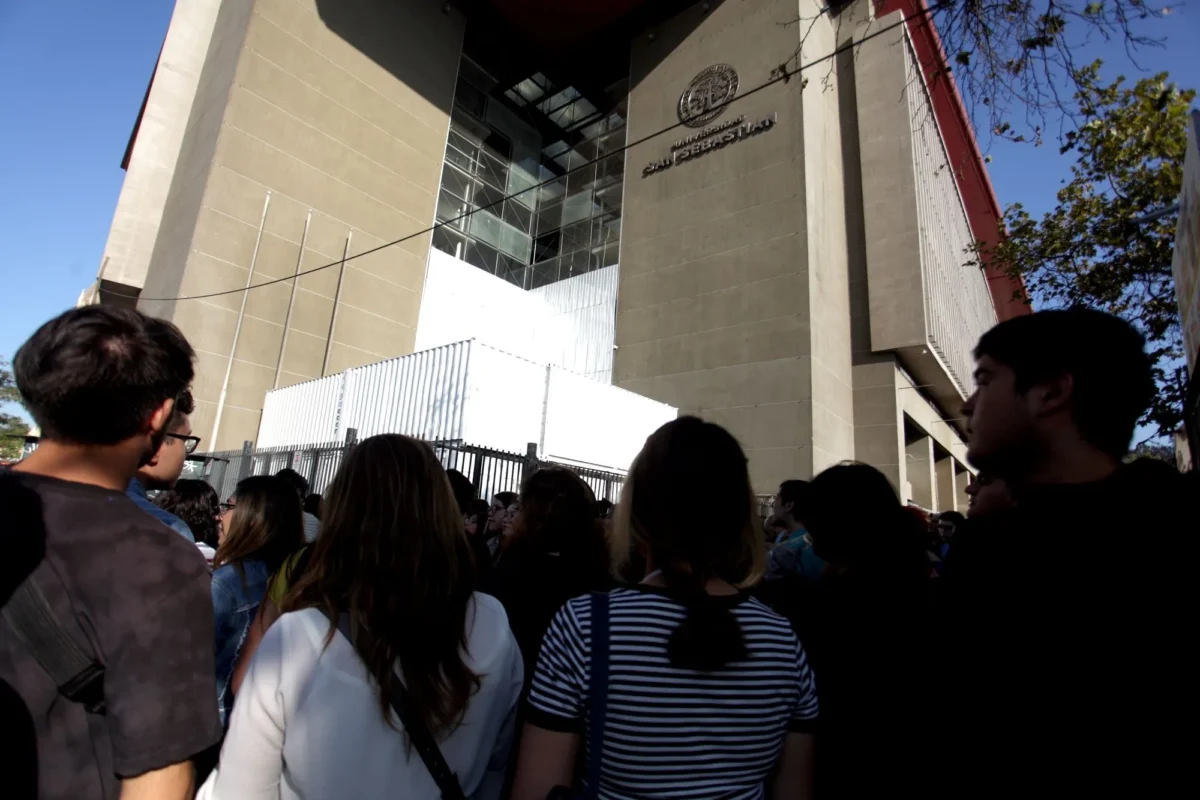
Universities return to the center of the debate. Some time ago it was the Arcis University and the funds from the Venezuelan regime; today, it is the San Sebastián University and everything surrounding its academics and president. However, these events, beyond the current political debate, should serve to reflect on the importance of this institution in the country’s development. They are called to generate knowledge, contribute to public debate, and, very importantly, to train future leaders.
Universities emerged in the 11th century around philosophy and theology; their term referred to both the community of scholars and students as well as the place that gathered all knowledge. In their origin, they were an institution dedicated to the intellectual world, to knowledge, which has expanded across the globe with universities on all continents.
So how do we go from being the institution that gathers knowledge to being embroiled in political controversies? Its academics and students can participate in political life; in fact, in many cases, important political leaders emerge from student councils, and topics are raised in university assemblies that jump into the public political debate. However, none of this changes that original spirit of education and knowledge. Moreover, nothing should tarnish it.
Universities play a fundamental role in society, not only because they become a place of social growth and pride for families whose child arrives at university for the first time, but also because, through their engagement with the community, they contribute to society.
The university is that environment of freedom where students and professors can debate a wide range of topics, exchange viewpoints, and even generate currents of thought that can have a global impact. There are many examples of this. Henry Kissinger was the director of the Defense Studies Program, the International Seminar, and the Special Studies Project at Harvard before becoming Secretary of State and National Security Advisor of the United States; Joseph Nye, an academic at Harvard University, created, along with Robert Keohane, neoliberal theory, and his analysis of power has had a worldwide impact. He was the chairman of the National Intelligence Council, Secretary of State, and Deputy Undersecretary of State, and there are many more like them around the world.
The university brings together different viewpoints in an environment of freedom of thought from which new theories can emerge. The participation of its members in politics and their identification with one party or another has never been a problem for academic debate and the training of future professionals, as long as the institution maintains its spirit, which, in fact, is affected by situations like those experienced this week.
The generation of knowledge and education must necessarily occur in an environment of freedom; otherwise, the university loses its purpose and relevance in the public sphere.