COLUMN | Program, Leadership, and Team in National Security, Public Safety, and Defense
This article was translated automatically and may contain differences from the original. For reference, read the original.
- by Richard Kouyoumdjian
- Opinion
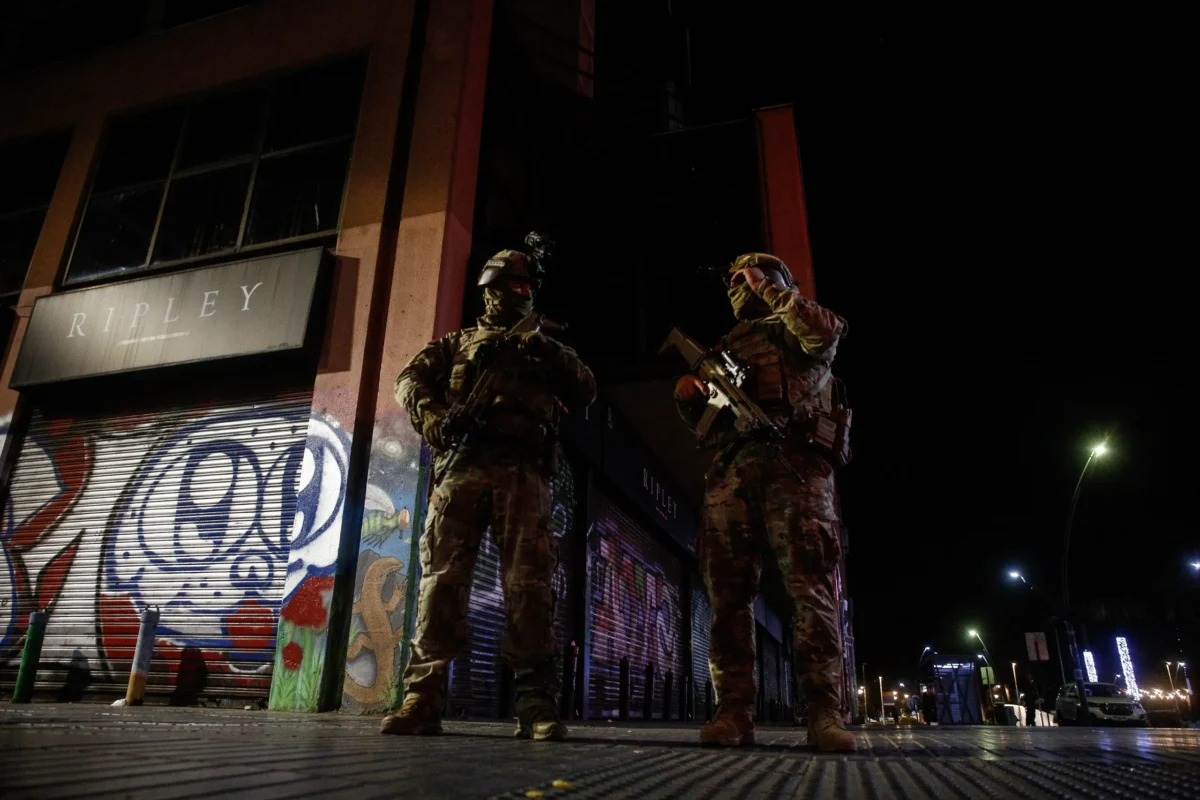
The person in charge, if convinced they are right, should not fear the consequences of their actions. Current Chile requires decisive and bold action, rather than worrying about criminal prosecution from the left.
In recent days, the landscape regarding presidential candidates, their phase one programmatic teams, and the ideas that will underpin their government programs has become clearer.
Some information is already known about what José Antonio Kast has in mind, and the same applies to Evelyn Matthei. Johannes Kaiser is currently focused on finalizing his libertarian party, but he will surely share something with us in the immediate future about his ideas and who will help shape them.
We should also expect something similar from Carolina Tohá, which should happen once it becomes clear what the PS is up to, as their priority is obviously to secure the nomination of their close relatives, and who knows, perhaps also from the DC.
We will see what surprises the PC and the FA bring us, as well as what happens with others who have expressed presidential intentions, such as Ximena Rincón and Rodolfo Carter. The latter has stated that he has no issues seeking another political home if Chile Vamos does not allow him to participate in a primary, which seems difficult, so I would not be surprised to see him joining forces with Johannes, as both have very similar views on Chile’s problems and the solutions required. It would be a very powerful duo.
Given all of the above, it is to be expected that all candidates will have relatively similar diagnoses of the problems afflicting Chile, which are primarily public insecurity and the issues arising from several years of low economic growth. I would add the fiscal situation that complicates the implementation of solutions to insecurity without having to re-engineer the rest of the state apparatus, which even for a leftist exceeds acceptable limits.
Logic suggests that if there is consensus on the diagnoses, the corrective programs, similar to what happens in medicine when seeking to address an ailment, should be relatively similar since we are looking at the same Chile. This clearly occurs in security, where there is not much difference between what Evelyn Matthei and José Antonio Kast propose, leaving to be seen what the other candidates and their programmatic teams recommend. That said, none have set specific objectives, as this requires doing the work, designing strategies that, to be effective, need clarity in their goals, the means to be used, and how they will be employed, as well as whether resources will be available and parliamentary support if necessary.
Conclusion 1: Action lists are helpful, but without strategies, they may prove insufficient.
The second point is that the programs and strategies will be as good as the teams behind them. This point is important, as it requires experienced and knowledgeable individuals, two key aspects if success in public safety and economic reactivation is desired. In this regard, the problem is not very different from selecting members of a football team, the cast of a play, or the members of an orchestra. One always wants the best, those who save or score goals, those who do the work and are effective for what they are hired for.
The individuals chosen to be part of the programmatic teams must not only meet the previous characteristics but also know how to work as a team and, above all, convey confidence and calm to voters and the public in general, which is fundamental after three years of poor governance. In security, it helps to have retired police and military personnel on the team.
In the realm of national security, public safety, and defense, it is known who has the expertise, those with street experience, those who know the borders, the prisons, those who understand strategy, armed forces, cyber issues, and those who are legislative experts, etc. The important thing is not to be captured by a few and to maintain the ability to summon the best. It is the time for professionals, strategists, and experienced individuals. There is no room for amateurs.
Conclusion 2: Spare no effort in having the most talented individuals, in having the best team.
I have left the most important point for last. It is to be expected that the issue of national security, and specifically public safety, due to its critical nature, is something that leadership does not want to delegate to others, where the respective ministers end up playing a supportive and executing role. I have the impression that this could be the case for Evelyn Matthei and José Antonio Kast, but not for Johannes Kaiser, whom I see as more focused on the effectiveness and efficiency of the State as a whole, rather than specifically on one issue. Personally, I lean towards presidents who are presidents and not ministers, which does not preclude them from emphasizing the most critical issues.
Whoever leads is not irrelevant; on the contrary, it is the most important aspect, more important than the programs and the teams. It is the person for whom we vote and in whom we place our trust and hope that they will resolve the problems and lift us from mediocrity.
The person in charge, if convinced they are right, should not fear the consequences of their actions. Current Chile requires decisive and bold action, rather than worrying about criminal prosecution from the left; it requires leadership that stands alongside the police and military, and does not leave them to their fate when they go out on the streets; or that worries about the old soldiers who are imprisoned for actions taken in the past. Police and military personnel swear to give their lives for Chile, but not for the current presidents. That loyalty is earned, and it is earned by leading and supporting the police, detectives, military, and gendarmes.
Current Chile is corrected by imprisoning criminals and insurgents, and for that, we need police, prosecutors, judges, and gendarmes. We need the support of the Armed Forces in logistics and technology, and we need parliamentary and financial support, as cleaning up is not free. Chile is not Argentina and is not El Salvador, but that does not negate the need for effective, strong, and committed leadership that has clarity in its objectives and the mission to be developed.
Conclusion 3: Leadership does matter and is the most critical aspect, much more than teams or programs.


