COLUMN | Questions for the Public Security Exam for Candidates
This article was translated automatically and may contain differences from the original. For reference, read the original.
- por Richard Kouyoumdjian
- Columnas
A security and public order strategy requires not only clarity in diagnosis but also in its objectives. To achieve clarity on this matter, I present some questions.
Given the reality of public insecurity we are experiencing and the fact that some candidates are making promises that contradict common sense or lack strategic character, I am sending you the questions for the security and public order exam, which are based on common sense, but if they can answer them correctly, they will be able to prepare logical and rational plans, rather than something that, at first glance, may sound more like demagoguery or something that can only convince those who are not knowledgeable about the subject, nothing more than a nice communication strategy.
A security and public order strategy requires not only clarity in diagnosis but also in its objectives, which in turn will determine the means to be used and their manner of use (the strategy itself), or conversely, the limitations of means or restrictions on use may in turn limit the objectives. To achieve clarity on this matter, I present some questions that will assist you in crafting your strategies, but first an example: It is not the same to say that my strategy is to close the border without specifying the means to be used, how I will do it, and with what objective, than to say that I will seek to close the border in order to reduce the murder rate in Chile by 50%, and that I will primarily use about 5,000 police officers and 3,000 soldiers who will support using and operating advanced technological means such as drones and satellites, accompanied by resources from national intelligence (data invented for this purpose).
The strategy cannot simply remain in what I will do. It must also be clear in the objectives and the means to be used. It is an exercise that is completed when all three parts make logical sense. This is something in which your military advisors are well trained. Let them do their job; you just indicate the objectives to be pursued and see if the means and manner of use align, or if the strategy needs to be adjusted if that is not the case.
Questions that you must be able to answer if you want to develop a good strategy:
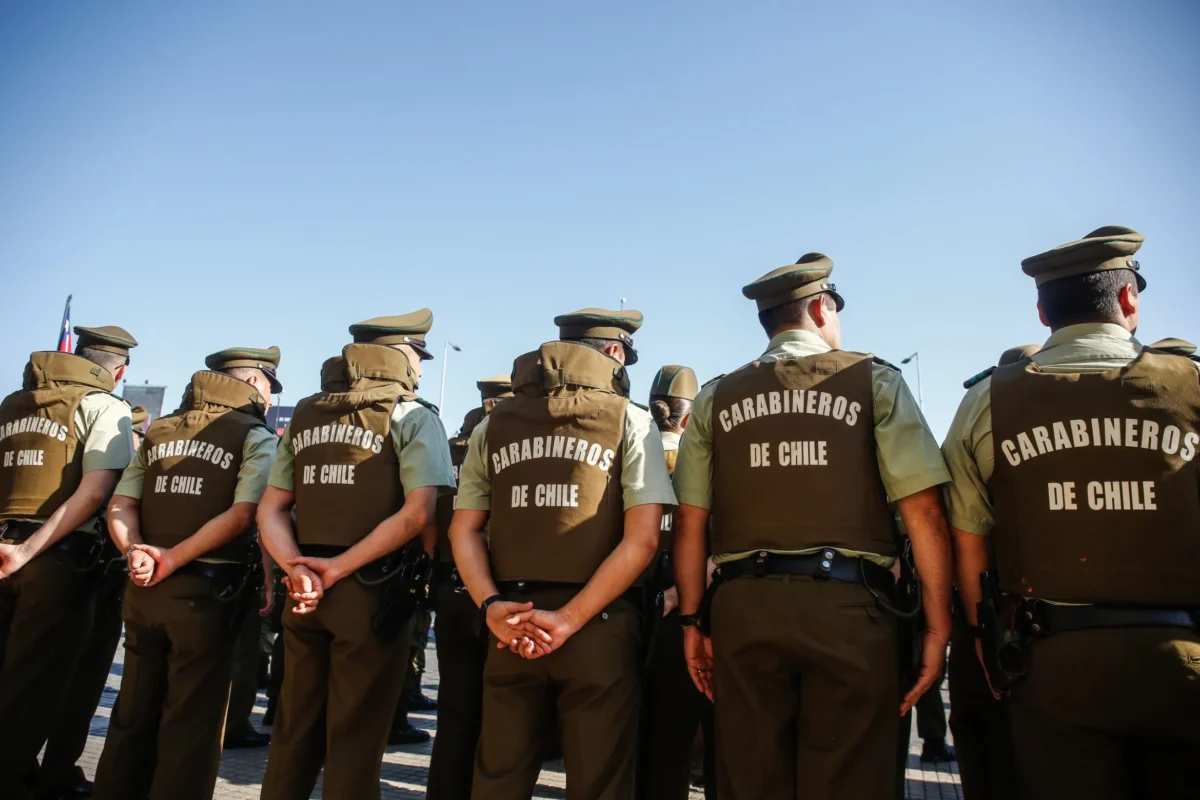
Question 1: Do you know what the effective strength of the Carabineros is? By this, I mean the police officers who are actually available, excluding those on vacation, on medical leave, or attending institutional courses. The Carabineros have never been very good at providing this number and they hide behind the military justice code, as it apparently is a matter of confidentiality or secrecy.
To also determine the availability of the Carabineros, it is necessary to review how many students are in training schools and in the officer school, as well as their capacity to produce new police officers ready for service annually.
Are you clear that the work being done at the borders is that of the Carabineros? The fact that there are units of the Chilean Army assigned to support the Carabineros is a misleading interpretation of critical infrastructure that has the approval of Congress.
Are you aware that the Carabineros are not fulfilling their constitutional role of guaranteeing order and security in the national territory, and that if problems of order and security arise simultaneously, they do not have the capacity to address them concurrently?
The term that begins on March 11, 2026, is not a new term; it starts with the Carabineros we have now or those we are preparing to deliver in 2025.
Question 2: Are you aware of the budgetary situation and staffing of the Armed Forces? Are you aware of the impact of the budget cuts in January 2025? Do you know what they are not doing or may have to stop doing if a second cut occurs? Are you in agreement with their permanent employment for security tasks even at the cost of degrading their military capabilities?
Question 3: Are you aware of the situation of the armed forces in the Southern Macrozone and those assigned to the borders with Peru and Bolivia? Do you understand what it means to have units deployed in terms of the impact on personnel and their family lives? One thing is for these deployments to be occasional or exceptional as stated in the constitution and the law of states of exception, and another is the use that different governments have made in recent years, whether from the right or the left.
Question 4: Are you aware of the staffing situation of the Public Ministry, PDI, Customs, UAF, SII, Gendarmerie, and others that are part of the Public Security system or process? The public security system goes beyond the Carabineros and the PDI, and resolving one bottleneck does not help if another point is blocked.
Question 5: Are you aware of the situation and capabilities of the National Intelligence Agency (ANI)? Are you familiar with the modernization bill for Intelligence or Intelligence 2.0? Is the problem of the ANI that it needs a better enabling law, or is it a matter of management and resources? Do you know that the staffing of the ANI is approximately 100 people, while Argentina has ten times that, and Spain must have over 3,500?
Question 6: What do you understand by closing the border and why is it important? How does it help in achieving your strategic objectives? Is it an option given limited resources?
Question 7: What is your strategy for deactivating the Mapuche insurgency we have in the regions of Bio-Bio, Araucanía, and Los Ríos? You know that there is sufficient military capacity to capture the insurgents, but as long as it continues to be defined as a criminal problem rather than a national security issue, no military capacity will suffice. Is there political will to use the armed forces to eliminate or neutralize the insurgency?
Question 8: What is your opinion on the RUF project? Do they serve any purpose? And what about the issue of critical infrastructure, which still lacks the law to make it functional? Do you want to involve the Armed Forces in public security matters? Are you willing to assume the legal and political costs of their employment, and that the thread does not break at the weakest point?
Question 9: What are the numerical, quantifiable, and measurable objectives of your public security strategy? Do you have the means necessary? Does your manner of use comply with the principles of a rule of law?
Question 10: How do you plan to allocate more budget to law enforcement and public security forces, and to the Armed Forces to ensure they are effectively trained for their primary purposes and those cases where they are performing internal security functions? Will you do it through reallocations, as a politician recently told me, or by closing ministries as indicated by another, or by appointing tri-ministers? Chile is not Argentina, and it is not so easy to close or dismantle state secretariats. Are you willing to endure the protests that the left will surely promote when this occurs?
Question 11: What is your opinion on municipal security? Should they become municipal police? Do you agree that they should be allowed to carry weapons? The reality indicates that the Carabineros have neglected many communes in Santiago, which, if it were not for municipal security, would be under criminal control.
Question 12: What do you think and what will you do about the new Ministry of Public Security? Does it serve any purpose, would you make any modifications to its structure and organization?
Questions for additional points:
Do you know anything about cybersecurity and our level of preparedness in that area?
What do you think about the military prisoners of Punta Peuco, Colina 1, and other prisons? Are you willing to support humanitarian initiatives that would send many of those over 75 years old or terminally ill back to their homes? The military family is closely watching all candidates, especially after having been betrayed by some in previous elections, or by those who reopened human rights cases, which has resulted in over 1,000 being prosecuted. The military now observes closely how their parents and grandparents are treated. Their level of support will depend on this.
Are you aware of the length and characteristics of the border with Peru and Bolivia?