COLUMN | The Case of Tariffs and National Security
This article was translated automatically and may contain differences from the original. For reference, read the original.
- by Richard Kouyoumdjian
- Opinion
Not everything is lost in Chile; it is simply a matter of utilizing the institutional framework provided by the 1980 Constitution, which, with minimal changes, can meet our needs by 2025.
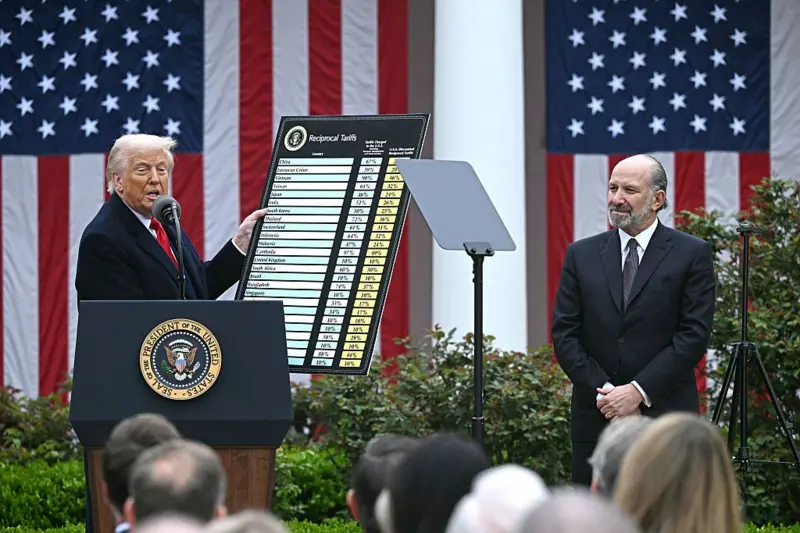
The announcement of a 10% tariff on our exports to the United States and the tariffs applied to other countries with which we trade generated all kinds of reactions, some somewhat hysterical, and many committee meetings ad hoc to assess the impacts on agriculture, mining, and fishing, along with requests from the private sector and Congress to the Government to review the matter with their counterparts in the northern country.
This type of crisis, along with those we have seen regarding public security, the Mapuche insurgency in the southern macrozone, and the permeability of our northern and northeastern borders to illegal immigration and transnational crime, are all issues that could perfectly be addressed in the National Security Council, which is the institutional body we have for discussing these matters, rather than the aforementioned ad hoc committees, the Executive Political Committee, or the Congressional commissions.
The reluctance to utilize the National Security Council is one thing, and another is whether it is in a position to be used for state matters of the nature previously mentioned. We should indeed seek to ensure that its sessions can be subject to confidentiality or reserve, if necessary, as well as perhaps review its composition, but it serves as a body to agree on state actions of the type Whole of Government approach, and it could make our lives easier, often preventing problems from being solely the concern of the Executive, which we know does not have control over the other branches of government or autonomous bodies, such as the Public Ministry.
Evidently, the Council would benefit from having a support office, as well as the existence of a national security coordinator or advisor to ensure the Council functions, who would be responsible for the follow-up and implementation of the agreements made, and who would maintain the comprehensive vision that the national security system requires, which takes shape when the Council becomes active and there is a government department that brings it to life and manages it, and that also generates a national security strategy, providing the logic that the whole needs to function.
In the case of tariffs, rather than having everyone shouting and running around, what should have happened is a session of the Security Council. The issue of tariffs clearly intersects with other aspects of Chile’s foreign trade, strategic relations, and defense with countries in the Western world, and the decisions made have consequences that must be considered at the time of making them.
We cannot review the issue of tariffs in isolation without considering the effects our decisions may have regarding China, our main trading partner and an important investor in Chile, or regarding the United States, the still dominant global power, with which we have deep political and military relations.
There is talk of seeking to reduce our trade dependencies on China and the northern country, but if it were that easy, we would have already done it. As far as is known, the trip to India did not yield many new business opportunities, only many good intentions, but nothing more than that. For a country like Chile, which is open and depends on global trade, what happens is not irrelevant, and we literally must appease both God and the devil, something that our highest office struggles to understand.
The Council would also be an ideal body to consider how we position ourselves regarding Bolivia, a state that is effectively failed, or with Peru, which is not going through a good moment, or to make decisions regarding the control of our borders and the necessary resources to make it effective, or to finally address what will be done about the Mapuche insurgency, which, despite the State of Emergency, occasionally shows its teeth.
Evidently, it is also the body to discuss and review the public security strategy that the new ministry must produce, as the problem of insecurity clearly exceeds the limits or capacities of the organization led by Minister Cordero, who should certainly be part of the Council along with the Ministers of the Interior, Defense, and Foreign Affairs.
In conclusion, when issues are addressed institutionally, with a state perspective and outside purely political forums, the possibility of making good and sound decisions increases. Not everything is lost in Chile; it is simply a matter of utilizing the institutional framework provided by the 1980 Constitution, which, with minimal changes, can meet our needs by 2025.


