COLUMN | Carabineros de Chile on its 98th anniversary
This article was translated automatically and may contain differences from the original. For reference, read the original.
- por Richard Kouyoumdjian
- Columnas
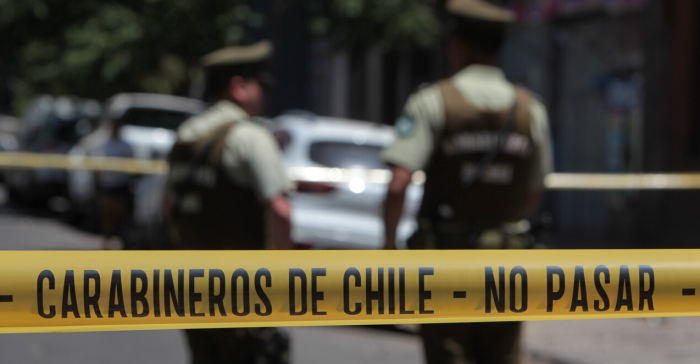
We cannot continue pretending that everything is fine, that there are no problems with Carabineros, or that doing more of the same will solve the issue, or that the Ministry of Public Security is the silver bullet that resolves everything.
At the end of this week, Carabineros de Chile will celebrate its 98th anniversary. The institution was established on April 27, 1927, by then-Colonel Carlos Ibáñez del Campo, who brought together the fiscal and municipal police along with the Carabineros of the Chilean Army, a unit under his command that remained so until he assumed the presidency on July 27 of that year.
For a time, it included what is now known as Gendarmería and the Police of Investigations (PDI), which soon gained independence from Carabineros, the main police force.
Over the years, due to the professionalism they demonstrated, additional functions were assigned to them, which ultimately detracted from their primary mission: to guarantee order and security within the territory of the Republic of Chile. The times when their anthem stated, “Sleep peacefully, innocent girl, without worrying about the bandit, for your sweet and smiling dreams, your loving carabinero watches over you,” are now far behind.
Ninety-eight years after its creation, we face a concerning reality that goes beyond their inability to fulfill their constitutional role, something that crime statistics remind us of daily.
Media reports indicate high levels of absenteeism, ranging from 19% to 26%, depending on the size of the operational units. Furthermore, almost all mayors in the Metropolitan Region—if not all—complain about the lack of carabineros, with many municipalities operating at less than 40% of authorized personnel, which becomes even more complex when considering the shortage of available vehicles and the lack of political will and legal support for the use of police force. Thus, it is not surprising how we are faring in terms of security.
In light of the aforementioned scenario, where there are few available carabineros and those who are present lack the assurance to act decisively, Chileans with financial means have opted to privatize their security. If they are fortunate enough to live in resource-rich municipalities, they delegate security responsibilities to private security firms, a service that is evidently unavailable to the poorer population and those living in resource-scarce areas, who continue to rely on the few available carabineros.
Aside from the high absenteeism, which, unlike in the past, is less due to physical injuries and more due to mental health issues, what are the reasons for the perception that there are too few carabineros?
It is a difficult question, as Carabineros does not assist much with its secrecy, failing to disclose the numbers of personnel and resources available, hiding behind military justice regulations. This, combined with the reality that they are expected to be present everywhere—including returning to stadiums to protect Chileans from other Chileans who claim to be fans of their respective teams—makes it challenging to have a clear diagnosis of why Carabineros de Chile is failing and unable to fulfill what is stated in Article 1 of its Constitutional Organic Law, which states:
“Carabineros de Chile is a technical and military police institution that integrates the public force and exists to enforce the law; its purpose is to guarantee and maintain public order and internal public security throughout the territory of the Republic and to fulfill the other functions assigned to it by the Constitution and the law.”
Therefore, it is difficult to understand the strategy of this and previous governments to focus more on creating a Ministry of Public Security, which only brings more bureaucracy, or to reform Carabineros to cease being a military police force, rather than increasing their effective personnel and providing them with the equipment they need to fulfill their constitutional obligations.
Clearly, with the number of students graduating from their schools each year, Carabineros is not able to increase its effective personnel, but rather, at best, replace those who leave or retire.
This is an issue that has persisted for many years, and it is hard to understand why both recent governments and high-ranking institutional leaders have not resolved the problem. Without carabineros on the streets, in the fields, and at the borders, the fight against crime is lost. We need police, not just technological solutions as some propose. It is time to understand and be clear.
If anyone expects results significantly different from those currently being achieved against organized crime and criminals without more carabineros, detectives, and prosecutors from the Public Ministry, it seems they are living in a different Chile. The main current political dilemma is to allocate more budget to the national security system, which includes the Public Security subsystem, the National Defense subsystem, and Intelligence (ANI, plus institutional intelligence), which I include due to the almost permanent involvement of the Armed Forces in internal security tasks, supporting Carabineros, due to the lack of resources for the latter, a shortage that is also manifesting in the Defense institutions, which have been affected in their operational capabilities due to the recent cuts made by the Treasury in January 2025.
Security costs money, and this is something that seems difficult to understand or that we do not want to understand. If the public treasury is tight and there is no capacity to increase fiscal spending, we will have to cut state expenditures in ministries and programs that are not related to national security, given that insecurity levels have reached critical levels, jeopardizing our daily lives.
Everything indicates that we will have to adjust social programs and things we have become accustomed to, but without carabineros, there is no security, and without security, there is no freedom. It is time to think about what is more important: security or well-being.
Let us start by clarifying the effective numbers of carabineros dedicated to operational functions. Every strategy requires clarity not only in diagnosing the problem to be solved but also in the available resources. A strategy with a reasonable number of carabineros is very different from one where they are few.
We are already seeing the impact of having too few carabineros in the municipalities and the responsibilities that municipal security forces have taken on, or the few available in the hard-hit southern macrozone, or the insufficient personnel available for the northeast border, both cases supplemented by military resources.
We cannot continue pretending that everything is fine, that there are no problems with Carabineros, or that doing more of the same will solve the issue, or that the Ministry of Public Security is the silver bullet that resolves everything.