COLUMN | Quo Vadis Carabineros de Chile?
This article was translated automatically and may contain differences from the original. For reference, read the original.
- por Richard Kouyoumdjian
- Columnas
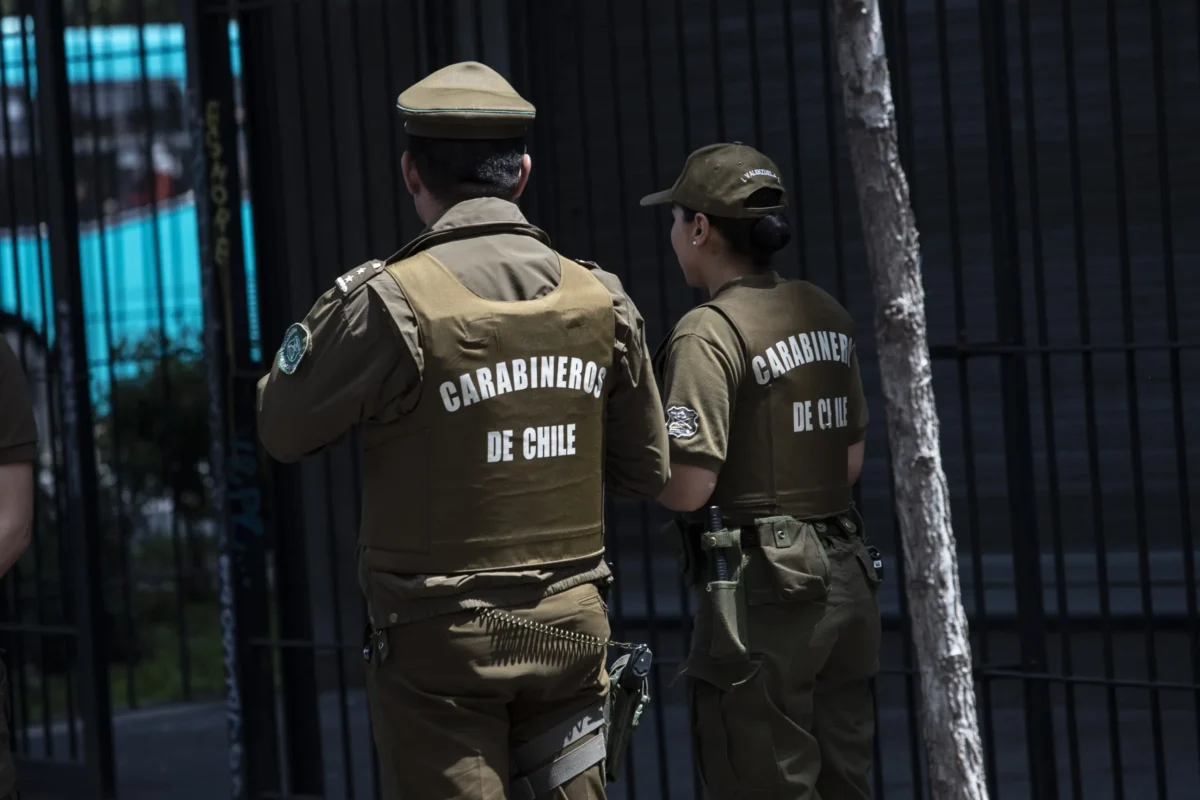
We need more Carabineros, many more. If this does not happen, we will have to convert the municipal security departments, which they replaced nearly 100 years ago, into municipal police.
Last week I used the expression “Quo Vadis” with the Chilean Navy in relation to the celebration of Naval Glories Day on Wednesday, May 21, and because they will soon have a change of commander-in-chief on June 18.
Carabineros de Chile does not have immediate events ahead like those indicated for the Navy, but its importance is more than critical regarding public order and security, by far two of the most important issues in present-day Chile, and whose absence troubles many, especially the poorest.
In a recent survey published by AthenaLab on perceptions of foreign policy and national security – on pages 33 to 35 – there is a section dedicated to Carabineros, an institution that according to its Organic Constitutional Law, aims to guarantee and maintain public order and internal public security throughout the territory of the Republic.
Every time I write about Carabineros de Chile, I cannot help but recall not only what its Organic Constitutional Law states, but also what the Constitution indicates in its article 101, which says:
“The Forces of Order and Public Security are composed solely of Carabineros and Investigations. They constitute the public force and exist to enforce the law, guarantee public order, and internal public security, in the manner determined by their respective organic laws. They depend on the Ministry responsible for Public Security.”
I emphasize this because no one seems to be concerned that Carabineros de Chile is not fulfilling what both the Constitution and its Organic Constitutional Law establish. I find this to be of utmost seriousness, and it should be a matter of concern for Congress, the Ministry of Public Security, municipalities, and civil society, which has every right to demand that the respective institutions and ministries comply with what the Constitution and the laws of the Republic state. If everyone in Chile did what they were supposed to do, we would be talking about a different country.
In the AthenaLab survey the general public indicates that crime prevention and maintaining public order in the streets are clearly the top two priorities, with activities such as traffic control, mountain rescues, guarding the presidential palace, participating in military parades, equestrian displays, and musical performances ranking lower.
Experts are even more critical when it comes to the tasks of Carabineros, assigning percentages of around 89% and 88% to the same two top priorities of the general public, namely crime prevention and maintaining public order, and giving much lower scores to anything that is not related to these two tasks.
The common sense of the general public, along with the knowledge and experience of experts, points to the fact that we have a problem, and one wonders why Carabineros does not focus on what is essential and neglects what is not related to its constitutional role. My friends in the uniformed police may forgive my harshness, but I wonder, how and where did Carabineros lose their way? Was it something on their part, or was it something that, if it were not for the current security crisis, we all allowed to happen?
It does not help much that Carabineros does not disclose its numbers. We suspect they have more than 60,000 personnel, but we do not know how many are dedicated to public order and security tasks. We also do not know their geographical distribution by regions and municipalities, all of which makes it very difficult for municipalities like Las Condes, where I am a councilor, to plan and design a public security strategy.
Recently, numbers related to their absenteeism rates or the inverse of effective availability have been published, which are recognized to be over 20%. It is also known that Carabineros, along with Gendarmería, are the institutions with the highest number of medical licenses. This should tell us something about the institutional state.
I place a lot of emphasis on Carabineros because they are the police responsible for order and security, and not the public security departments of the municipalities, which, for all intents and purposes, assist in the matter but do not have police powers and cannot carry weapons. Again, I use the example of Las Condes, a municipality with resources, which should have at least 500 Carabineros on staff, a number I suspect is closer to something between a quarter and a third of what it should have.
The absence of Carabineros is concerning because the figures they publish, the S.T.O.P, indicate that we have increases in homicides and all categories of thefts for the Metropolitan Region regarding 2024, and that, in cases like Las Condes – a municipality somewhat neglected by them – it is even more striking, highlighting the burglary of inhabited places with an increase of over 100%. If that number is concerning, it is even more alarming that the number of arrests at the Metropolitan Region level is less than 14% according to the same S.T.O.P data.
Obviously, they do not act independently; they follow the orders of the government, particularly the Ministry of Public Security to which they report. Until very recently, until the Naín-Retamal law was passed, using their weapons was a sure path to prosecution, so it was advisable to either not arrive or arrive late, and the low effectiveness of the Public Ministry in criminal prosecution does not help, which is why the reduction of criminals on the streets is not progressing at the speed we would like.
They do not have good salaries, their shifts are long and exhausting, they cannot unionize, they are obedient, disciplined, and hierarchical, and despite all this, many join Carabineros year after year, which will soon celebrate its 100th anniversary. They are a militarized police force, originating from the Carabineros regiment of the Chilean Army. They are proud of their military past, but in these times when they are so needed, they must focus on their purpose, which is to guarantee order and security throughout the territory of the Republic. The rest is just noise.
Despite everything, Chileans like them and trust them a lot. We need more Carabineros, many more. If this does not happen, we will have to convert the municipal security departments, which they replaced nearly 100 years ago, into municipal police. The need for security is directly proportional to the insecurity that Chile experiences. If it is provided by Carabineros, excellent, and if not, it will be by the municipalities that have the resources and capabilities to do so, and if that is not the case, Chileans will privatize their security or take it into their own hands. Security is a basic and vital need that, when absent, puts the freedom and development of individuals at risk.
Two things must happen urgently and necessarily: the government and Congress must increase the budgets and resources for the police and the Public Ministry, and, on the other hand, Carabineros should not wait for the initiative to focus solely on the essentials to come from the Minister of Public Security; it must come from them and no one else. The constitutional obligations and those established in the Organic Constitutional Law are for Carabineros de Chile, and for those who are part of that beloved, prestigious, and nearly centennial institution.